
Tampa Case Study: The Rent Was Locked. The Costs Weren't.
Month eight of a twelve-month lease, and a Brandon rental went cash-flow negative with a tenant who paid on time. Nothing went wrong with the tenancy. The costs were repriced on a calendar the lease knew nothing about.
Month eight of a twelve-month lease. The tenant paid on the first every month, never called after hours, and kept the yard better than the owner had. And the owner rang us convinced she'd done something badly wrong, because her mortgage payment had gone up $607 and she couldn't find the mistake.
There wasn't one. Her rent was fixed on the lease's calendar. Her two biggest costs had just been repriced on the county's calendar and her insurance carrier's — and nobody had asked the lease's permission. What followed was a Tampa rental cash flow turnaround that never touched the tenant: no vacancy, no turnover, no renovation, not one dollar of rent change. The property went from losing $121 a month to clearing $211 — though $276 of that $332 swing was always going to arrive on its own, and knowing which part was which is the whole story. The tenant never knew any of it happened.
Why did a Brandon rental go cash-flow negative with a good tenant paying on time?
Because the rent was locked for the term and the costs weren't. Property tax and insurance on this Brandon house rose by about $4,000 a year between one lease anniversary and the next. The lease had another four months to run. That gap — repriced costs against fixed revenue — is what put the property underwater, not anything the tenant did.

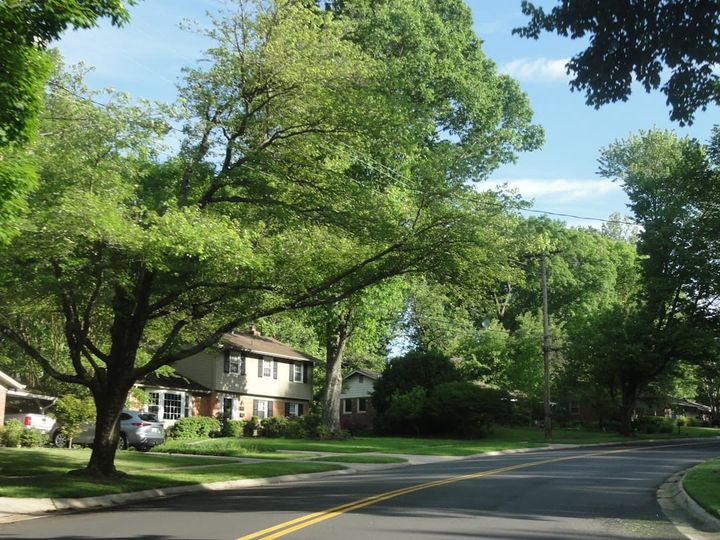
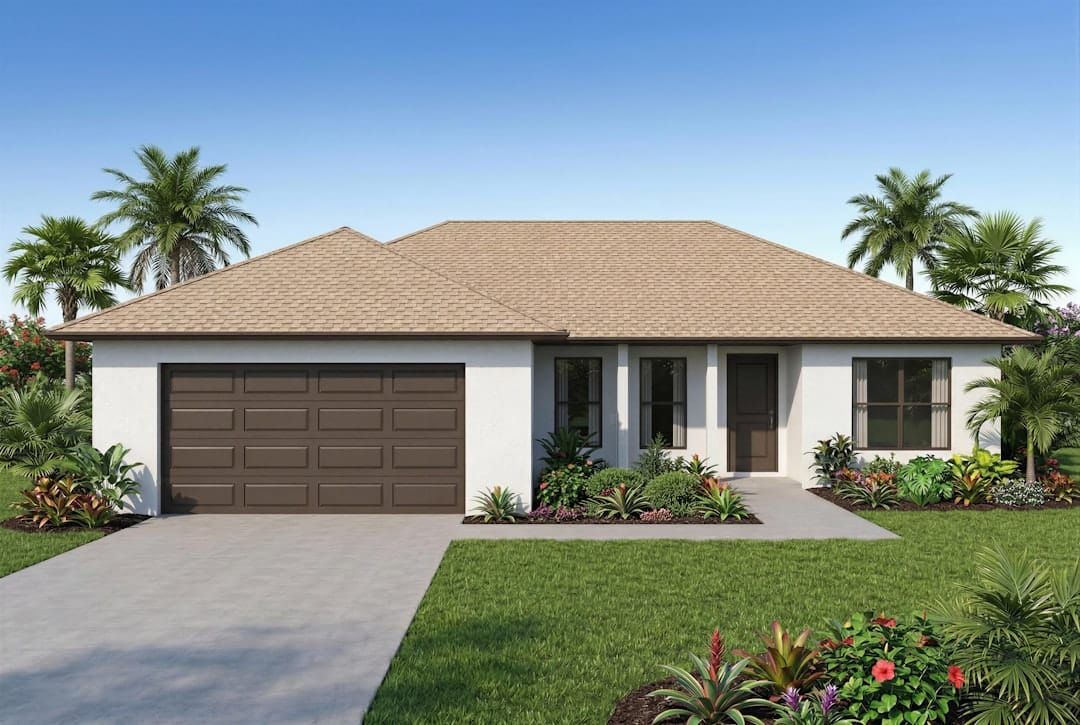
The house is a 3BR/2BA single-family in Brandon, in unincorporated Hillsborough County. The owner bought it in 2017 as her primary residence and homesteaded it for eight years. In 2025 she moved across town, decided the 2017 mortgage was too good to give up, and rented it out instead of selling.
That instinct was right, by the way. Her principal and interest ran $1,080 on a loan nobody can get today. Add $529 a month of escrow and the payment came to $1,609 against $2,095 in rent — call it $486 a month before maintenance. On paper it was the easiest decision she'd ever made about that house.
Zillow's rent index for ZIP 33510 reads $1,647 as of July 2026, well under the $2,095 she was collecting, and every so often an owner sees that gap and panics that they've priced themselves off the market. They haven't. That index blends apartments and condos in with houses, so it runs below what a three-bedroom single-family asks — the Brandon rental market splits harder by property type than a single median suggests.
What actually made the mortgage payment jump $607 a month?
Three things moved at once, and only two of them were permanent. About 45% of the $607 was temporary and would disappear on its own within a year. Most owners never learn that, which is how a survivable year gets mistaken for a failed investment.
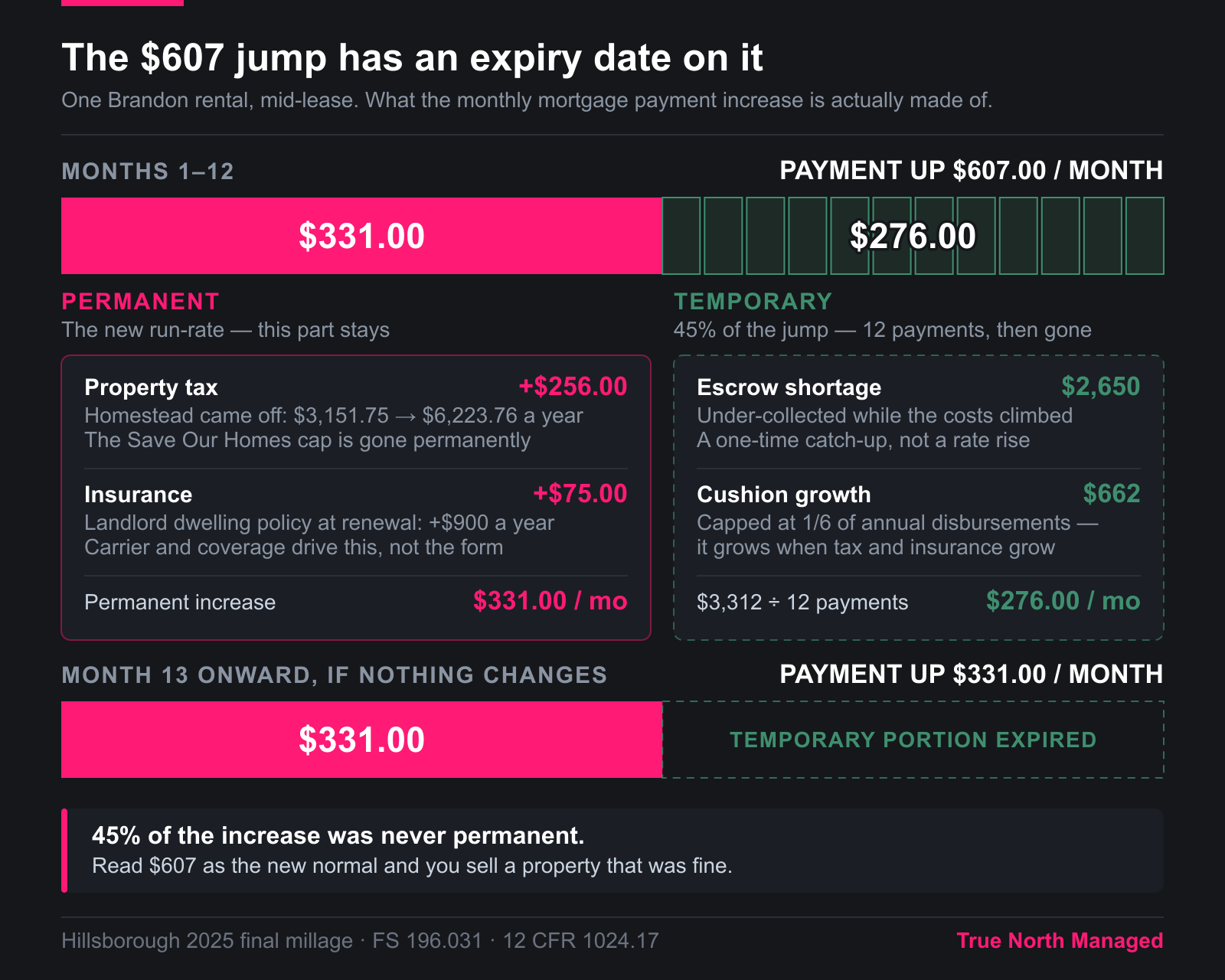
The tax bill, up $256 a month. When the house stopped being her homestead, two protections went with it — the exemption itself and the Save Our Homes cap that had held her assessed value at $214,000 while the market climbed to $341,000. You can't do this with one multiplication, because Florida's second $25,000 exemption skips school levies under Statute 196.031(1)(b). Homesteaded, she paid $1,198.26 in school tax and $1,953.49 in everything else: $3,151.75. As a rental, the full $341,000 met the full rate — 18.2515 mills for unincorporated Hillsborough on the county's final 2025 millage table — for $6,223.76. Brandon sits outside Tampa city limits, which is why she pays that rate and not the city's higher one.
The insurance, up $900 a year. Her homeowner's policy was rewritten as a landlord dwelling policy at renewal and the new premium came back $900 higher. That direction isn't a rule, whatever you've read — a dwelling policy isn't automatically more expensive than the homeowner's policy it replaces, and what separates them on any given house is the carrier and the coverage, not the form. Our Tampa landlord insurance guide covers what moves that number in Hillsborough.
The escrow cushion, up $662 in one go, which almost nobody sees coming. Federal rules cap the cushion a servicer may hold at one-sixth of estimated total annual disbursements (12 CFR 1024.17(c)(5)). One-sixth of a bigger number is a bigger number. So the cushion grew because the tax and insurance had grown, and her servicer collected the difference.
Those first two also left the account behind. The servicer had been collecting against last year's tax and last year's premium right up until the analysis caught it, so the account had quietly run $2,650 short.
Stack it all and the jump comes apart cleanly. The genuine, permanent run-rate increase was $331 a month. The rest — that $2,650 of arrears plus the $662 of extra cushion — is $3,312 spread across twelve monthly payments under 12 CFR 1024.17(f)(3)(ii). That's $276 a month with an expiry date on it.
This is the moment owners list the house. They read $607 as the new normal, run it out over a thirty-year hold, and conclude the property is broken. Nearly half of it was going to evaporate without anyone doing anything.
What can you fix mid-lease when the rent is locked?
Not the rent. A signed fixed-term lease holds every material term until it ends, so the first lever anyone reaches for is the one lever you don't have — our guide on what a Florida landlord can change mid-lease walks through why. Everything underneath the rent is fair game, though, and none of it needs the tenant's signature or even her awareness.
Here's what we went after on this house.
We cleared the whole catch-up in one payment. The twelve months in the regulation is the minimum period a servicer can make you spread a shortage over — it caps what they can demand, and it says nothing about whether you may clear it sooner. Most servicers will take the lump sum, but call first and have it designated as an escrow shortage payment, or it can land on principal instead and do you no good at all. She wrote a check for $3,312, the arrears plus the cushion top-up.
We re-shopped the landlord policy. With a current wind-mitigation form in hand, $4,100 became $3,420. Fifty-seven dollars a month, for two phone calls.
Then we made the servicer re-run the analysis. This is the step owners miss, and it's the one that turns the other two into an actual lower payment. A lump sum and a cheaper policy don't move anything on their own — the payment is set at the annual escrow analysis, so it sits at the old number until the account is looked at again. We sent the new declarations page and asked for an off-cycle re-analysis. That's when the $276 came off, along with the insurance.
We confirmed the homestead had actually come off — and that she'd told the county. This is the part that worries me on every converted primary residence, because owners assume it happens automatically. Renting out all or substantially all of a homesteaded house counts as abandoning the homestead under Statute 196.061, and Statute 196.011(10)(a) puts the duty to notify the property appraiser on you, promptly.
Miss it and the exposure is the exempted taxes plus a 50% penalty and 15% interest a year, reaching back as far as ten years. Don't count on confessing your way out of that, either; the statute's forgiveness clause covers the appraiser's own clerical errors, not an owner who moved out and stayed quiet. She'd filed correctly. It's one of the easiest things to miss on a converted primary residence, and our guide to converting a Tampa home into a rental is where that conversation usually starts.
We checked the assessment and left it alone. Comparable sales supported the $341,000, so there was no case to bring. That's the ordinary outcome. When the number genuinely doesn't hold, a Hillsborough assessment appeal is worth the filing fee.
What did this cash flow turnaround deliver?
Better than the panic suggested. Permanently worse than it was before the county and the carrier repriced it, because the cost base is higher for good. The property went from $121 a month in the red to $211 in the black — measured against the mortgage, before maintenance, vacancy, and management — with no turnover and no rent increase.
| Monthly payment | Net against $2,095 rent | |
|---|---|---|
| Before the re-analysis | $1,609 | +$486 |
| After the payment jumped | $2,216 | −$121 |
| After the fix | $1,884 | +$211 |
Now the part most case studies leave out, because it makes the numbers look smaller. Twelve payments from now that $276 falls off by itself, whether anyone lifts a finger or not. Do nothing at all and the house still lands at $155 a month.
So here's the honest accounting of what the work bought her. The insurance quote took just under $57 a month off permanently — that one is real and it compounds. Paying the catch-up early pulled the rest of the relief forward by most of a year, which is worth something when you're staring at a negative number, but it wasn't a saving: $3,312 in one payment or $276 across twelve is the same money either way. She bought the timing, not the amount.
Which means the permanent part didn't stay permanent. It shrank, from $331 a month to about $274, and the $57 that came off was the insurance — not the escrow. Everything else was calendar.
Look at what isn't in that table, either. No turnover. No make-ready. No listing photos, no showings, no screening, no days on market. The tenant renewed later that year.
There's a ceiling on all this, and it's permanent: the house will never again earn what it did as a homesteaded property. The Save Our Homes cap is gone for good, and that's the price of the conversion.
What should other Tampa owner-landlords take from this?
Read the escrow analysis before you price your losses off the payment. Call it "The Two-Calendar Squeeze" — your revenue runs on one calendar, the lease's, and your costs run on everyone else's: the county's tax roll, your carrier's renewal, your servicer's escrow year. Those two sides never line up, so the gap opens mid-term.
An investor reading this is already objecting, and fairly: underwrite non-homestead tax and a landlord policy at purchase and none of this ambushes you. Someone who buys a rental prices those costs on day one. Someone who moves out of a house she loved and rents it carries an owner-occupant's cost basis into a landlord's tax bill, and finds out in month eight.
Two things to do about it. Split any escrow jump into permanent and temporary before you decide what the property is worth — your annual escrow statement itemizes it if you read past the new payment amount, and the lines you want are the shortage, the required cushion, and the new monthly escrow figure. And if you turned a homesteaded house into a rental, confirm the appraiser was told, in writing, this week.
The rent itself keeps until renewal. That's the lawful reset, and a renewal is worth planning rather than improvising sixty days out. Hers went up at renewal, to a number the market supported, with a tenant who stayed.
If your payment jumped and you're staring at a lease you can't touch, that's a solvable afternoon. We'll pull your assessment, your policy, and your escrow analysis, and tell you which part of the increase is real. Get a free rental analysis and we'll run the three numbers with you. More on how we work across Hillsborough is on our Tampa property management guide.