
How a Tampa Landlord Cut a Rental's Tax Bill With One Appeal
A Seminole Heights duplex got hit with a sharp reassessment. One VAB appeal — filed inside a 25-day window — cut about $790 off the bill.
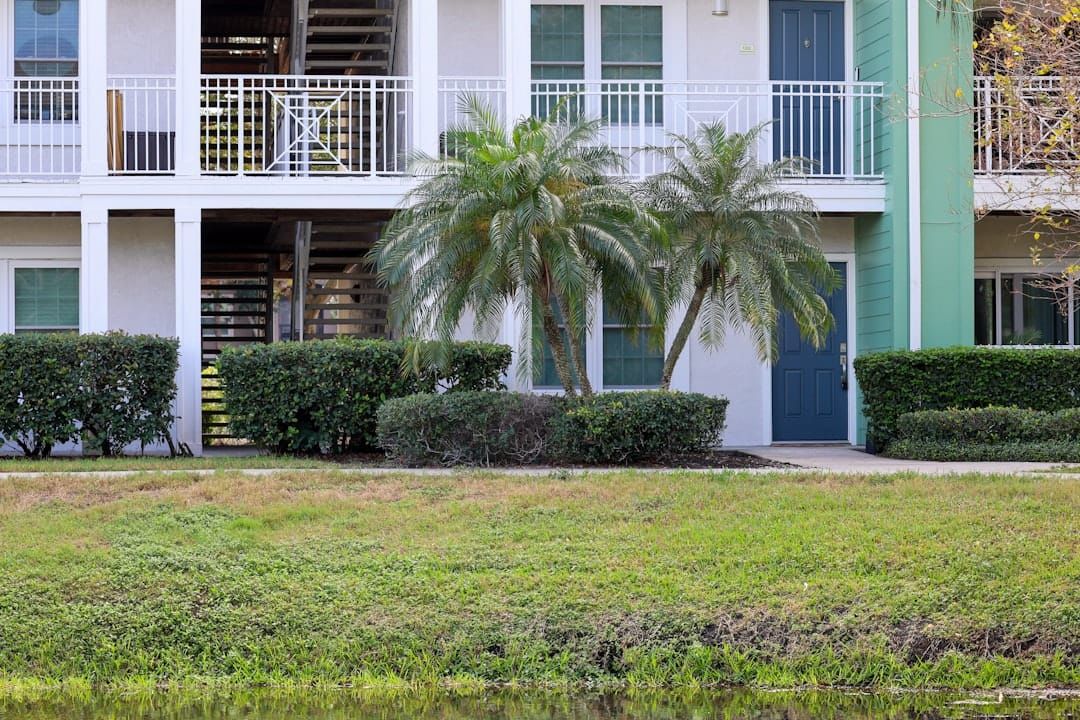
The owner of a Seminole Heights duplex called us in August, rattled. The Hillsborough TRIM notice had just landed, and the proposed value on the property had jumped to $448,000 — a number that didn't match anything selling on the block. The estimated tax bill climbed with it. His question was the one most Tampa landlords ask and then drop: "Can I actually fight this, or do I just pay it?"
You can fight it. He did, and it cut about $790 off the bill. Here's exactly how the appeal went, and why the window to do it is shorter than most owners realize.
Why was the rental over-assessed in the first place?
Seminole Heights ran hot, and the property appraiser's mass-valuation models followed the comparable sales up — sometimes past what a specific property is really worth. The TRIM notice reflected that surge, and a non-homestead rental gets no break for being an investment. The result was an assessed value out of step with the actual block.

The appraiser values tens of thousands of parcels with automated models, not individual walk-throughs. In a fast-appreciating pocket like Central Tampa, those models can overshoot a particular property — especially one with an older roof or a dated unit that comps don't account for. This duplex had both. On paper it looked like the renovated flips two streets over; in person it didn't. That gap between the model and the property is exactly what an appeal exists to correct.
One thing worth clearing up: the annual assessment cap didn't save him here. Florida caps how fast a non-homestead property's assessed value can grow year to year, but the cap doesn't stop the appraiser from setting too high a value in the first place. A cap limits the climb; an appeal fixes the starting number. (For how a pending ballot measure could change that cap, see our breakdown of the 2026 property-tax amendment.)
What did the appeal actually involve?
We filed a petition with the Hillsborough County Value Adjustment Board, backed by four comparable sales and documentation of the property's condition. The whole case rested on one argument: the just value on the TRIM notice was higher than what the duplex would actually sell for. Hillsborough raised the filing fee to $50 effective the 2025 season, and Florida Statute 194.013(1) caps it at $50 per parcel.
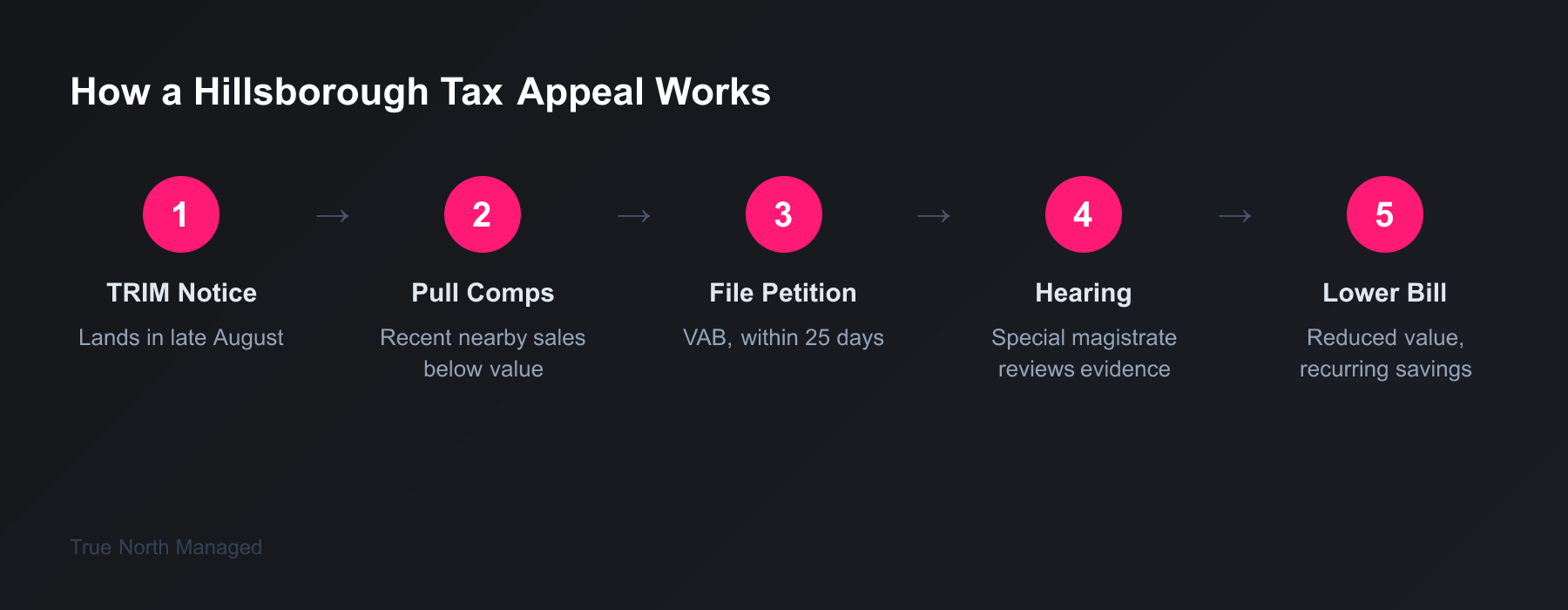
The timeline is the part owners miss. A TRIM notice — Truth in Millage — isn't a bill. It's the property appraiser's proposed value, mailed in late August, and it starts a clock: you have 25 days from that notice to petition the Value Adjustment Board through the Clerk of Court. Miss it, and you're paying the number for the year. We had the petition in well inside the window.
Here's what went into the file:
- Four comparable sales within roughly half a mile, closed in the prior six months, averaging about $405,000 — meaningfully below the $448,000 assessment.
- Condition evidence: photos and a contractor's estimate for an aging roof, plus the dated kitchen in one unit. Comps of renovated homes don't reflect deferred work, and the magistrate can.
- A clean one-page summary tying the comps and condition to a supportable value, so the special magistrate could follow the math in two minutes.
A special magistrate — an independent appraiser the board uses to hear petitions — reviewed it. You can present this yourself or have a manager or agent do it; the state's VAB petition guide walks through the format.
What were the results?
The magistrate reduced the assessed value from $448,000 to $408,000 — a $40,000 cut. At Tampa's 2025 combined rate of about 19.84 mills, that's about $794 off that year's tax bill.
Run the math the way we showed the owner. A $40,000 reduction times a millage rate of about $19.84 per $1,000 of value comes to roughly $794 for that year. And the cost to get there was a $50 filing fee and a couple of hours.
A successful appeal on the value side is one of the few levers an owner actually controls.
It doesn't always land this cleanly. Some petitions get a partial reduction; some get denied when the assessment is actually fair. The point isn't that every appeal wins — it's that the owner who never files automatically pays whatever the model produced.
What can other Tampa landlords learn from this?
Treat the TRIM notice as a deadline, not a receipt. The moment it arrives in late August, you have 25 days to decide whether the assessed value is defensible — and if it isn't, comparable sales are the evidence that moves a magistrate. Most owners read the notice, sigh, and pay. The few who check their comps and file are the ones who stop overpaying.
A few takeaways that apply to any Hillsborough rental:
- Read the TRIM notice the day it arrives. The 25-day clock is strict, and a missed deadline means a full year at the wrong number.
- Pull comps before you decide. If recent nearby sales sit well below your assessed value, you have a case. If they're in line, you probably don't — and that's worth knowing too.
- Document condition. An automated model can't see your roof. Photos and estimates close the gap between a renovated comp and your actual property.
- For a deeper walk-through of the mechanics, our Florida property-tax appeal guide and the Tampa property-tax overview cover the details.
Property tax is one of the three expenses that quietly decide whether a Tampa rental cash-flows, alongside insurance and maintenance — and it's the one most owners treat as fixed when it isn't. If you'd like a clear read on what your Orlando or Tampa property should earn and cost to hold, start with a free rental analysis. We'll tell you where the numbers really stand.