
Hillsborough Redrew Its Evacuation Zones for 2026 — Check Your Rental's Zone
Hillsborough expanded its evacuation zones for 2026, and some Tampa rentals are in a zone for the first time. Here's how to check yours and what it means for you.

If you own a rental in Hillsborough County, the property may sit in a hurricane evacuation zone it wasn't in last year. The county redrew its zones for the 2026 season, pushing Zone A farther inland and adding whole neighborhoods — parts of New Tampa among them — that were never in any evacuation zone before. An owner in one of those areas could get a mandatory evacuation order this season and not even know the rule changed.
This isn't a flood-insurance question. It's a who-leaves-when question, and it's the kind of thing tenants call their landlord about at 6 p.m. when a storm is in the Gulf. The fix takes about ten minutes: confirm your rental's new zone, update your hurricane plan, and tell your tenants. Here's what changed and exactly what to do.
What changed in Hillsborough's 2026 evacuation zones?
Hillsborough County expanded its hurricane evacuation zones for the 2026 season, with the biggest changes to Zone A and Zone E. Zone A — the first to evacuate — pushed farther inland along the coast and the Alafia River, taking in more of Apollo Beach, Town 'n' Country, and mobile-home communities. Zone E now covers areas that were in no zone at all.
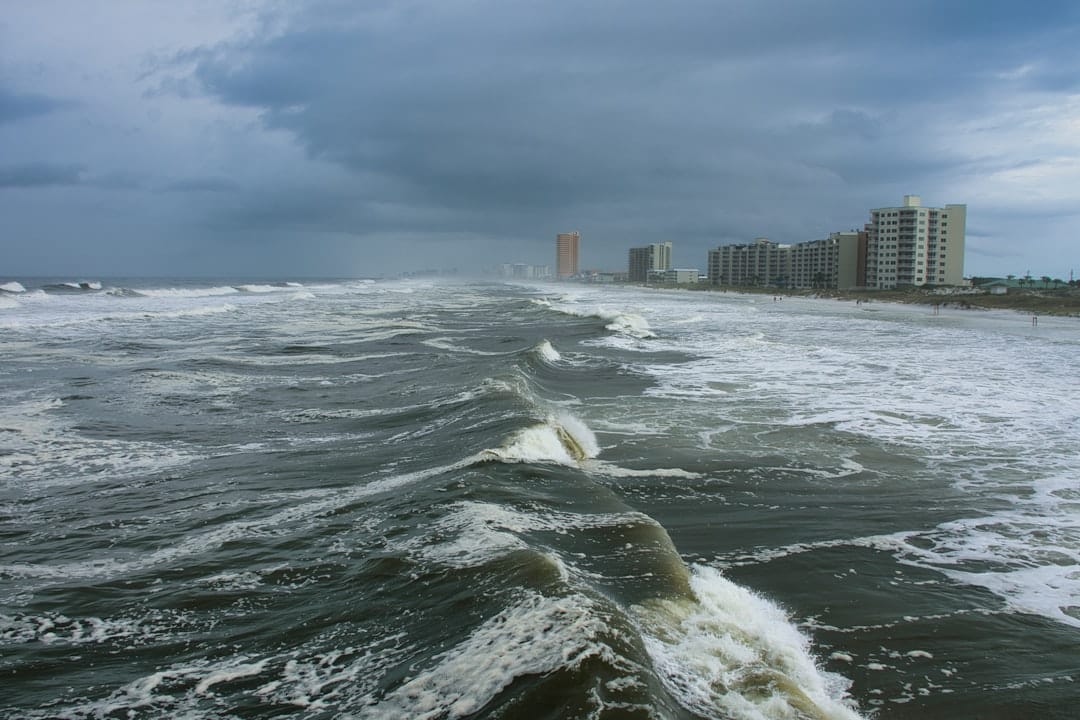
The county announced the update in an early-May notice, and officials tied it directly to 2024's storms, when inland and riverine flooding reached places the old maps didn't account for. A few specifics worth knowing:
- Zone A grew inland. The first-to-evacuate zone now includes more of Apollo Beach, Town 'n' Country, and properties along the Alafia River.
- Zone E added new neighborhoods. Parts of New Tampa, areas near Tampa Executive Airport, and inland Apollo Beach south of Big Bend Road are now in an evacuation zone for the first time.
- Some parcels shifted from Zone D to Zone C, meaning they'd be called to evacuate earlier than before.
If your rental is in one of the newly added areas, the practical change is real: a property that never faced an evacuation order could face one this season.
Is my rental in an evacuation zone now?
Check it by address. The county runs a free lookup tool at HCFL.gov/HEAT — type in the property's address and it returns the zone, A through E. Don't assume last year's answer still holds; the whole point of the redraw is that a lot of addresses changed. And remember one rule that never changes: every manufactured and mobile home in the county evacuates first, no matter what zone it's in.
Do this for each property you own in Hillsborough, not just the ones near the water. The New Tampa additions are the surprise — owners well inland assumed evacuation orders were a coastal problem, and for some of them that's no longer true. Write down the zone for each rental and keep it with the lease file, because the next time a storm enters the Gulf, you'll want the answer in front of you, not buried in a county map.
A quick way to read the letters: Zone A leaves first and Zone E leaves last, with the county calling zones in order based on a storm's track and surge. Being in Zone E doesn't mean you'll evacuate every storm — it means you're now in the system and could be called for a major one.
The county keeps the full picture — zone maps, shelter locations, and which zones are actually under order — on its evacuation information page, and it updates that page as a storm approaches. It's worth a bookmark. For a landlord, the move is to check it early and translate it for your tenants: a renter who gets a clear "you're in Zone A, here's your route" text from their landlord acts faster than one squinting at a county map for the first time during a warning. That early clarity is the difference between an orderly evacuation and a 2 a.m. scramble — and for an out-of-state owner, it's the part that's almost impossible to do well once the storm is already named.
What's the difference between an evacuation zone and a flood zone?
They're two different maps for two different jobs, and owners mix them up constantly. An evacuation zone is the county's storm-surge tier — it decides who leaves and when during a hurricane. A flood zone is FEMA's insurance map — it decides whether you need flood insurance and what it costs. A property can be in one and not the other.
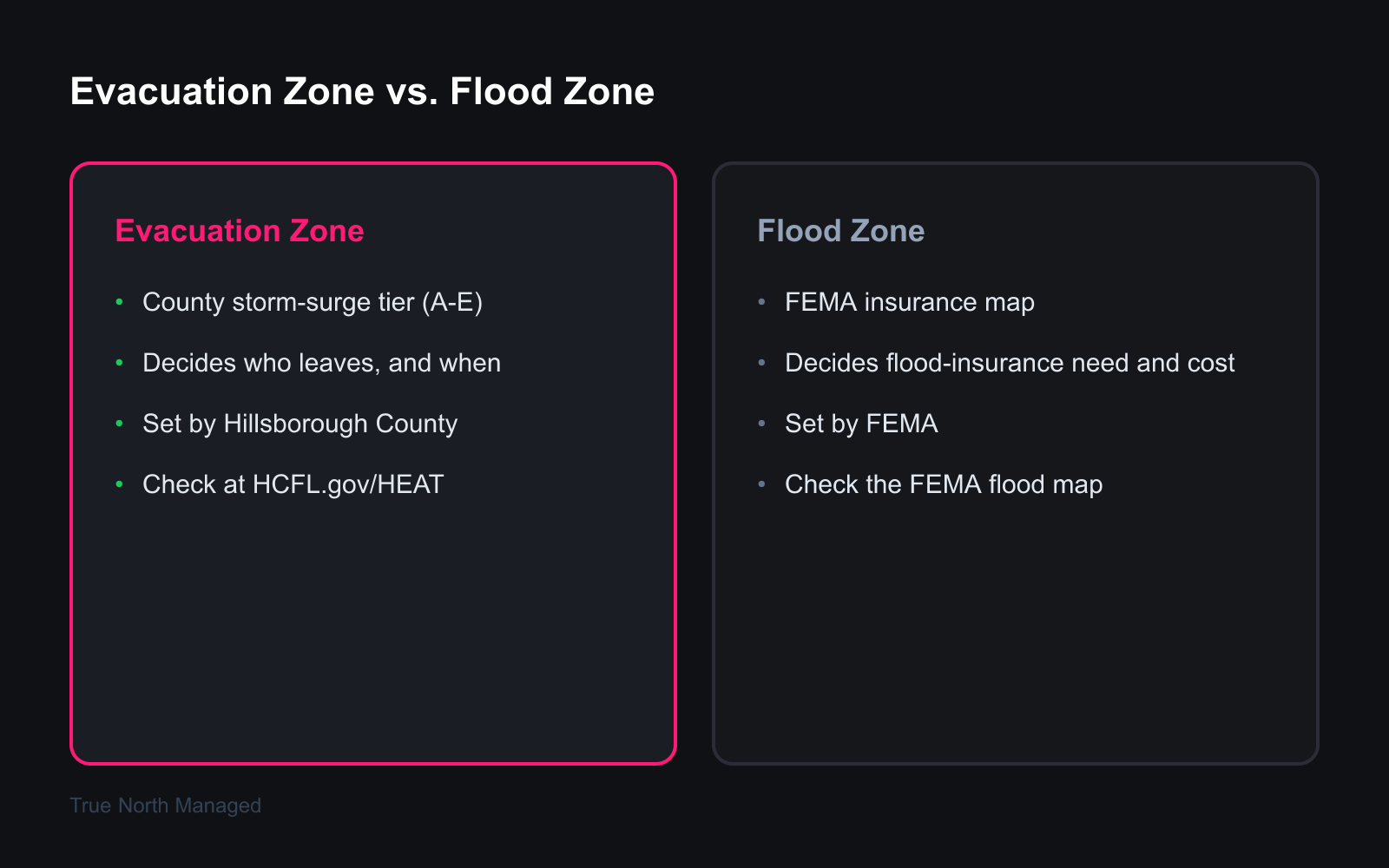
This matters because the answers don't transfer. Your rental can sit outside a FEMA high-risk flood zone and still land in evacuation Zone A, or carry flood insurance while being in the last evacuation group. They're set by different agencies for different reasons. If you want the insurance side of the picture, our flood insurance guide for Florida rentals breaks down what coverage actually runs and how flood zones factor in — but for evacuation, the only map that counts is the county's, and it's the one that just changed.
What does the change mean for you as a landlord?
It means three jobs: know the zone, put it in writing, and make sure your tenants know what to do. None of these is a heavy legal mandate in Florida, but skipping them is how a manageable storm turns into a panicked tenant, a damaged property, and a dispute afterward.
Here's how the pieces fit together:
- Update your hurricane plan per property. Note the new zone, the nearest shelter, and the evacuation route. For an owner managing from out of state, this is the difference between a calm text to your tenant and a scramble while the bridges are closing.
- Use a hurricane lease addendum. A short written addendum can state the property's evacuation zone and spell out what the tenant is expected to do before a storm — bring in patio furniture, close shutters, follow evacuation orders. Putting it in the lease before move-in prevents the "nobody told me" argument later.
- Communicate before the season, not during it. A one-time email to each tenant with their zone, the HEAT lookup link, and your contact plan does more than any checklist. Tenants who know their zone in June don't panic in September.
On damage, the basic split still applies: you're responsible for storm and structural damage as the owner, while the tenant is responsible for damage they cause — including damage from ignoring reasonable storm-prep duties the lease spells out. A clear addendum is what makes that line enforceable instead of theoretical.
What should you do before the next storm?
Run a short checklist now, while the Gulf is quiet. Hurricane season is already open, and the time to sort this out is before a system is named — not when your tenant is texting you about sandbags.
- Look up every Hillsborough rental at HCFL.gov/HEAT and record the 2026 zone for each.
- Flag any property that's newly in a zone — especially New Tampa and inland Apollo Beach rentals — and treat those owners' tenants as the priority for communication.
- Add or refresh a hurricane addendum in each lease with the zone and tenant storm-prep duties.
- Email tenants their zone and a plan — the HEAT link, evacuation route, and how you'll communicate during a storm.
- Confirm your insurance separately. Evacuation zone and flood zone are different; if you're unsure about coverage, check what flood insurance actually covers and your policy before the season peaks. Our broader Tampa hurricane-prep guide and the statewide hurricane-season checklist cover the rest of the property-hardening steps.
Common mistakes landlords make with evacuation zones
Assuming last year's zone still applies. The redraw is the whole story — an address that was unzoned in 2025 can be in Zone E now. Re-check every property.
Confusing the evacuation zone with the flood zone. They're different maps. Being clear of a FEMA flood zone tells you nothing about whether the county will order your tenants to evacuate.
Forgetting mobile and manufactured homes evacuate first. If you rent out a manufactured home anywhere in the county, your tenants are in the first group to leave for every evacuation — regardless of the zone letter. Build your communication plan around that.
Get the property storm-ready, wherever you are
If you own a Tampa rental from out of state, an evacuation-zone change is exactly the kind of update that's easy to miss until it matters — and by then your tenant is the one making decisions about your property. Knowing the zone, having the addendum in the lease, and having a tenant communication plan in place is the quiet work that keeps a storm from becoming a crisis.
That's the part a local manager handles before the first named storm. If you'd like a clear read on what your Orlando or Tampa property should earn and how to keep it protected through hurricane season, start with a free rental analysis — it's the simplest way to put local eyes on your investment before the wind picks up.