
Pool Maintenance for Florida Rental Properties
By default the pool at your Florida rental is the landlord's job — and the safety law (Chapter 515) and drowning-liability exposure make a silent lease an expensive bet. Here's who handles what, what it costs, and the clause that protects you.
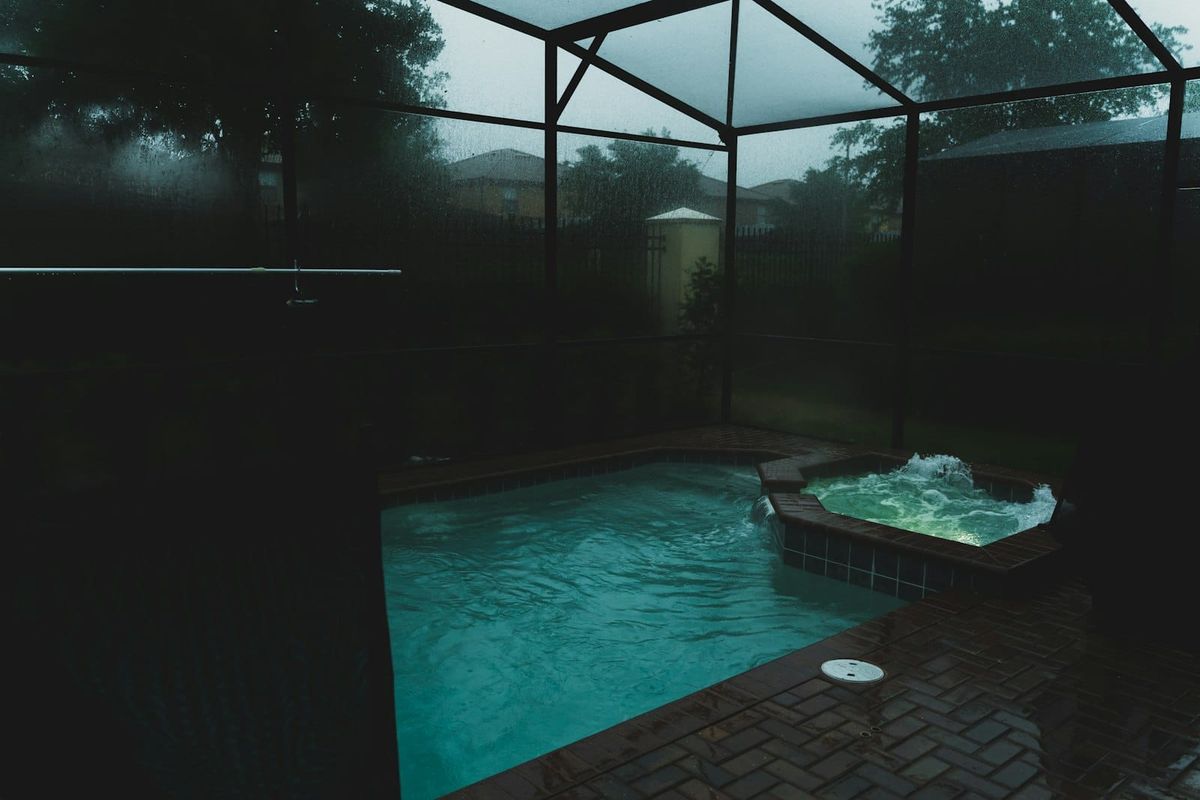
About a quarter of the homes in Orlando and Tampa have a pool. If yours is one of them and you're renting it out, you probably made the same assumption nearly every owner makes: the tenant lives there, so the tenant takes care of the pool.
Here's the short version. In Florida, the pool is your job by default — not the tenant's. The safety law has real teeth, including a fence-or-alarm requirement and a misdemeanor charge attached to it. And a neglected pool doesn't just cost you a cleanup. It can mean a code lien, a wrecked pump, or a drowning lawsuit with your name on it. The thing that actually protects you isn't the pool guy. It's one clause in your lease and the right service setup behind it.
Let's walk through who handles what, what it costs, and how to keep a pool from turning into the most expensive amenity you own.
Who's responsible for pool maintenance in a Florida rental — landlord or tenant?
By default, the landlord. Florida's landlord-tenant law makes maintaining the premises the owner's duty, and the pool is part of the premises. You can shift routine care to the tenant — but only in writing, and only for a single-family home or duplex. Safety equipment and structural repairs stay yours no matter what.
The duty comes from Florida Statute 83.51, which tells you a landlord has to comply with applicable building, housing, and health codes and keep the rental in good repair. The statute never says the word "pool." But a pool is plumbing, equipment, and a structure on the property you're renting out, so the upkeep lands on the owner the same way the roof does.
Now here's the part owners get wrong, and it's the exact same trap as yard care: silence in the lease doesn't split the work down the middle. If your lease says nothing about the pool, the tenant has zero obligation to touch it — no law and no contract created one. You, meanwhile, already carry the maintenance and code duty under 83.51. Add those together and a silent lease puts the whole pool on you. It's the same silent-lease problem we break down in our guide to who's responsible for landscaping at a Florida rental, and the fix is the same too: a written clause.
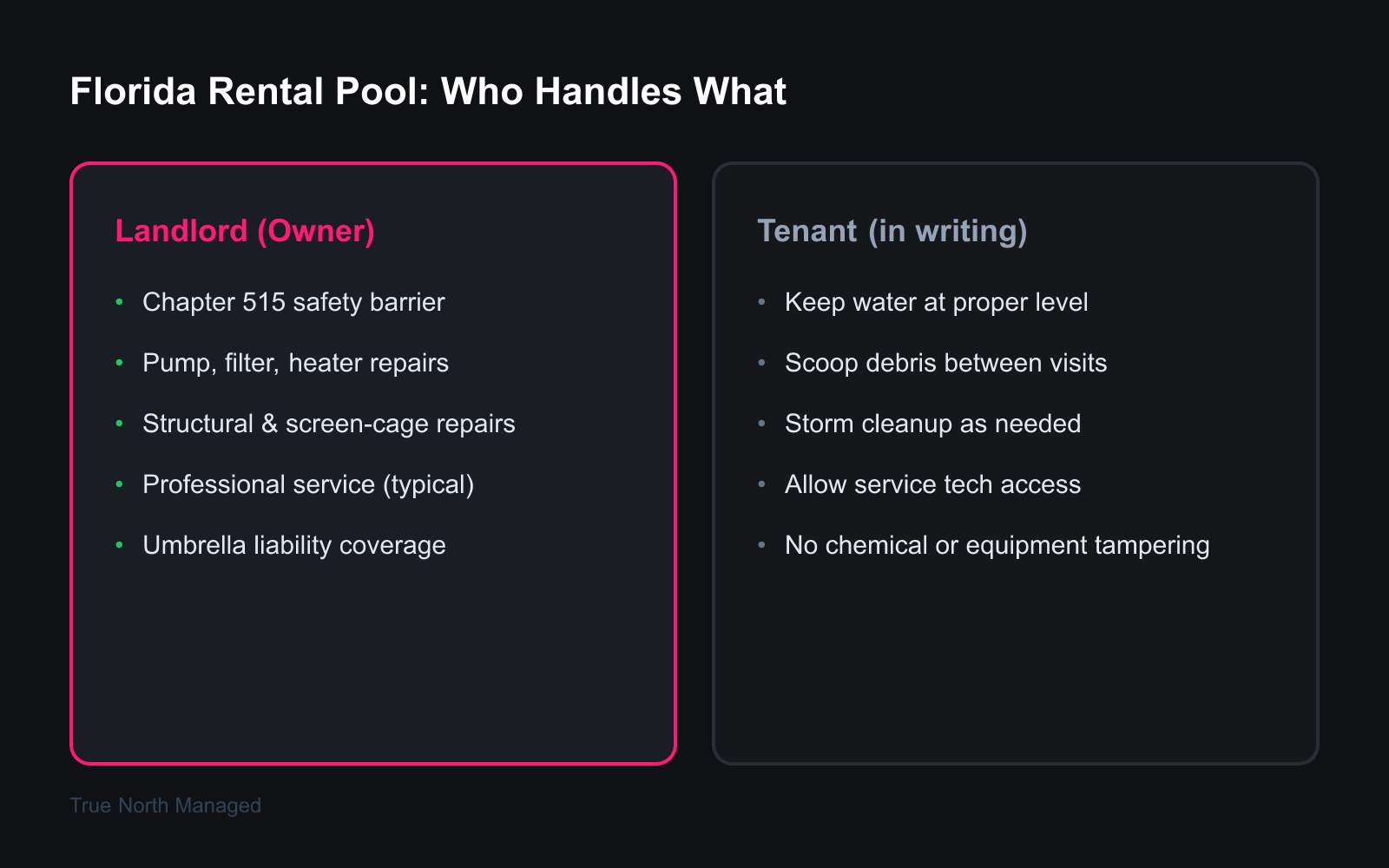
There is a door out, and 83.51 hands it to you directly. The statute says a landlord's obligations "may be altered or modified in writing with respect to a single-family home or duplex." That's the legal hook. For a single-family rental or a duplex, you can assign routine pool care to the tenant — but it takes a written clause, not a handshake and not what feels obvious. The common, sane setup most owners land on: you hire a pool service and fold the cost into rent, and the tenant keeps the water level up, scoops debris between visits, lets the tech in, and keeps their hands off the chemicals and equipment. More on that clause below.
What does Florida's pool safety law require?
Florida's Residential Swimming Pool Safety Act — Chapter 515 — requires a residential pool to have at least one approved safety feature. The options are a four-foot barrier, an approved safety cover, exit alarms on doors and windows, a self-latching door device, or a pool alarm. Skipping it on a new pool is a second-degree misdemeanor.
Florida Statute 515.27 spells out the five choices, and a pool needs only one to pass:
- A barrier enclosure at least four feet high on the outside, with no gaps a child could slip through, and a gate that opens away from the pool and is self-closing and self-latching.
- An approved safety pool cover.
- An exit alarm on every door and window with direct access to the pool — minimum 85 decibels at 10 feet.
- A self-closing, self-latching device on those doors with the release no lower than 54 inches off the floor.
- A pool alarm certified to the ASTM F2208 standard that sounds when something enters the water.
Two things to get straight, because the internet muddies both. First, that mandatory "pass final inspection or it's a misdemeanor" enforcement is keyed to new pools — a pool built or substantially modified after the act took effect has to show one of those features to get its certificate of completion. An older pool that predates the rule isn't automatically cited at permit. Don't read that as a free pass, though. Chapter 515 is the standard a Florida court measures you against in a drowning case, so an older rental pool should meet it anyway. A four-foot self-latching gate is cheap next to the alternative.
Second, your pool is a "residential" pool here — any pool deeper than 24 inches at a one- or two-family home, including spas and hot tubs. A single-family rental's private pool is not a "public pool" under the Department of Health's rules. Those cover apartment, condo, and hotel pools serving five or more units, and they come with operating permits and DOH inspections. Your rental house pool doesn't need any of that. It needs the Chapter 515 feature and ongoing upkeep, full stop.
One Florida-specific note that trips people up: a screen enclosure — the pool cage almost every Central Florida pool sits inside — is not, by itself, a code-compliant child barrier. A cage keeps out leaves and love bugs. Unless its access door is four feet of self-latching barrier under 515.29, it doesn't satisfy the safety law. Don't assume the cage counts.
How much does it cost to maintain a rental pool in Florida?
Plan on roughly $100 to $200 a month for professional pool service in Orlando or Tampa, which puts all-in annual upkeep around $3,000 to $6,000 once you add chemicals, electricity, and the occasional repair. The real budget-buster isn't weekly service — it's equipment, which dies on a schedule and isn't cheap.
Weekly full-service runs about $116 to $132 a month in Orlando and $107 to $122 in Tampa on a four-visit plan. If you let a tenant self-service instead, chemicals alone run $100 to $150 a month in Florida's heat, and they spike in summer when UV burns through chlorine and a single afternoon storm dilutes the whole pool. That's the hidden cost of tenant-managed care: it works right up until it doesn't.
Equipment is where a pool actually hurts. A pump lasts 8 to 15 years and runs $300 to $1,600 to replace; a filter goes 10 to 15 years; a heater, if the pool has one, lasts 7 to 15 and can hit $1,500 to $5,000. And the screen cage that makes Florida pool living bearable? A full rescreen is $1,200 to $4,500, though a torn-panel repair after a storm is more like $200 to $600. None of that moves to the tenant. Equipment and structure stay your bill, lease clause or not.
So is a pool home even worth buying as a rental? Usually, yes. Pool homes rent at a premium and lease faster in Florida, where a backyard pool is closer to expected than special. Just run the math honestly: you're adding $1,200 to $2,400 a year in service plus a bigger insurance line and real liability exposure. If the rent premium covers that and then some — and in most Orlando and Tampa submarkets it does — the pool earns its keep. If it doesn't, you're paying to maintain someone else's swim.
What pool liability do Florida landlords actually face?
A pool is the single biggest liability item on most rental properties. Florida treats it as an "attractive nuisance," which means you can be sued even when a child wanders onto the property uninvited. Drowning cases produce some of the largest verdicts in the state, and a neglected pool brings code fines and health hazards on top.
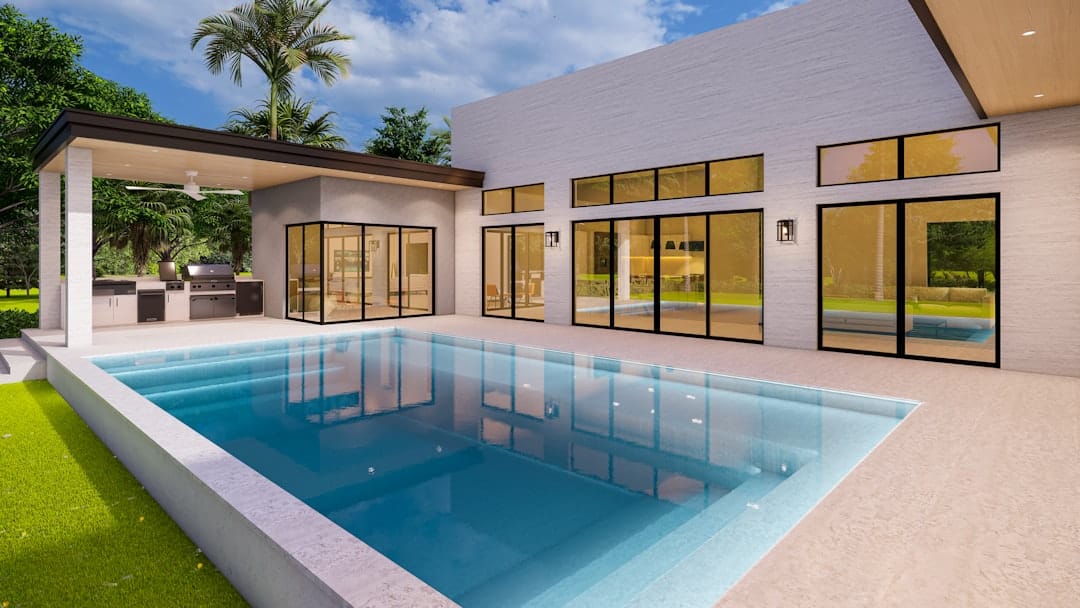
The attractive nuisance doctrine is the one to understand. Under Florida law, a pool is exactly the kind of thing that draws a child too young to grasp the danger — so the normal "trespassers assume their own risk" rule doesn't protect you. If a kid gets through a gap in the fence or an unlatched gate and drowns, and you knew or should have known the barrier was bad, you can be on the hook. That's why the four-foot fence, the self-closing gate, and the latch out of a child's reach aren't just box-checking. They're your defense. Pool injuries already overlap with the broader exposure we cover in our guide to tenant and visitor injuries at a Florida rental, and a pool is the highest-stakes version of it.
Then there's the green-pool problem. Let a pool go three weeks without service in a Florida July and it turns into a mosquito farm — West Nile and Zika carriers breed in stagnant water — plus an algae-and-bacteria health hazard. Cities and counties treat a neglected pool as a nuisance. In Hillsborough County, code enforcement can fine an owner up to $1,000 a day and lien the property — the penalty ceiling Florida's local code-enforcement law (Statute 162.09) allows for a county over 50,000 people — and Orange County handles green pools the same way under its nuisance code. And the citation goes to the owner of record — not the tenant who let it slide. Call it the Owner-of-Record Trap: the person standing at the pool isn't the name the county comes after. You can be 1,000 miles away and still be the one with the lien.
Given all that, carry real coverage. Pool homes typically warrant an umbrella policy of $1 million to $5 million on top of the standard landlord liability, and at roughly $100 to $200 a year per extra million, it's the cheapest peace of mind you'll buy. Our breakdown of landlord insurance in Florida covers how the umbrella stacks on top of your base policy.
What should a Florida pool lease clause actually say?
A working pool clause does five jobs: it names who provides and pays for service, it lists what the tenant must do, it passes tenant-caused code and HOA fines through to the tenant, it keeps safety and equipment squarely with the owner, and it reserves your right to step in and fix a neglected pool at the tenant's expense.
"Tenant maintains the pool" is not a clause. It's a wish, and a county-court judge can't enforce a wish. Here's what an enforceable one actually covers:
The five-part pool clauseService and payment. State plainly whether you provide professional service (cost folded into rent) or the tenant arranges and pays for it. Don't leave it implied.Tenant duties. Even with owner-provided service, name what the tenant handles: keep the water at the proper level, scoop debris between visits, clean up after storms, allow the technician access, and don't tamper with chemicals or equipment settings.Fine pass-through. Make the tenant responsible for any code-enforcement or HOA penalty caused by their neglect. Statute 83.51(4) backs you here — a landlord isn't liable for conditions the tenant's own negligence created.Owner carve-outs. Equipment (pump, filter, heater), structural repairs, and the Chapter 515 safety feature stay with you. You can't legally offload the safety barrier, and you wouldn't want to.Right to cure. Reserve the right to hire a service and bill the tenant if the pool isn't maintained after written notice. This is your backstop before a citation lands.
The carve-out in number four is the one inexperienced owners skip. You cannot fully hand off the safety duty, and a tenant has no business adjusting your chemistry or your pump. Give them water level and debris. Keep the equipment and the barrier yours.
Should the landlord or the tenant handle the pool?
For most Florida rentals, owner-provided service is the safer call — especially if the home is in an HOA, if you're an out-of-state or relocated owner, or if you simply want control over your liability. Tenant-assigned care can work, but only with a hands-on local tenant and a tight clause backing it up.
If you're managing from out of state, this isn't really a close call. You can't drive by and see that the pool went green or that the gate latch broke. So pay for the service, require the company to send dated photos with each visit, and have whoever does your periodic inspections confirm the Chapter 515 barrier still latches. Fold the $100-to-$200-a-month cost into the rent and treat it as insurance against a lien you'd never see coming. When you hire that crew, hire deliberately — our guide to building a reliable vendor network for a Florida rental covers how to find a pool service that actually shows up.
Tenant-assigned care has its place. A long-term tenant who loves the pool and lives locally can absolutely keep it up — as long as the clause is specific and you verify the water and the equipment at every inspection. Just go in knowing the failure mode: the tenant who stops servicing it in month seven, and you find out when the plaster's stained and the pump's seized.
Common pool mistakes Florida landlords make
Three pool mistakes cost Florida landlords real money: betting on the lease's silence, letting tenant-assigned care drift, and treating the screen cage as a legal barrier.
Assuming silence means the tenant's job. It means your job — the service, the code citation, and the green-pool cleanup. This is the single most expensive misread on the topic.
Letting a tenant-managed pool go green. A neglected pool doesn't just need a cleanup. Unbalanced water eats plaster and burns out a pump, and you've turned a $130 service call into a $1,600 equipment bill plus a possible nuisance lien. Inspect, or provide the service yourself.
Counting the pool cage as your child barrier. A screen enclosure keeps debris out. It only satisfies Chapter 515 if its door is a four-foot, self-latching barrier — and most aren't. Don't gamble a drowning case on a screen door.
The clause and the cover are the product
A weekly pool cleaning is a commodity — any crew in Orlando or Tampa will do it for about the cost of a nice dinner. What actually protects your property and your title is the paragraph in the lease that assigns the work correctly, the Chapter 515 safety feature that holds up in court, and the umbrella policy behind both. Write the clause first. Hire the pool guy second.
At True North Managed, that's part of what we handle for pool-home owners across Orlando and Tampa — drafting lease clauses that hold up, vetting the pool crews, and inspecting the property so a green pool or a failed latch never becomes your problem. If you'd like a clear read on what your pool home should rent for and how to set it up right, start with a free rental analysis. And for the full landlord playbook, the Florida Owner's Guide is the place to begin.