
Rental Property Landscaping: Who's Responsible in Florida?
Florida law never assigns yard care at a rental — so a lease that's silent on landscaping puts 100% of the cost, plus any code-violation fine, on the landlord. Here's the clause that fixes it.
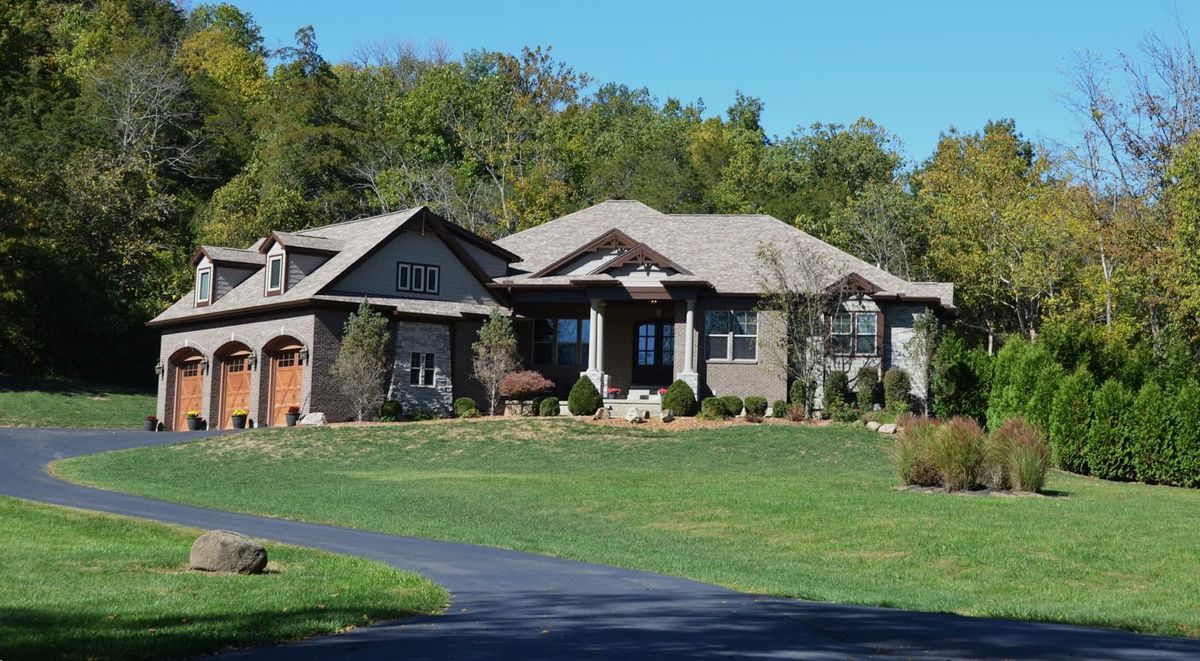
You rent out your house in Orlando, the tenant lives there, so the tenant mows the lawn. That's the assumption most owners make. Then a code-enforcement notice shows up in the mail — and it's addressed to you, not the person living there.
Here's the short version. Florida law never says who maintains the lawn at a rental property. And when nobody is named, the work doesn't get split down the middle. It lands on the landlord — the full cost, plus any city overgrowth citation and any HOA fine. The thing that actually protects you isn't a gardener. It's one paragraph in your lease.
Does Florida law say who maintains the lawn at a rental property?
No. Florida's landlord-tenant law — Chapter 83, Part II — never mentions lawn, yard, or landscaping anywhere. Florida Statute 83.51, which sets the landlord's maintenance duties, and Statute 83.52, which sets the tenant's, are both silent on yard care. The default falls to the owner.
That surprises a lot of landlords, so let's slow down on it.
Statute 83.51 tells you the landlord must comply with applicable building, housing, and health codes, and keep the structural parts of the home in good repair — roof, walls, plumbing, the things that make a house habitable. Grass isn't on that list. Statute 83.52 tells you the tenant must keep their part of the home clean and sanitary and haul out the garbage. Mowing isn't on that list either.
So there's no statutory yard duty for anyone. And here's the part owners get wrong: silence is not a 50/50 split. If the lease says nothing, the tenant has zero obligation to touch the yard — because no law and no contract created one. The landlord, meanwhile, already carries the code-compliance exposure under 83.51. Add those two facts together and a silent lease puts the entire job on you.
There is one door out, and it's worth knowing. Statute 83.51 says the landlord's obligations "may be altered or modified in writing with respect to a single-family home or duplex." That's the legal hook. For a single-family rental or a duplex, you can shift yard maintenance to the tenant — but only with a written clause. No clause, no shift. A handshake or a text message doesn't count, and neither does what feels obvious. If you want the full picture on how lease terms work in Florida, our guide to the Florida lease agreement walks through the document section by section.
What happens if the lease is silent on landscaping?
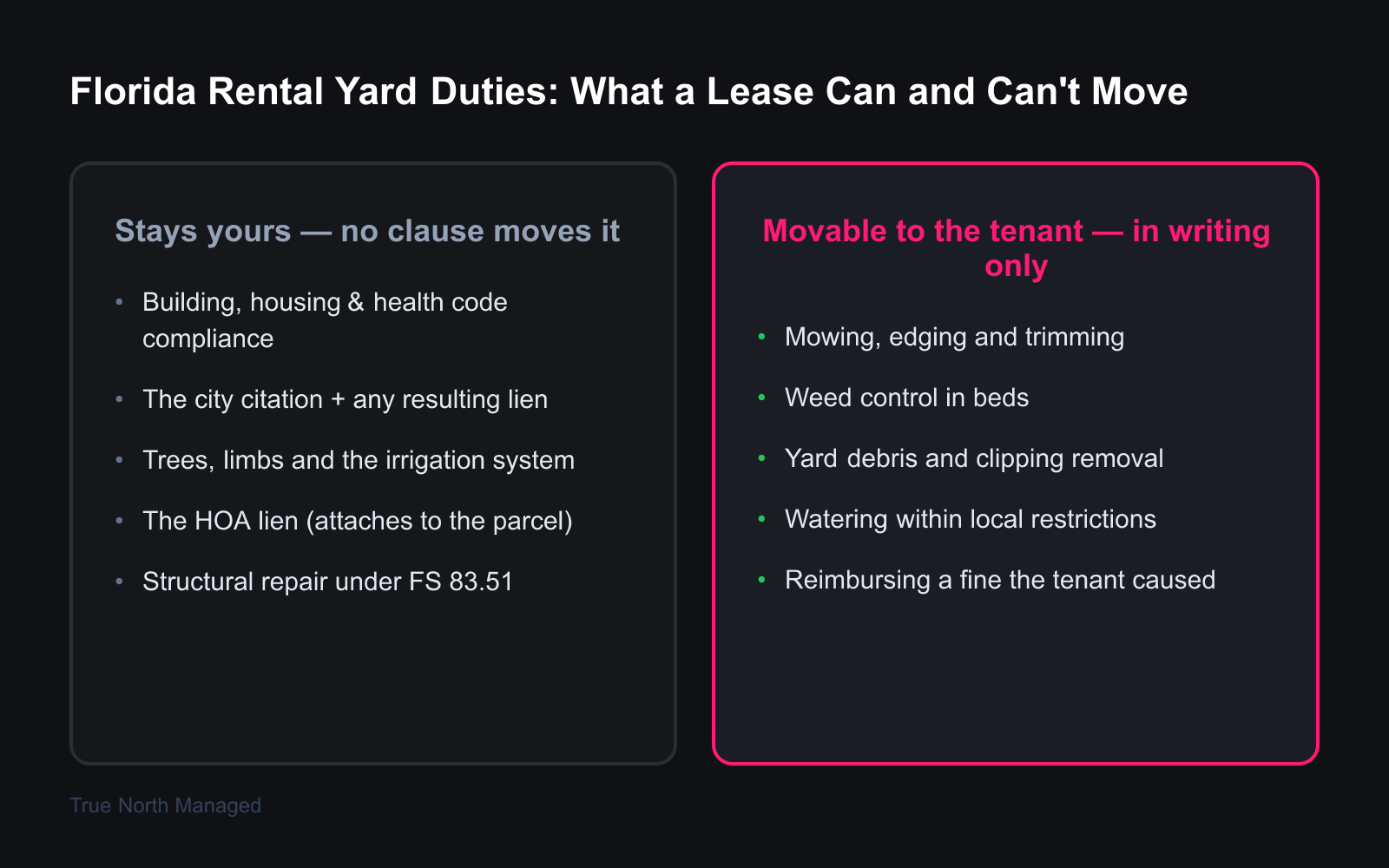
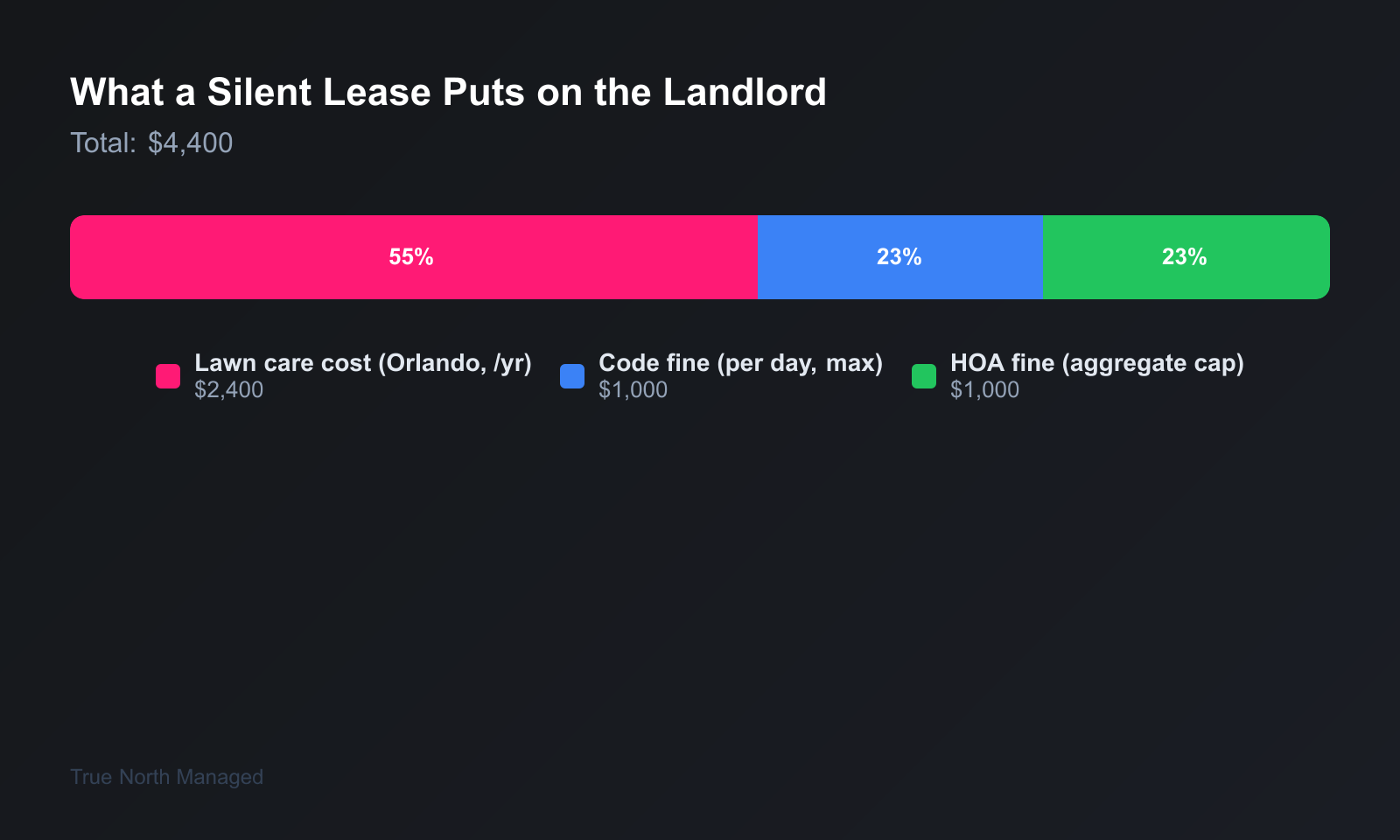
When a Florida lease says nothing about landscaping, three separate bills can land on the landlord: the cost of the yard work itself, a municipal code-violation citation, and — if the property sits in an HOA — an association fine. Silence buys none of the protection owners think it does.
Walk through it.
The cost. No clause means no tenant duty, so the routine mowing, edging, and trimming is yours to pay for. Crews quote per cut and per lot size: a quarter-acre yard runs $36 to $55 a visit in both metros, where the published cost guides have sat since early 2025. Weekly through the growing season is four visits, so $145 to $220 a month. A bigger lot, or a yard that's been let go, costs more.
Get two local quotes rather than trusting any published range, this one included. And if you priced your rent assuming the tenant handles the yard, that's a couple thousand dollars a year you didn't budget for.
The code citation. This is the one that stings. When a rental's yard crosses the line into a nuisance condition, the Notice of Violation lands on the property owner of record. Your lease isn't part of that decision. The city looks up the deed.
The HOA fine. Similar story. An association may be able to fine your tenant directly, but only your parcel can carry a lien for it. More on that below.
A silent lease feels neutral. It isn't. It quietly assigns every dollar of risk to the person whose name is on the title.
How do Orlando and Tampa code-enforcement rules treat an overgrown rental?
Orlando, Tampa, and unincorporated Hillsborough each measure this differently. All three send the citation to the owner, and an unpaid one becomes a lien on the property. Orlando runs a condition test with no height at all. The City of Tampa uses twelve inches, but only where the growth exceeds it over the majority of the parcel. Unincorporated Hillsborough uses ten inches within 200 feet of a building, structure, recreational area, or street right-of-way.
Know which rulebook you're under before you worry about the number. The county is explicit that its code enforcement reaches "the unincorporated areas of Hillsborough County" — not the City of Tampa. A rental inside the city limits answers to Tampa's code; a rental in Brandon or Riverview answers to the county's, and you report a problem there at 813-274-6600.
Orlando is the one that surprises people. There is no grass-height rule: the city adopts the International Property Maintenance Code but deletes the model code's "Weeds" section — the one carrying the familiar height test — outright. What replaces it is a nuisance standard. Section 14.22 prohibits the "excessive accumulation or untended growth of weeds, undergrowth or other dead or living plant life" where the parcel may reasonably become infested by rodents or vermin, breed mosquitoes, endanger public health or safety, or impair "the economic welfare of adjacent property." A yard doesn't get cited for a measurement. It gets cited for a condition. (If you've seen twelve inches quoted for Orlando, that's Tampa's number, borrowed.)
The duty also runs past your lot line. Section 14.23 makes it "the duty of the owner" to control growth on the property and "on the portion of the adjoining public right-of-way between the property and the street." That strip between the sidewalk and the curb is yours to mow.
So there's no height to hide behind, and no automatic violation the week you skip a mow. The yardstick is the one Florida's climate already sets: weekly May through October, biweekly the rest of the year. Turf here doesn't take a winter off. A yard left alone for three weeks in July is well into nuisance territory.
Orlando then runs two separate tracks, and the one you'll meet is the quieter of the two. Under the lot-cleaning article, the Code Enforcement division notices the record owner — pulled from the Orange County Property Appraiser's rolls, not from whoever is living there — and gives 15 days (Sec. 14.24). Miss it and the city doesn't argue with you. Per the city's own guide to its codes, "a city contractor will clean the property and invoice the property owner." Leave that invoice unpaid 30 days and it becomes a special assessment lien at 8% interest, recorded with the Clerk of the Circuit Court (Sec. 14.26). A second violation on the same property inside twelve months adds a $100 administrative penalty; a third adds $200 (Sec. 14.27).
The Code Enforcement Board is the other track, and it's the tail risk rather than the norm — a separate proceeding with its own hearing and its own compliance date. Its ceiling is $1,000 a day for a first violation and $5,000 for a repeat (Sec. 5.07), Orlando having adopted the enhanced schedule Florida permits larger cities. Those fines run only for days the violation continues past the date the Board set. The number to watch has never been the ceiling. It's the deadline — which is why a landlord who doesn't open their mail is in far more danger than one whose grass got tall.
The lien is where this stops being a maintenance annoyance. A recorded order attaches to the land and, in Orlando's words, "upon any other real or personal property owned by the violator." One neglected yard can reach everything else you own. And the homestead protection you may be assuming is precisely the protection you don't have: Florida bars foreclosing a code lien on homestead property, under the same Article X of the state constitution that shields a family home from creditors — but a rental isn't your homestead. The owner-occupant down the street is shielded. As the landlord, you're the one who isn't. Tampa runs the same way, with fines and liens recorded in Hillsborough County under the city's code rather than the county's.
A lease that says "tenant maintains the lawn" does not move any of this off you. Orlando's ordinance puts the duty on "the owner," and its lot-cleaning article never mentions a tenant at all. Tampa's and Hillsborough's name "any owner, lessee or occupant" — which adds your tenant to the list without taking you off it. Florida Statute 162.12 directs code-enforcement notices to the owner at the address on the tax rolls. And the lien attaches to the land, which only one of you holds title to.
No city is going to tell you your lease doesn't count. It never enters the analysis. This is what I call the Owner-of-Record Trap: the person standing in the yard isn't the person the government holds accountable for it. So the clause won't make this someone else's problem. What it gives you is a contractual right to recover what the city makes yours.
Managing from out of state turns that into a practical problem: you can't see an overgrown yard from Newark. Don't rely on a tenant's assurance or a line item on an invoice. Require the lawn service to send a dated photo after each visit and to report to you rather than to the tenant — if the vendor's only relationship is with the occupant, you'll find out about a lapse when the notice arrives.
Two more things. Put your own mailing address on record with the city, so a Notice of Violation reaches you and not the mailbox at the house. And check the city's complaint status yourself a couple of times over the summer. The cure period only protects an owner who knows the clock started.
Who pays an HOA fine when a rental's yard breaks the rules?
Usually the owner — though the statute lets an association fine your tenant directly too. Under Florida Statute 720.305, an association can levy a fine "against any member or any member's tenant, guest, or invitee." In practice it usually comes to you, because you're the one it has a covenant relationship with — and the one whose parcel it can eventually encumber.
The statute puts guardrails on the association, though fewer than landlords assume. A fine generally can't exceed $100 per violation, and for a continuing violation the aggregate is capped at $1,000 — but both of those caps give way if the community's governing documents say otherwise. Read your declaration before you assume $1,000 is your ceiling. Before any fine sticks, the board has to give at least 14 days' written notice and a hearing before a committee of at least three members who aren't officers, directors, employees, or their relatives. If that committee votes the fine down by majority, it can't be imposed.
Below $1,000 a fine can't become a lien at all, which sounds like relief and mostly isn't — it just means the association has to chase you for payment rather than encumber your title, until the total climbs.
The attorney's fees are the real exposure here, not the $100. Section 720.305 gives the prevailing party in any action to recover a fine its reasonable fees and costs — so a violation you decide to fight, or just don't pay after the noticed deadline, can turn into a legal bill that dwarfs the mowing it was about.
Notice, too, who gets the 14-day notice and stands at that hearing: you. So write the clause to do two jobs: obligate the tenant to follow the HOA's rules, and pass any fine caused by the tenant's violation through to the tenant. That doesn't change who the association comes to first — it's still you — but it gives you a contractual right to recover it. A lot of HOAs also require the landlord to handle lawn care directly, and some won't let you delegate it to a tenant at all, so the community's covenants need a read before you assign anything. If you want to understand how association rules shape a Florida rental more broadly, our breakdown of HOA rental restrictions in Florida covers the rest of the picture.
What should a Florida landscaping lease clause actually say?
A working landscaping clause names the specific tasks and how often they're done, assigns the cost in plain dollars, passes HOA and code fines through to the tenant when the tenant caused them, keeps tree and irrigation work with the owner, and reserves your right to step in and fix a neglected yard at the tenant's expense.
"Tenant keeps the yard nice" is not a clause. It's a wish. In a Florida county-court dispute, vague language loses — a judge can't enforce "nice." Here's what a real clause covers:
- The specific tasks and cadence. Spell it out: mow weekly May through October, biweekly November through April, edge and trim with each mow, control weeds in beds, keep shrubs below the windows. A tenant can only be held to what's written.
- Who pays. State plainly whether the tenant arranges and pays for the service, or whether you provide it and the cost is baked into rent. Don't leave it implied.
- The fine pass-through. Add language making the tenant responsible for any HOA fine or code-enforcement penalty that results from their failure to maintain the yard. Statute 83.51(4) backs you up here — a landlord isn't liable to the tenant for conditions caused by the tenant's own negligent act or omission, so the contract should put that cost where it belongs. It's the same statute-driven logic behind a written air conditioning repair obligation: in Florida, what's in writing is what holds.
- The carve-outs. Trees, large palms, and the irrigation system stay owner responsibilities — keep them yours, without exception. There's no statutory tenant duty to trim a tree, and liability for a hazardous limb doesn't reliably transfer with a lease clause; it tends to follow who knew about the hazard and who controlled the property, which on a rental is usually you. Don't hand a tenant a job that keeps your liability anyway.
- The right to cure. Reserve the right to hire a service and bill the tenant if the yard isn't maintained after written notice. This is your backstop — it lets you protect the property before a citation lands instead of after.
Should the landlord or the tenant handle lawn care?
It depends on the property — but the who matters less than the clause. Owner-provided lawn care is the safer call for HOA homes and remote owners; tenant-assigned care can work for a non-HOA home with a reliable, hands-on tenant. Either way, the lease is what protects you.
If your rental is in an HOA, lean toward providing the service yourself. You control the schedule, you control the quality, and you're not gambling a $1,000 aggregate fine exposure on whether a tenant remembers to mow. The same goes if you're an out-of-state or relocated owner who can't drive by and eyeball the yard — pay for the service, fold $145 to $220 a month into the rent, and treat it as cheap insurance against a lien.
If the home isn't in an association and you've got a long-term tenant who genuinely wants to handle their own yard, assigning it can work fine — as long as the clause is tight and you verify the yard's condition at your periodic inspections. When you do provide the service, hire it deliberately; our guide to building a vendor network for a Florida rental covers how to find a lawn crew that shows up. A dependable yard service also keeps small problems off your maintenance plate — the same way a clear after-hours maintenance plan keeps a 2 a.m. call from becoming a crisis.
One thing to settle in writing while you're at it: mulch and plant beds fade and thin over a year of Florida sun. That's normal wear, not tenant damage — don't expect a tenant to re-mulch unless the lease specifically says so.
Common landscaping mistakes Florida landlords make
Three landscaping mistakes cost Florida landlords real money: relying on the lease's silence, writing a clause too vague to enforce, and handing tree work to the tenant.
Assuming silence means the tenant's job. It doesn't. Silence means your job, plus your citation and your HOA fine. This is the single most expensive misread in this whole topic.
Vague clause language. "Maintain the landscaping" and "keep the yard presentable" can't be enforced because nobody can prove what they mean. Name the tasks, name the cadence, name who pays.
Putting tree and limb work on the tenant. A tenant has no statutory duty to trim trees, and a signed clause is not a shield you should count on when a limb comes down. Keep tree work yours. Hand tenants the mowing, not the chainsaw.
The clause is the product
A $45 mow is a commodity — any crew in Orlando or Tampa can do it. The thing that actually protects your property and your title is the paragraph in the lease that assigns the work, the cost, and the fine exposure correctly. Write that first. Hire the gardener second.
At True North Managed, that's part of what we handle for owners across Orlando and Tampa — drafting lease clauses that hold up, vetting the lawn crews, and inspecting the yard so a citation never reaches your mailbox. If you'd like a clear read on what your property should rent for and how to set it up right, start with a free rental analysis. And for the full landlord playbook, the Florida Owner's Guide is the place to begin.