
Florida Apartments Are Giving Away Free Months — Single-Family Rentals Aren't
Apartments are discounting hard and single-family rentals are holding their ground. Here's what the 2026 rent gap means for Florida investors — and the catch most miss.

Two Florida rentals, same week, opposite stories. A new apartment complex down the road is dangling two months free and waiving the application fee just to fill units. A single-family house a few streets over leases at full asking price in under two weeks. That split isn't a fluke — it's the defining feature of Florida's 2026 rental market, and it changes where a smart dollar goes next.
The short version: apartments are oversupplied and discounting, while single-family rentals are holding up. If you're deciding what to buy or how to position what you own, the gap matters. Here's what's driving it, what it means for your next move, and the catch that keeps single-family from being a free lunch.
What's happening to apartment rents in Florida?
Florida apartments are in a renter's market. A wave of new construction delivered more units than the market could absorb, so operators are holding occupancy with concessions instead of rent hikes — and Rental Beast's Q1 2026 national report found more than four in ten rental listings carried a concession like a free month. Apartment asking rents have slipped, with smaller units falling hardest.
The numbers tell the story. Nationally in the first quarter of 2026, one-bedroom rents fell about 7.5% year over year and two-bedrooms about 4.4%, while concessions hit a record. Florida felt it sharply: CoStar put Tampa Bay's apartment vacancy at a record 10.7% entering 2026, the highest since it began tracking the market in 2000.
This is a supply story, not a demand collapse. Builders flooded the apartment pipeline in 2022–2023, and those towers are leasing up now, all at once, in the same metros.
Why are single-family rentals holding up?
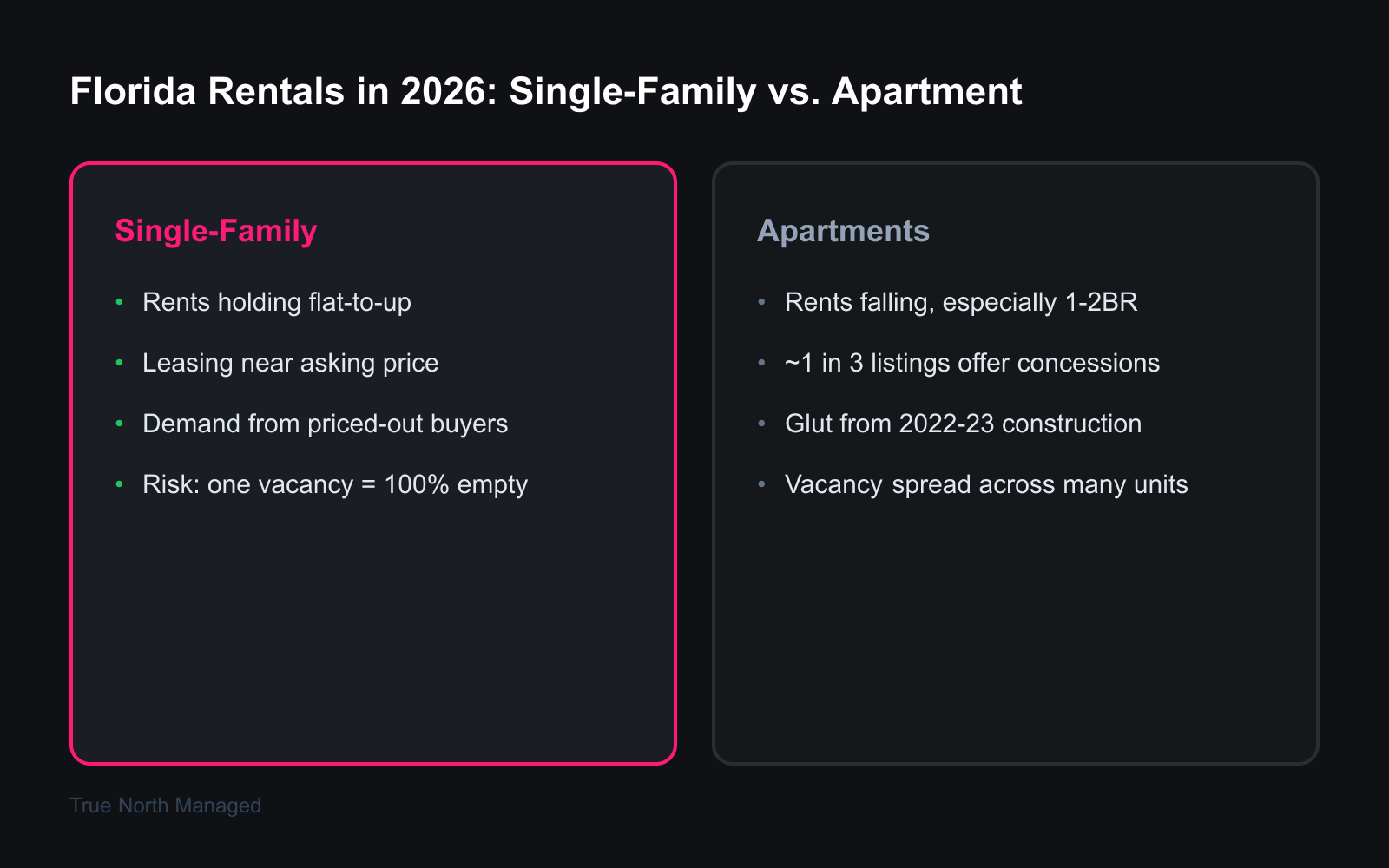
Single-family rentals are the resilient side of the market because demand for them never softened the way apartment supply surged. While apartment rents fell, single-family rents stayed roughly flat to modestly up.
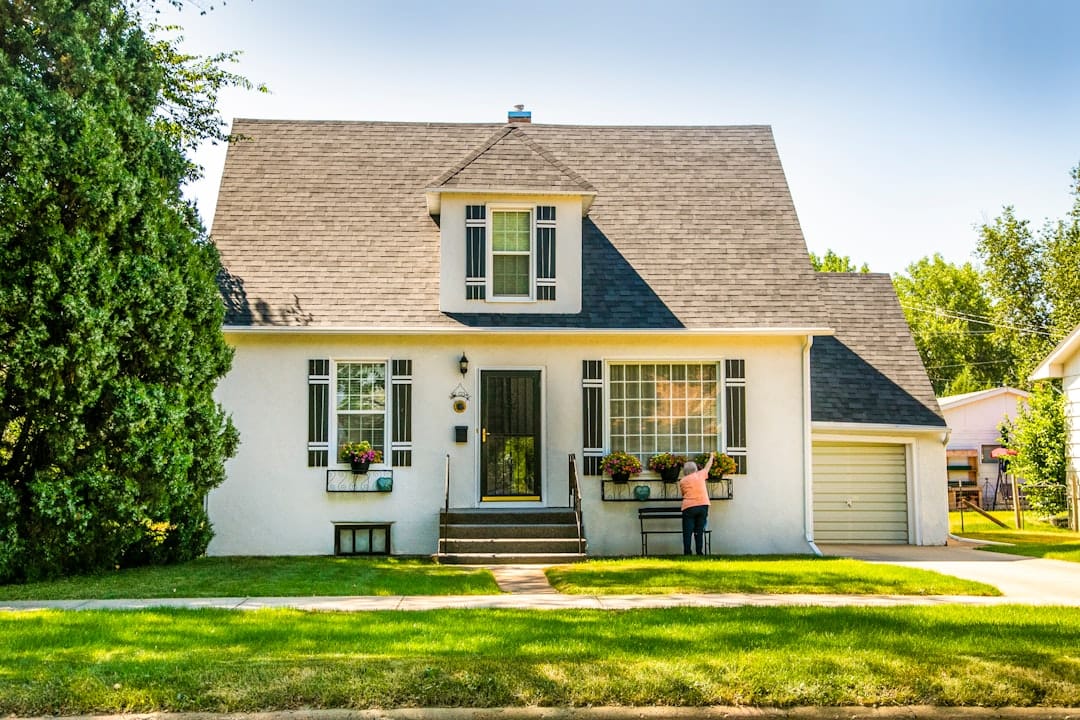
A few things hold the floor under single-family demand. Buying still costs more per month than renting in most of Florida, so households that want a yard, a garage, and a good school zone rent a house instead of buying one. That renter doesn't want a fifth-floor unit with a shared elevator, so the apartment glut two miles away doesn't directly compete for them. And single-family supply, while growing through build-to-rent, hasn't ballooned the way apartments did — build-to-rent demand has stayed stable precisely because affordability keeps pushing households toward houses they can't yet buy.
For a landlord, that's the practical edge right now: a well-located single-family rental in a strong school zone is leasing closer to ask, with less pressure to give away a free month, than a comparable apartment.
Where in Florida is the gap widest — Tampa or Orlando?
Tampa has the sharper split right now, because its apartment glut is more acute. Yardi Matrix put the metro's average apartment occupancy at 93.3% in April 2026, down 140 basis points in a year — yet single-family rents in Hillsborough and Pinellas have held up, with houses still leasing near ask. The distance between the discounting apartment tower and the full-price rental house is simply wider in Tampa.
Orlando shows the same pattern, a step milder. Yardi Matrix put occupancy in Orlando's stabilized apartments at 93.7% in April 2026, down 70 basis points in a year, so the concession pressure is real but a notch lighter than Tampa's. Single-family rentals in strong Orlando school zones — think the suburbs families target for the year-round commute — are the resilient end of the market here, too. If you're shopping submarkets, the takeaway is the same in both metros: the apartment corridors are where the discounting lives, and the established single-family pockets are where pricing power still sits.
The practical read: in Tampa, lean harder into single-family or be very disciplined underwriting apartments; in Orlando, the same tilt applies with a touch more room. Either way, price to the segment, not the metro average.
What does the gap mean for your next dollar?
It tilts the near-term math toward single-family — but the size of the tilt depends on the specific deal, not the headline. The clean way to think about it is to compare effective rent, not asking rent, and to weight occupancy.
Formula: Effective annual rent = (monthly asking rent × 12) − concessions − expected vacancy loss.
Example: An apartment unit asks $1,800 but gives one month free — effective rent is closer to $1,650, and in a 10%-vacancy submarket you underwrite more downtime. A single-family house asks $2,300, leases with no concession, and holds tenants longer. Even before appreciation, the house's effective, occupied rent is doing more work per dollar invested today.
What's good or bad? In 2026's Florida market, single-family is the segment with pricing power and the apartment segment is the one buying occupancy. If you're choosing between a turnkey single-family rental in a good school zone and a small multifamily building in an oversupplied apartment corridor, the single-family side has the wind at its back for the next year or two. If you already own apartments, the move is to compete on readiness and right-priced rent rather than chase a number the market won't pay.
Is single-family always the better bet?
No — and assuming so is how investors get burned. Single-family wins this cycle on rent resilience, but it carries risks an apartment building spreads out, and the apartment discount won't last forever. Underwrite the trade-offs, not the trend.
Three things to weigh before you treat single-family as a sure thing:
- Vacancy is all-or-nothing. A 20-unit building at 90% occupancy still collects 18 rents. A single-family house at "90% occupancy" is just a house that sat empty for five weeks — your income went to zero, not down 10%. One bad tenant or a slow re-lease hits a single property far harder.
- Costs concentrate, too. A new roof, an AC failure, or a single-property insurance premium lands on one rent stream instead of being spread across many doors. Per-door operating costs often run higher for scattered single-family than for a building.
- The gap is cyclical. Today's concession war eases as supply normalizes over the next year or two. You're buying into a moment, not a permanent law.
The point isn't that single-family always wins. It's that right now, in Florida, the rent gap favors it — and a landlord who reads the cycle correctly buys accordingly while it lasts. If you want to pressure-test a specific market against your goals, our comparison of Florida vs. other states for rental investment and the local average rents by property type in Orlando are good places to ground the numbers.
Common mistakes landlords make in a split market
Pricing a single-family rental like the apartment down the street. Your house isn't competing with the tower's free-month special. Price it to its own comps and tenant pool, not to the concession war.
Chasing the apartment glut for the "deal." A discounted small-multifamily building in an oversupplied corridor can look cheap and still underperform if it has to keep buying occupancy. Cheap and cash-flowing aren't the same thing.
Treating the 2026 gap as permanent. Underwrite for the apartment market tightening back up. If a deal only works while concessions are at a record, it doesn't really work.
Ignoring the tenant pool behind the numbers. The family renting a house in a top school zone and the young professional shopping concession deals downtown are different renters with different lease lengths and turnover. Buy the tenant pool you can actually serve well, not just the rent figure on the listing.
Put the gap to work on your own numbers
Whether you own a single house or a small portfolio, the 2026 split is an opportunity to reposition — lean into the segment with pricing power and price the rest to reality. The owners who win this cycle are the ones who underwrite effective rent and occupancy honestly, not the ones chasing last year's asking prices.
That's the read we give every owner we work with. If you'd like to know what your Orlando or Tampa property should actually rent for in today's market — apartment or single-family — start with a free rental analysis. It's the fastest way to see where your numbers really stand before you make your next move. The market is handing single-family owners an edge right now — the real question is whether your numbers are built to use it.