
Pasco County Landlord Rules: What's Actually Different (2026)
Most Pasco County landlord rules are just Florida state law. The few things that are genuinely county-specific — the rental registration program and where you file an eviction — are the ones that catch owners off guard.

You bought a rental in Wesley Chapel, or you inherited a house in Land O' Lakes, and now you're trying to figure out what Pasco County requires that the rest of Florida doesn't. Here's the honest answer most landlord blogs won't give you: almost nothing. The tenancy itself — deposits, notices, evictions, screening — runs on Florida state law, the same in Pasco as in Miami. Since July 2023, a state statute called Florida Statute 83.425 has actually made it illegal for Pasco County to write its own landlord-tenant rules. So the real Pasco county landlord rules come down to a short list: a county rental registration program with real fines, the specific court where you file an eviction, and a handful of code and noise ordinances that apply to the property, not the lease. This guide separates what's genuinely local from what just feels local.
What's actually Pasco-specific (everything else is state law)Register the property. Unincorporated Pasco runs a rental and vacant-property registration program. Annual. Skip it and you risk $500/day after a code warning.File evictions in Pasco County Court. Two judicial centers: Dade City (east) and New Port Richey (west). Standard county-court eviction, state notice rules.Follow county code, noise, and short-term-rental ordinances. These regulate the property and conduct, not the lease.Don't copy a Hillsborough checklist. Since 2023, state preemption bars enforcing the notice, disclosure and fee duties in Hillsborough's Tenant Bill of Rights; whether its source-of-income rule survives is unsettled. Pasco never had its own version. Governing framework: Florida Statutes Chapter 83, Part II; FS 83.425 (state preemption, effective July 1, 2023).
What are the Pasco County landlord rules versus Florida state law?
The Pasco County landlord rules that actually differ from the rest of Florida are narrow: a property registration requirement, the local eviction court, and county code ordinances. Everything about the tenancy relationship — security deposits, lease terms, notices, screening, eviction grounds — is governed by Florida state law and is identical across all 67 counties. Pasco cannot legally change those rules.
That last point trips people up, so it's worth stating plainly. In 2023 the Legislature passed HB 1417, which created Florida Statute 83.425. The statute says: "The regulation of residential tenancies, the landlord-tenant relationship, and all other matters covered under this part are preempted to the state." Here, "this part" means Chapter 83, Part II. Per the Florida Senate's 2023 bill summary, it rendered existing local ordinances on screening, notice requirements, disclosures, and tenant rights "null and void" statewide. Effective date: July 1, 2023.
So if you're a Pasco landlord, your deposit handling, your eviction notices, and your lease all follow the same Florida statutes a Tampa or Orlando landlord follows. The county has no authority to add a local twist. What Pasco can still do is regulate the physical property and how it's used — registration, code enforcement, noise, occupancy density, short-term rentals. Those aren't "landlord-tenant" rules in the legal sense, so 83.425's preemption doesn't reach them. They're where your county-specific obligations live.
Does Pasco County require landlords to register a rental property?
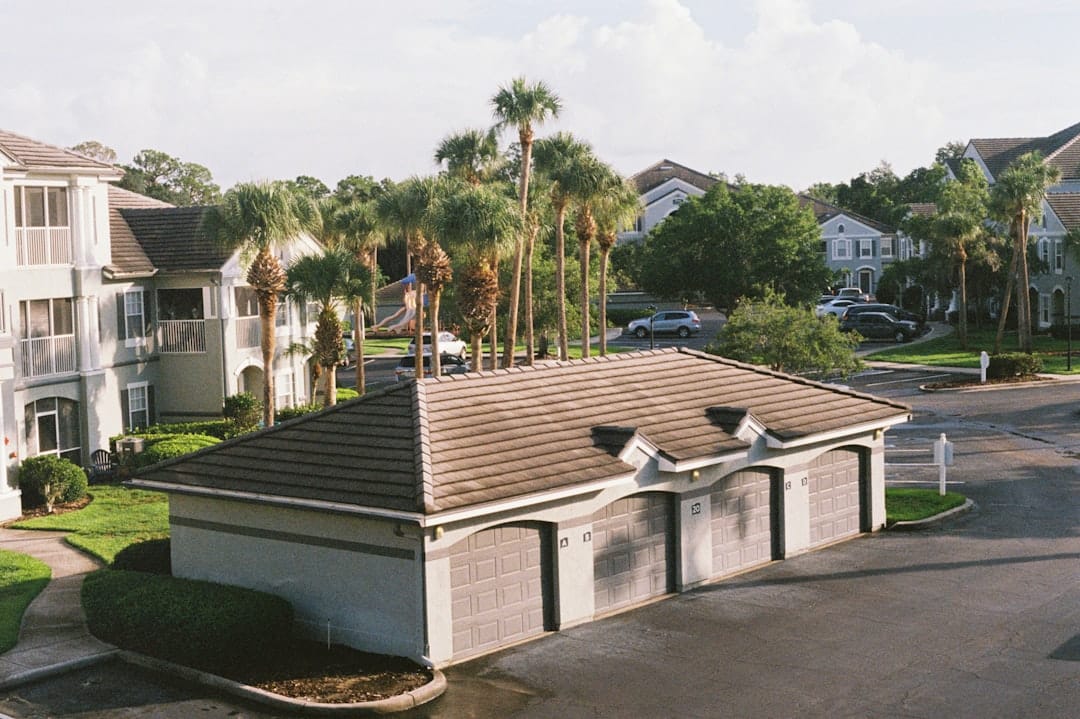
Yes. Unincorporated Pasco County runs a registration program for residential rental properties of four units or fewer, plus vacant properties. Owners must register through the county, keep the contact information current, and renew annually. Failure to register can trigger code compliance action and, after an unheeded warning, fines of up to $500 per day. This is the single most overlooked Pasco county rental rule.
Here's how the program works, based on the county's official registration program page:
- Who must register: Owners of residential rentals with four units or fewer, and owners of vacant property (with or without a structure), located in unincorporated Pasco County.
- What it's for: Giving the county and the Sheriff's Office a reliable owner or responsible-party contact when there's a code issue, a vacant-property hazard, or an emergency at the property.
- How often: Annually. You renew and update tenant or vacancy information each year.
- The penalty: If you fail to register and get a code compliance warning, you have 30 days to comply. After that, the county can pursue fines of up to $500 per day. That number gets expensive faster than any tenant dispute.
- How to do it: The county uses an online tool. Questions go to rentalregistry@mypasco.net or 727-847-2411. The underlying ordinance lives in Chapter 18 of the Pasco County Code.
This is not a license, and it does not give the county power over your lease. It's a contact registry tied to code enforcement. That distinction is exactly why it's legal under state preemption — it regulates the property, not the tenancy. If you own in Wesley Chapel, Land O' Lakes, Lutz, or another unincorporated area, treat registration as a standing annual chore, like renewing your insurance. If you're new to the area, our Wesley Chapel investment guide covers the rest of the local picture.
What if my Pasco rental is inside a city?
The registration program applies to unincorporated Pasco. If your property sits inside an incorporated city — New Port Richey, Port Richey, Dade City, Zephyrhills, San Antonio, or St. Leo — the county program may not apply, but the city may run its own. Don't assume one way or the other. Check with the city directly before you decide you're exempt. A quick call to the city's code or building department settles it, and it's cheaper than a $500-a-day surprise.
Where do you file an eviction in Pasco County?
You file a residential eviction in Pasco County Court through the Pasco County Clerk & Comptroller, at one of two judicial centers: the Robert D. Sumner Judicial Center in Dade City (east Pasco) or the West Pasco Judicial Center in New Port Richey (west Pasco). The notice rules and grounds are all Florida state law — only the courthouse is local. File at the center serving the property's location.

The process itself is the standard Florida eviction, which we cover in depth in our Tampa eviction walkthrough. The Pasco-specific pieces, per the Pasco Clerk's eviction guidance, are:
- Serve the correct state-law notice first. Non-payment of rent is a 3-day notice (excluding weekends and holidays). With no written rental agreement, it's a 7-day notice for weekly tenancies, and for monthly ones Florida law requires "not less than 30 days' notice prior to the end of any monthly period." That's 30 days, not the 15 that older guides still quote. These come straight from Florida Statute 83.56 and 83.57 — they are not Pasco rules.
- File the complaint with a copy of the notice attached at the correct judicial center. Pasco residential evictions are county-court matters; expect the standard county-court eviction filing fee (confirm the current amount with the Clerk, since the Clerk distinguishes county-court from circuit-court evictions).
- Let the process run. The Clerk issues the summons (a small per-summons fee applies), the tenant gets the statutory response window, and an uncontested case moves to default and final judgment.
- The Sheriff executes the writ of possession. After judgment, you request the writ; the Pasco County Sheriff handles the lockout. A writ fee is payable to the Sheriff.
One Pasco wrinkle worth knowing: the county is large and split east-to-west. Dade City and New Port Richey are roughly 40 minutes apart. If you self-manage from out of state, build that geography into your plan — you or your agent may need to be at a specific courthouse, not just "Pasco County." Out-of-state owners especially should map their property to the right judicial center before a dispute ever starts.
Can a Pasco County landlord evict a tenant without going to court?
No. Like everywhere in Florida, a Pasco County landlord cannot change the locks, shut off utilities, or remove a tenant's belongings to force them out. Only the court and the Sheriff can remove a tenant. So-called "self-help" eviction is illegal statewide, and "[a] landlord who violates any provision of this section shall be liable to the tenant for actual and consequential damages or 3 months' rent, whichever is greater, and costs, including attorney's fees" under Florida Statute 83.67.
Three months' rent is the floor, not the cap. This is one of the most expensive mistakes a frustrated owner can make, and it's the same in Pasco as in any Florida county. We break down exactly what counts as illegal self-help — and the cheaper alternatives — in our Florida self-help eviction guide. The short version: no matter how clearly your tenant is in the wrong, the only legal path runs through Pasco County Court and the writ of possession. Lock changes and utility shutoffs do not.
What Pasco County ordinances apply to a rental property?
Beyond registration, the Pasco County ordinances that affect your rental are property-and-conduct rules: noise, nuisance, occupancy density, code maintenance standards, and short-term-rental regulation. None of these touch the lease itself, which keeps them clear of 83.425's preemption. As the landlord, you're responsible for the property's compliance even when a tenant causes the violation.
Noise and nuisance. Pasco's noise rules sit in Chapter 66 of the county code and apply countywide in unincorporated areas. Repeated noise or nuisance complaints can land on you as the owner, especially if the tenant ignores them. A noise clause in your lease — and acting on complaints quickly — is the practical defense.
Code and maintenance. Pasco code enforcement handles overgrown lots, junk and debris, unpermitted structures, and unsafe conditions. The registration program exists partly to make sure the county can reach you when these come up. Address violations fast; daily fines accrue while you wait.
Occupancy and short-term rentals. Florida law (Statute 509.032) says: "A local law, ordinance, or regulation may not prohibit vacation rentals or regulate the duration or frequency of rental of vacation rentals. This paragraph does not apply to any local law, ordinance, or regulation adopted on or before June 1, 2011." So a county can't ban short-term rentals or cap how long or how often they're rented unless its rule predates June 2011; registration, noise, parking, trash, and occupancy rules fall outside that paragraph. Pasco regulates short-term rentals through these levers. If you're renting on Airbnb or VRBO rather than on a standard 12-month lease, do not assume the rules above are the whole story — verify the current short-term-rental ordinance with the county before you list, because the occupancy and operating requirements for short-term rentals are stricter and change more often than long-term rules.
Is Pasco County different from Hillsborough for landlords?
Yes, but not in the way most people expect. The biggest difference is what Pasco doesn't have. Hillsborough County passed a Tenant Bill of Rights with local notice and screening provisions; HB 1417 made its notice, disclosure and fee duties unenforceable in 2023, but whether its source-of-income rule survives is unsettled, and federal fair-housing law applies either way. Pasco never adopted a comparable tenant ordinance. So a Pasco landlord follows leaner local rules than a Hillsborough landlord was used to before preemption.
This matters because the two counties sit next to each other and owners often hold property in both. If you copy a pre-2023 Hillsborough compliance checklist for a Pasco rental, you'll either over-comply with rules that no longer bind you or cite a local ordinance that's been preempted. We track the full history of that change in our Hillsborough Tenant Bill of Rights guide. The takeaway for Pasco: ignore the local-tenant-ordinance noise, follow state law for the tenancy, and focus your county compliance on registration, the right eviction court, and code.
For the deeper statewide picture — deposits, leases, fair housing, and the rest of the Florida framework that applies in Pasco — our Florida Owner's Guide is the place to start.
The Pasco landlord compliance checklist
If you own a long-term rental in unincorporated Pasco County, here's the short list that's actually local:
- Register the property through the county program and renew annually. Keep contact info current.
- Know your judicial center — Dade City (east) or New Port Richey (west) — before you ever need it.
- Use state-law notices for any eviction (3-day non-payment, 7/30-day no-agreement). Pasco doesn't add its own.
- Mind county code and noise rules, and act on complaints fast to avoid daily fines.
- Verify city rules separately if your property is inside an incorporated city.
- Treat short-term rentals as a separate category with stricter, faster-changing county rules.
Everything else — deposits, lease terms, screening, fair housing — is Florida state law, and it's the same in Pasco as anywhere else in the state. That's genuinely good news: fewer local landmines than the county next door.
Managing a Pasco County rental from out of town, or just tired of tracking registration deadlines and court venues? Get a free rental analysis and we'll tell you what your Wesley Chapel, Land O' Lakes, or Dade City property should rent for — and handle the county compliance so you don't have to.
This guide is general information for Florida landlords, not legal advice. County programs and ordinances change; verify current requirements with Pasco County and the Pasco Clerk before acting, and consult a Florida attorney for your specific situation.