
Horizon West in 2026: Is Orlando's Fastest-Growing Suburb Still a Strong Rental Bet?
Horizon West pairs $3,400 house rents with a wave of new construction. Here's the 2026 read for investors — strong demand, an apartment supply wave, and the yield reality.
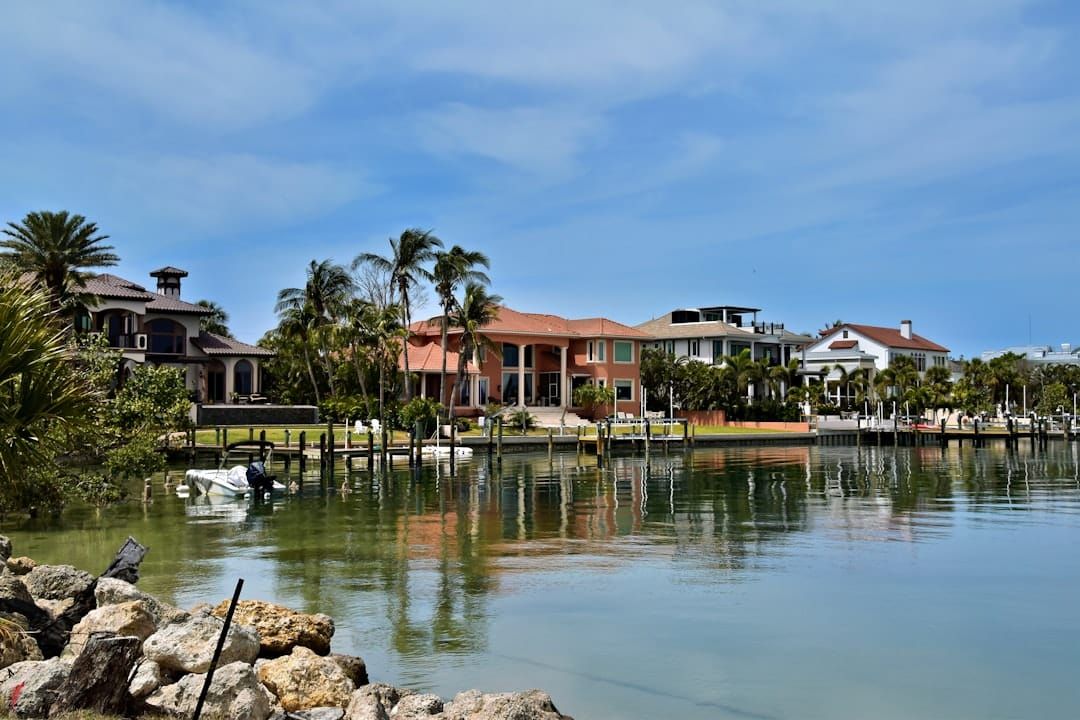
A single-family house in Horizon West rents for around $3,400 a month — among the highest in metro Orlando. At the same time, cranes are everywhere: a 323-unit luxury apartment complex is rising near Avalon Road, another developer just broke ground on more, and ten builders are selling across a dozen communities. So the question every investor asks about Orlando's fastest-growing suburb in 2026 is fair: with rents that high and that much new supply coming, is Horizon West still a smart place to own a rental?
The short answer: yes for the right kind of investor, with eyes open. Horizon West has genuine, durable rental demand — but it's a premium, appreciation-driven submarket, not a cash-flow bargain, and the apartment side faces a supply wave. Here's a clear read on the Horizon West rental market in 2026 — the full picture and who it actually fits.
What's driving Horizon West's growth in 2026?
Horizon West is a master-planned corridor in southwest Orange County built for families, and the growth engine is jobs, schools, and Disney proximity. Ten national builders are actively selling across eleven-plus communities — the Ovation master plan alone has Toll Brothers, M/I Homes, Ashton Woods, and Taylor Morrison — and the area keeps adding the amenities — a town center, a library, a regional park — that turn new subdivisions into a place people want to stay. The rooftops keep coming, and so do the renters who fill them while they wait to buy.
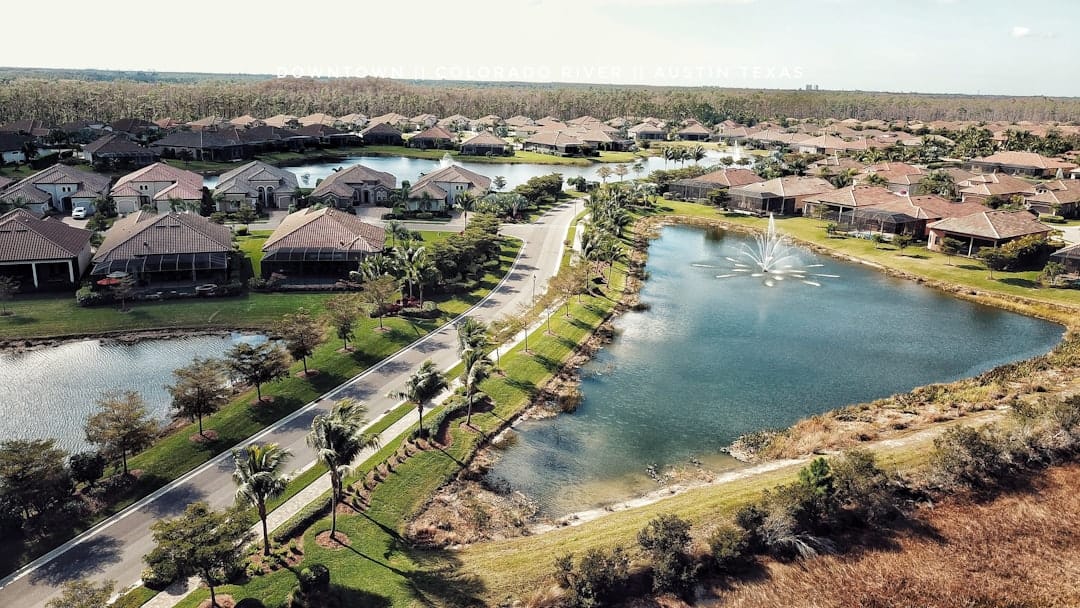
What makes that demand durable is what's underneath it: jobs and schools, not hype. The corridor sits next to one of the region's largest employment clusters — the Disney and Lake Buena Vista tourism-and-hospitality economy, plus the medical and professional jobs spreading west — so there's a steady inflow of households that need housing near work. Layer on top-rated school zones and a master plan that keeps adding parks, retail, and services, and you get the rare combination of new supply and demand that keeps pace with it. That's the backdrop a rental investor is really buying into here.
The demand is structural, not speculative. Families move here for the Orange County Public Schools attendance zones and the short commute to the Disney/Lake Buena Vista employment cluster, then they rent before they buy because entry-level prices in the corridor are steep. That's a renter pool with stable incomes and a reason to renew — the kind of tenant base that holds up even when the broader market softens. Our Horizon West neighborhood guide covers the area's bones; this piece is about what the 2026 market is doing right now.
How much do rentals actually bring in Horizon West?
Horizon West is a high-rent submarket across every property type. A single-family house rents for roughly $3,399 a month, townhomes run about $2,800, condos around $3,100, and newer apartments span roughly $1,679 to $2,964 depending on size. Those are premium numbers for Orlando — a Horizon West house commands hundreds more per month than a comparable rental in many older parts of the metro.
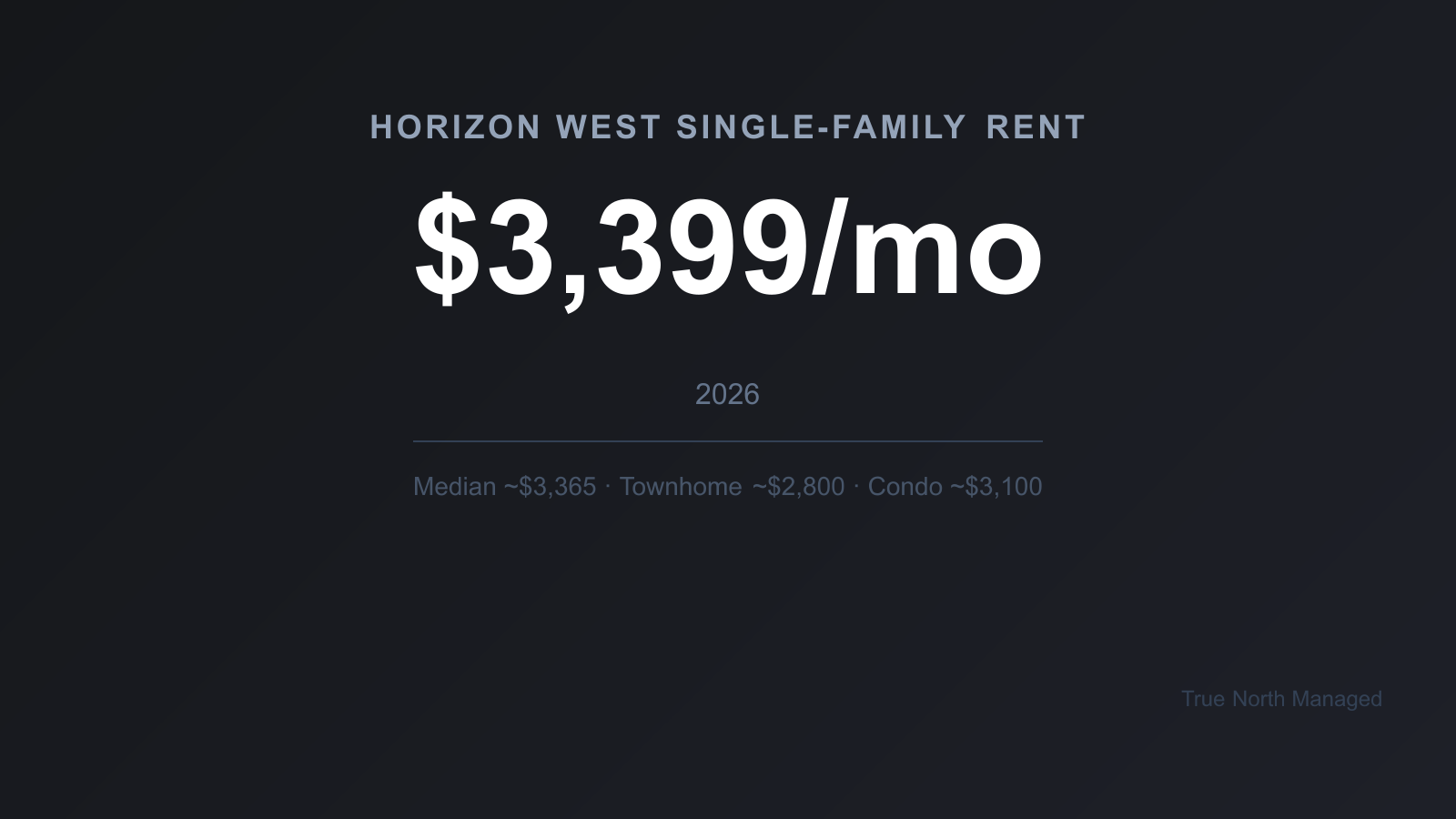
A few things stand out for an investor. Single-family and townhome rents sit well above the metro average, which is what you'd expect in a school-zone, family-magnet corridor — these are people paying up for space and a specific attendance zone. About 31% of Horizon West housing is renter-occupied, so there's a real, active rental pool rather than a pure owner enclave. For a sense of how those numbers compare to the rest of the metro, our breakdown of average rents across Orlando puts Horizon West's premium in context. The headline: you can command strong rent here — the catch is what you pay to get in, which we'll come to.
What about the apartment building boom?
The apartment pipeline is the part to watch. A 323-unit luxury complex near Avalon Road and Seidel Avenue — six garden-style buildings plus four carriage houses — is delivering through mid-2027, Unicorp broke ground on its own luxury apartments in late 2025, and more is in the works. When that supply lands all at once, expect the same pattern playing out across Florida — apartment operators competing on concessions, with free months and waived fees pressuring apartment rents.
Here's the nuance that matters for where you put your money. That supply wave hits the apartment segment hardest; single-family houses and townhomes in the corridor are far more insulated, because a family renting for the school zone isn't choosing between your house and a free-month special at a new mid-rise. It's the same single-family-versus-apartment divergence playing out statewide in 2026 — just concentrated in one fast-building corridor. If you're buying in Horizon West for rental income, the house and townhome side carries less supply risk than a small multifamily play here over the next two years.
Is Horizon West still a good rental investment?
It depends on what you want out of the deal. Horizon West is an appreciation-and-stability play, not a high-cap-rate cash-flow play — the rents are high, but so are the purchase prices, so the yield is modest compared to cheaper Orlando submarkets. If you're underwriting for a fat cap rate, this isn't your corridor.
Run the rent against the price and the gap is obvious.
Formula: Gross yield = (annual rent ÷ purchase price) × 100.
Example: A $3,400/month house brings $40,800 a year. At a $625,000 Horizon West purchase price, that's a 6.5% gross yield — before taxes, insurance, and management. That same $40,800 of rent on a $400,000 house in an older Orlando submarket is a 10%+ gross yield. The Horizon West home may appreciate faster and rent more reliably, but the cash-flow math starts a step behind.
What's good or bad? A 6–7% gross yield in a premium, appreciating corridor isn't a bad number — it's just a different bet than a 10% yield on an older property that needs more work and attracts a less stable tenant. Neither is "better" in the abstract; they're different strategies.
Think of it as "the premium-submarket trade." You're paying up for a property that rents to a stable, school-motivated tenant pool in a corridor with years of growth ahead, and you're betting on appreciation and low vacancy more than on monthly cash flow. For a long-term hold — especially an out-of-state owner who wants a low-drama, low-turnover tenant base and is patient on returns — that trade can make sense. For an investor who needs the property to throw off strong cash flow from day one, a lower-priced submarket will pencil better. Run the actual numbers before you decide: high rent is only half the equation, and the purchase price is the other half.
Who is Horizon West right for?
It fits a specific investor. If you're a long-term, buy-and-hold owner — especially one managing from out of state — who values a stable, school-motivated tenant pool and low turnover over a high monthly yield, Horizon West rewards patience. That premium tenant base tends to renew, treat the home well, and pay on time, which quietly lowers the costs that actually eat returns: vacancy, turnover, and damage. A family settled into an attendance zone isn't moving every twelve months.
It fits less well if you need the property to cash-flow hard from day one. The entry prices that come with $3,400 rents push cap rates below what you'd find in a cheaper, older Orlando submarket, so a cash-flow-first investor usually does better elsewhere. The same goes if you're drawn to small multifamily here — the 2027 apartment wave makes that the riskier slice of an otherwise strong corridor. Know which investor you are before you write the offer.
Common mistakes investors make in Horizon West
Confusing high rent with high yield. A $3,400 rent on an $700,000 house is a different return than a $2,000 rent on a $300,000 one. Always run rent against the entry price, not in isolation.
Buying small multifamily into the supply wave. A few new mid-rises are about to compete hard on concessions through 2027. If you want Horizon West, the single-family and townhome side carries less near-term supply risk than apartments.
Underwriting today's rent forever. Premium rents can plateau when a lot of new product delivers at once. Stress-test your numbers against a flat-rent year or two, not just continued increases.
Decide with the real numbers, not the headline
Horizon West is one of the strongest demand stories in Orlando — but "strong demand" and "good deal for you" aren't the same sentence. The investors who do well here buy the appreciation-and-stability trade on purpose, underwrite the entry price honestly, and lean toward the single-family and townhome side while the apartment pipeline works through.
If you're weighing a Horizon West rental — or comparing it against a cheaper Orlando submarket — start with a free rental analysis. We'll tell you what the property should actually rent for and what it should cost to hold, so you're buying the trade you mean to make. In a corridor building and leasing this fast, that clarity is the difference between a smart long-term hold and an expensive lesson.