
Orlando Short-Term Rental Permits: 2026 Compliance Guide
City of Orlando registration, Orange County zoning, DBPR license, tourist tax, and HOA rules — step-by-step short-term rental compliance for Orlando owners.

Running a short-term rental in the Orlando area means clearing four separate layers of rules — your city or county, the state, the tax collector, and your HOA. Get one wrong and you're looking at fines or a shutdown. Here's exactly what you need, and how to check where you can operate.
Before you buy or list: confirm your address is in the City of Orlando (or another city with its own STR rules) versus unincorporated Orange County. In unincorporated Orange County (Horizon West, for example), the county's zoning rules for stays under 30 days in residential zones point to a discretionary Special Use Permit. Check the county's current rules for your parcel; whether a given local limit is enforceable depends in part on when it was adopted.
If you're in the City of Orlando: get a DBPR Vacation Rental License, then register with the city ($275 first-year fee; $100 a year after if the owner is the resident host, $125 if a tenant is the resident host — check the current schedule).
Every year: renew the DBPR license, and remit Orange County's 6% tourist development tax.
Do you need a permit for a short-term rental in Orlando?
Yes — and which permit depends entirely on where your property sits. A short-term rental is any stay under 30 days. If your address is inside the City of Orlando, you register with the city. If it's in unincorporated Orange County, it's the county's rules and your parcel's zoning you need to check. Always confirm your jurisdiction before you commit a dollar.
This is the mistake that burns Orlando STR investors: assuming "Orlando" means one set of rules. It doesn't. The City of Orlando, unincorporated Orange County, Kissimmee, and Osceola County each regulate short-term rentals differently. Pull your parcel on the Orange County Property Appraiser site — it tells you whether you're in the city or the county.
How do you get a City of Orlando short-term rental permit?
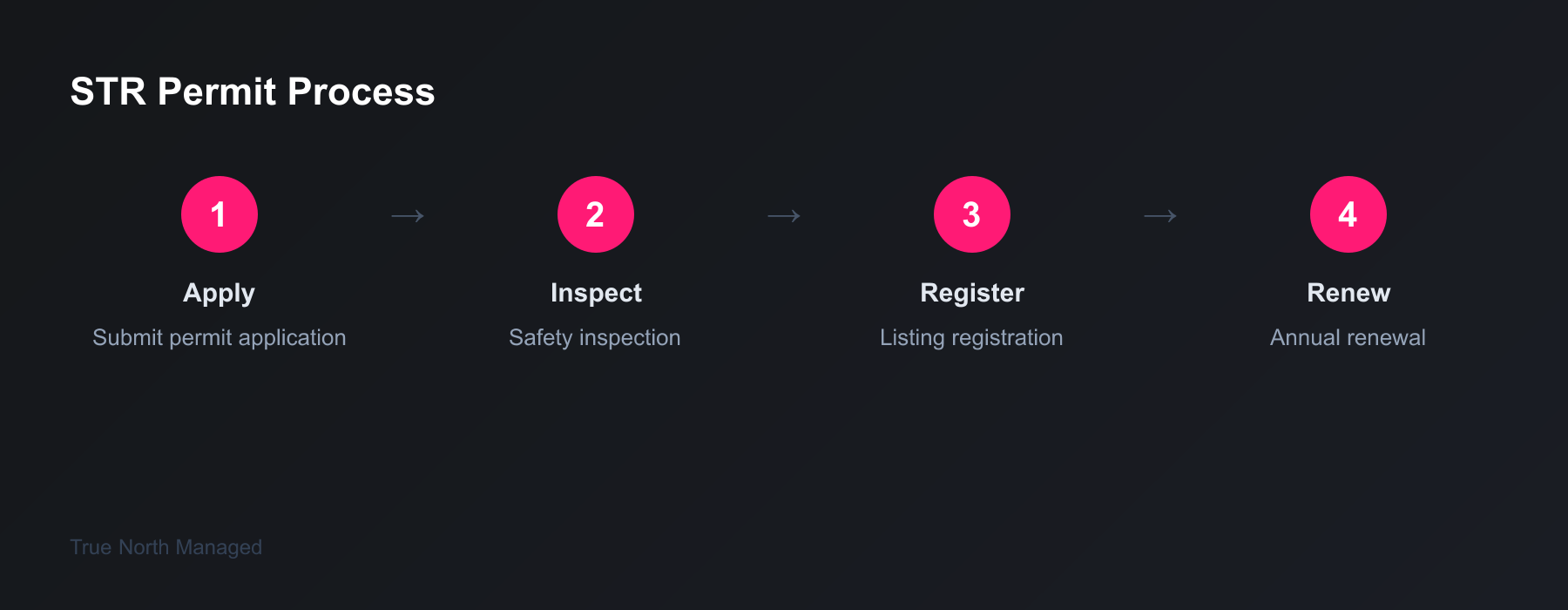
If your property is inside City of Orlando limits, you register with the city's Home Sharing program. Get the state DBPR Vacation Rental License, then submit the city application with a $275 first-year registration fee (then $100 a year if the owner is the resident host, $125 if a tenant is), and pass a city inspection. Fees change, so confirm the current figures with the city before you apply.
If your plan is to buy a house in an Orlando residential neighborhood and rent the whole thing on Airbnb while you live elsewhere, check the city's current rules and the parcel's zoning before you buy — whether a given local limit on whole-home rentals is enforceable depends in part on when it was adopted.
Can you run a short-term rental in unincorporated Orange County?
It depends on the parcel. Unincorporated Orange County — which includes Horizon West and large parts of east Orange County — has zoning rules for stays under 30 days in residential districts, with a discretionary Special Use Permit, decided at a public hearing and not guaranteed, as the route to approval. State law limits what those rules can do. Under FS 509.032(7)(b), "A local law, ordinance, or regulation may not prohibit vacation rentals or regulate the duration or frequency of rental of vacation rentals. This paragraph does not apply to any local law, ordinance, or regulation adopted on or before June 1, 2011." Paragraph (c) adds: "Paragraph (b) does not apply to any local law, ordinance, or regulation exclusively relating to property valuation as a criterion for vacation rental if the local law, ordinance, or regulation is required to be approved by the state land planning agency pursuant to an area of critical state concern designation." So whether a given county limit binds your property turns partly on when it was adopted — check the county's current rules for the parcel before you buy.
The vacation-rental-heavy areas people picture — purpose-built resort communities — are concentrated in Kissimmee and Osceola County, which have zoning districts that specifically allow short-term rentals. Check the Orange County planning and zoning department for your specific parcel before you assume a home there can run as an STR.
Do you have to collect Orlando's tourist development tax?
Yes. Florida's tourist development tax — the "bed tax" — applies to every short-term stay. In Orange County the rate is 6%, collected directly by the Orange County Comptroller. That's on top of the 6% state sales tax and the local discretionary surtax, so a guest's stay carries roughly 12.5% in combined taxes.
Airbnb and Vrbo collect and remit some of these taxes automatically, but coverage varies — and you remain legally responsible for compliance. If you take direct bookings, the tax is entirely on you. Confirm exactly which taxes your platform handles and which you must file yourself. Our Florida short-term rental laws guide covers the statewide tax framework.
Do you need a DBPR vacation rental license?
Yes. Florida requires a Vacation Rental License from the Department of Business and Professional Regulation, Division of Hotels and Restaurants, for any dwelling rented more than three times a year for periods under 30 days.
DBPR licenses renew annually. So do local permits in the City of Orlando. Set a calendar reminder 60–90 days before each expiration — late renewal can mean fines or suspension, and an STR can't legally take bookings while its license has lapsed.
What insurance does an Orlando short-term rental need?
A standard landlord (DP-3) policy usually excludes short-term rental use. Operate an STR on a long-term landlord policy and a guest-injury claim could be denied outright. You need either a short-term-rental-specific policy or a commercial policy with liability and loss-of-rent coverage built for transient occupancy.
Verify the exact coverage with your agent before you take a single booking. Platform "host protection" coverage exists but is limited and shouldn't be your only layer.
Can your HOA or condo association block a short-term rental?
Yes. Many Orlando HOAs and condo associations restrict or outright prohibit rentals under a set term — often 30, 90, or 180 days. A recorded restriction in the governing documents is enforceable, and it can stop your STR plan cold even where city and county zoning would allow it.
Read the declaration of covenants, the bylaws, and any rental addendum before you buy or list. Don't rely on a seller's or agent's word — get the recorded documents. Our guide to HOA rental restrictions in Florida explains which restrictions hold up and which don't.
The Orlando STR compliance checklist
Work through these in order. Skipping a step is how landlords end up fined or shut down:
- Confirm your jurisdiction — City of Orlando vs. unincorporated Orange County vs. Kissimmee/Osceola.
- Confirm zoning allows STR at your specific parcel.
- Get a DBPR Vacation Rental License from the Division of Hotels and Restaurants.
- Register with the city or county and pass any required inspection.
- Set up tourist development tax collection and remittance (Orange County 6%).
- Update your insurance to an STR-specific or commercial policy.
- Confirm HOA/condo rules from the recorded governing documents.
- Maintain a local 24/7 contact if required by your jurisdiction.
Frequently asked questions about Orlando short-term rental permits
What is the short-term rental permit process in Orange County?
It depends on jurisdiction. In the City of Orlando, you get a DBPR Vacation Rental License, then register with the city's Home Sharing program ($275 first year; $100 a year after if the owner is the resident host, $125 if a tenant is the resident host — check the current schedule) and pass an inspection. In unincorporated Orange County, the county's zoning rules for stays under 30 days in residential zones point to a discretionary Special Use Permit; check the current rules for your parcel, since whether a given local limit is enforceable depends in part on when it was adopted.
Is Airbnb legal in unincorporated Orange County, Florida?
It depends on the parcel. Unincorporated Orange County, which includes Horizon West, has zoning rules for stays under 30 days in residential districts that route owners to a Special Use Permit, which requires a public hearing and is not guaranteed. Whether a given county limit is enforceable depends in part on when it was adopted, so check the county's current rules for your parcel.
How much does an Orlando short-term rental permit cost?
In the City of Orlando, expect a $275 first-year registration fee, then $100 for each annual renewal if the owner is the resident host or $125 if a tenant is the resident host. That is separate from the state DBPR Vacation Rental License fee and any inspection costs. Check the city's current fee schedule before you apply.
Do I need a DBPR license for an Orlando vacation rental?
Yes. Florida requires a DBPR Vacation Rental License for any dwelling rented more than three times a year for periods under 30 days.
What is the tourist development tax rate for Orlando short-term rentals?
Orange County's tourist development tax (bed tax) is 6%, collected by the Orange County Comptroller. Combined with the 6% state sales tax and the local discretionary surtax, a short-term stay carries roughly 12.5% in total taxes.
Can my HOA stop me from running a short-term rental in Orlando?
Yes. A recorded HOA or condo restriction on rentals under a minimum term is enforceable and can prohibit your STR even where city and county zoning would allow it. Always review the recorded governing documents before buying or listing.
Orlando STR compliance is layered — city, county, state, and HOA — and the rules turn on something as simple as which side of a jurisdiction line your house sits on. Get it confirmed before you list. For more Orlando landlord resources, see our Orlando property management guide.
If you own one property and the short-term rental rules are making you reconsider, you're not alone — many Orlando owners find that a long-term lease is simpler, steadier, and far less work. We manage single Orlando rentals, not just portfolios. Get a free rental analysis and we'll show you what your property could earn as a long-term rental.