

Building an Orlando Rental Portfolio: From SFH to Multifamily
SFH to duplex progression, best Orlando submarkets for scaling, financing strategies, and when to add a property manager.

From SFH to Duplex and Beyond
Scaling from SFH to duplex and beyond means more units per deal.Orlando duplexes and small multis often pencil better than single-families on a per-door basis. Lake Nona, Dr. Phillips, and Winter Park have strong rental demand.Florida Realtors market datatracks Orlando trends..
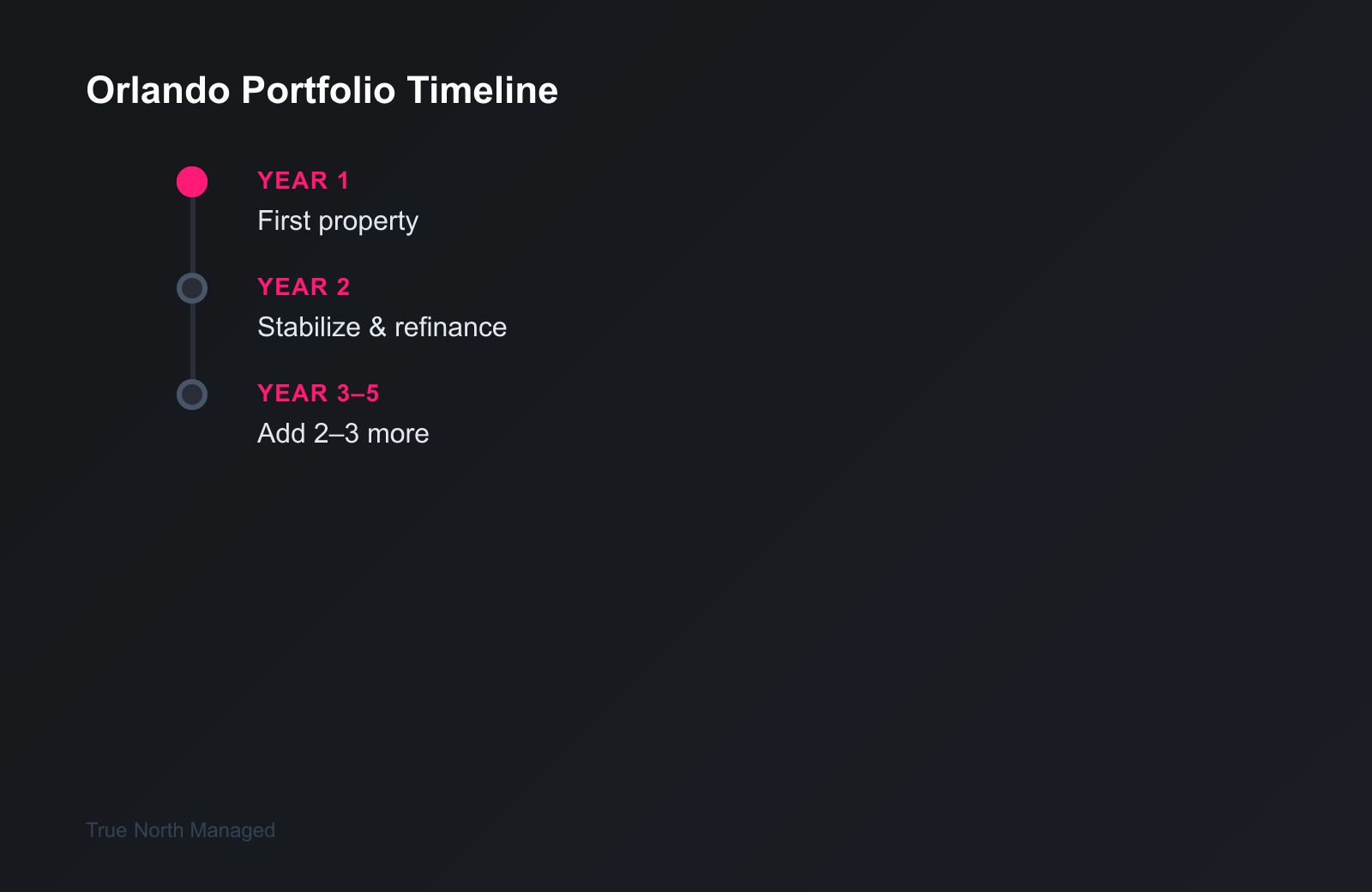
Many Orlando investors start with a single-family home and scale to duplexes, triplexes, or a small portfolio across neighborhoods. The progression makes sense -- you learn on one property, then add more. The key is choosing submarkets and financing strategies that support growth.
Best Orlando Submarkets for Scaling
Best Orlando submarkets for scaling: Lake Nona, Dr. Phillips, Winter Park, College Park, and Avalon Park.Each has different demographics and price points. Diversify across a few.
Affordability vs appreciation trade off. Lake Nona and Horizon West offer growth and newer construction but higher entry prices. College Park, Audubon Park, and parts of east Orlando offer more affordable duplex and smallFannie Mae multifamilyoptions. Dr. Phillips and Winter Park command premium rents but higher purchase prices. Match your capital and risk tolerance to the submarket. OurOrlando hubbreaks down neighborhoods and investment profiles.
Financing Strategies
Financing gets harder after 4 properties -- conventional limits hit.Portfolio loans, DSCR loans, or commercial financing become the path. Orlando lenders know the market.
Conventional loanswork for owner-occupied or first investment. For pure investment, DSCR (debt-service coverage ratio) loans use rental income to qualify. Portfolio lenders can finance multiple properties under one relationship. Cash-out refis on existing properties can fund the next purchase. See our guide onmanaging multiple rentals in Floridafor systems that scale.
When to Add a Property Manager
Add a property manager when you hit 3-5 doors or can't respond to emergencies.Orlando PMs charge 8-10% of rent. For scaling investors, the time savings usually justify the cost.
Self-managing 1-2 properties is doable. At 3-4, the maintenance calls, turnover coordination, and tenant communication add up. Many investors hire a PM when they hit 3-4 doors or when they're out of state. The cost (typically 8-10% of rent) buys time and professional systems. Ourwhen to hire a property manager in Orlandoguide walks through the decision.
Diversification Across Neighborhoods
Diversify across neighborhoods -- don't put all your Orlando eggs in one submarket.Lake Nona and Dr. Phillips can move differently. Spread risk.
Don't put everything in one zip code. Spread across 2-3 Orlando submarkets to reduce concentration risk. If one area softens, others may hold. Different neighborhoods attract different tenant profiles -- diversify by tenant type as well as geography.
Portfolio building is a marathon. Start with one property, learn the market, then scale with intention. For Orlando-specific guidance, see ourOrlando property management guide.Get a free rental analysisto discuss your portfolio goals.
Orlando Submarkets for Scaling
Orlando submarkets for scaling: Lake Nona, Dr. Phillips, Winter Park, College Park, Avalon Park.Each has distinct rent profiles and tenant pools. Run comps before you buy.
Lake Nona, Horizon West, and Avalon Park have strong absorption for new and existing inventory. Dr. Phillips and Winter Park command premium rents. East Orlando and the UCF corridor offer lower entry points with steady demand. OurLake Nona,Avalon Park, andDr. Phillipsprofiles break down the numbers. Diversify across submarkets to reduce concentration risk.
Financing and Entity Structure
Entity structure: LLCs per property for liability; DSCR or portfolio loans for financing.Florida has no state income tax, but entity choice still matters for asset protection.
Conventional loans typically cap at 10 financed properties. Portfolio loans and commercial financing open options beyond that. OurLLC guideandout-of-state landlord guidecover structure and financing. For property management at scale, seeOrlando PM costsandself-manage vs. hire.
Orlando Submarkets for Scaling
Same submarkets, different entry points.College Park is pricier; Avalon Park has more new construction. Match your capital to the submarket.
Lake Nona, Horizon West, and Avalon Park have strong absorption for new and existing inventory. Dr. Phillips and Winter Park command premium rents. East Orlando and the UCF corridor offer lower entry points with steady demand. OurLake Nona,Avalon Park, andDr. Phillipsprofiles break down the numbers. Diversify across submarkets to reduce concentration risk.
Financing and Entity Structure
Financing progression: conventional for 1-4, then DSCR or portfolio.Orlando has plenty of lenders who understand rental investors.
Conventional loans typically cap at 10 financed properties. Portfolio loans and commercial financing open options beyond that. OurLLC guideandout-of-state landlord guidecover structure and financing. For property management at scale, seeOrlando PM costsandself-manage vs. hire.
From SFH to Multifamily
When to add a PM: 3-5 doors or when you're out of state.Orlando's market moves fast. Don't let scaling slow you down.
Scaling from one SFH to a duplex or small multifamily changes the math. Duplexes offer two income streams and often better per-door economics. Ourvacant duplex case studyshows a turnaround example. Thehidden costs guidecovers what new investors miss. For Orlando market context, seerecent market updatesand theOrlando hub.
Financing Progression
Tax implications: Schedule E, depreciation, and no Florida state income tax.Keep clean books. Consider a CPA for 5+ properties.
Conventional loans typically cap at 10 financed properties. Portfolio loans and DSCR financing open options beyond that. Each new loan may require more reserves. Ourfinancing first rental guideandLLC guidecover structure. Factor Florida insurance into debt coverage.
When to Add a Property Manager
Financing gets harder after 4 -- plan for portfolio or DSCR loans.Orlando lenders are familiar with both. Shop rates.
Most landlords hit a wall between 3 and 5 doors. After-hours calls, turnover coordination, and vendor management consume 10-15 hours per month. At 8-10% of rent, a PM often pencils out. CompareOrlando PM costsandself-manage vs. hire. You free up time and get professional handling of tenant communication and maintenance.
Tax Implications
PM at 3-5 doors or when you can't handle after-hours.Orlando emergency calls don't wait.
Rental income and expenses go on Schedule E. Depreciation is a major deduction. Keep separate books for each property. OurFlorida landlord tax guideandtax deductions checklistcover filing. For scaling systems, seescaling your portfolio.
Financing Progression
Taxes: depreciation, Schedule E, no state tax.Florida is friendly to landlords. Keep records.
Conventional loans typically cap at 10 financed properties. Portfolio loans and DSCR financing open options beyond that. Each new loan may require more reserves. Ourfinancing first rental guideandLLC guidecover structure. Factor Florida insurance into debt coverage.
When to Add a Property Manager
Most landlords hit a wall between 3 and 5 doors. After-hours calls, turnover coordination, and vendor management consume 10-15 hours per month. At 8-10% of rent, a PM often pencils out. CompareOrlando PM costsandself-manage vs. hire. You free up time and get professional handling of tenant communication and maintenance.
Tax Implications
Financing for Portfolio Growth in Orlando
Conventional lenders cap you at 10 financed properties. After that, you're in commercial or portfolio lending. DSCR loans are common for Orlando investors—they underwrite based on your property's rent, not your personal income. That's useful if you're hitting debt-to-income limits.
Keep each property in a separate LLC if you're scaling. That limits liability and makes it easier to sell or refinance individual properties later. Orlando has plenty of investor-friendly attorneys who can set this up for $500–$1,000 per entity.
When to Form an LLC
Most investors form an LLC per property once they hit 3-4 doors. It limits liability—a lawsuit against one property doesn't touch the others. In Florida, LLC formation runs $125 plus registered agent fees.
Some lenders don't like LLCs. They want to lend to you personally. You may need to buy in your name and deed to the LLC later—check with your attorney. There are tax implications, so get advice before you structure.
Bottom Line
Orlando supports portfolio growth—diverse submarkets, strong demand. Get your financing and systems in place before you scale. Consider LLCs at 3–4 properties.
Orlando's diverse submarkets—Lake Nona, Dr. Phillips, Oviedo—let you diversify. Don't put all your units in one neighborhood.
When in doubt, document it. Florida landlords who follow the process and keep a paper trail protect themselves when disputes arise. A few minutes of documentation can save months of headaches.
Florida's landlord-tenant statutes—particularly Chapter 83—govern most of what you'll encounter. Familiarize yourself with the notice requirements, timelines, and documentation rules. A well-documented process protects you when disputes arise. In Orlando and Tampa, local ordinances can add layers; check your county and city rules before you act.
True North Managed helps Orlando and Tampa landlords navigate these issues every day. When you need local expertise, we're here.
Rental income and expenses go on Schedule E. Depreciation is a major deduction. Keep separate books for each property. OurFlorida landlord tax guideandtax deductions checklistcover filing. For scaling systems, seescaling your portfolio.