
Central Tampa Rental Rules: Historic District Restrictions
Seminole Heights, Tampa Heights, and Ybor City sit inside Tampa historic districts — a rulebook most landlords don't read until they're cited. Here's what to know.
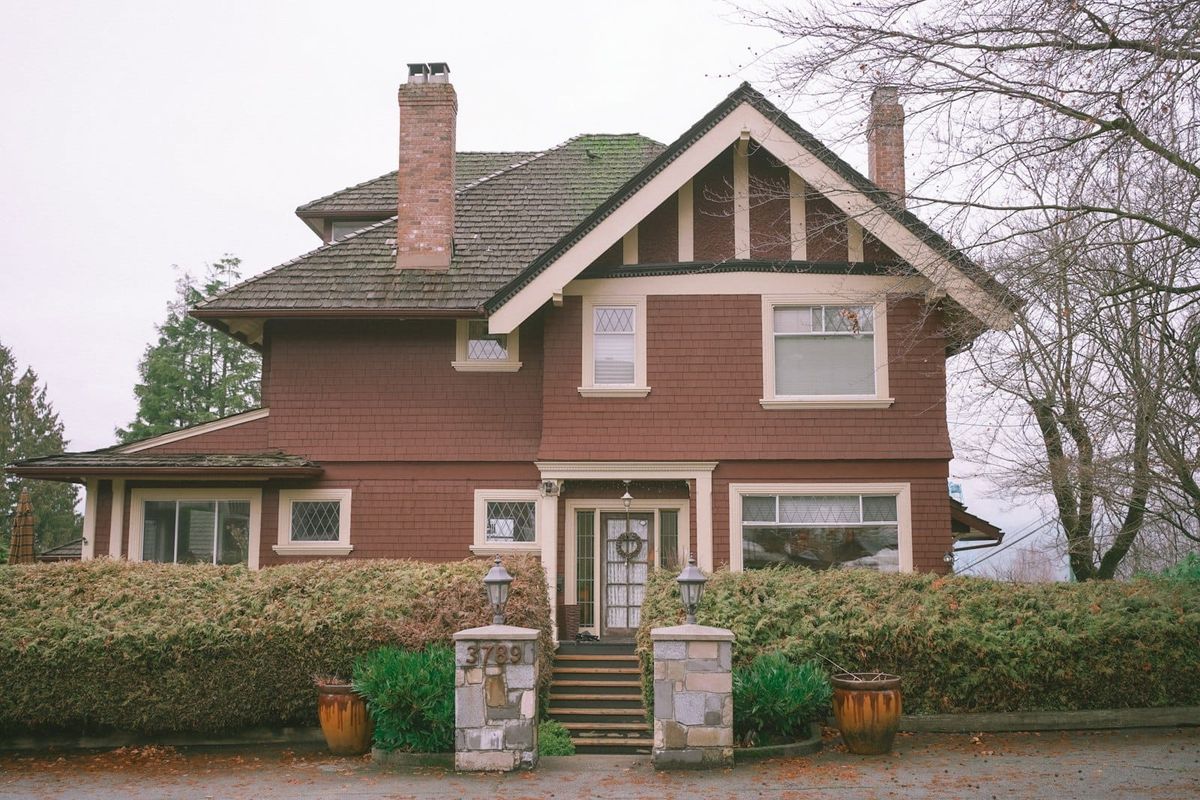
That 1920s bungalow in Seminole Heights makes a wonderful rental. The character, the deep front porch, the brick streets — those are exactly the things good tenants will pay a little more for. The bungalow also comes with a rulebook most landlords don't know exists until a stop-work notice shows up on the door.
Here's the short version. Three of Central Tampa's most popular rental neighborhoods — Seminole Heights, Tampa Heights, and Ybor City — sit inside local historic districts. Any exterior change to a property in one of them needs the city's approval, in the form of a Certificate of Appropriateness, before the work begins. And Ybor City answers to a different commission than the other two. If you own a rental in Central Tampa, or you're about to buy one, this is the layer of rules above ordinary Tampa landlording.
Why Central Tampa landlording comes with extra rules
Tampa has four Local Historic Districts. Three of them — Seminole Heights, Tampa Heights, and Ybor City — sit in Central Tampa. (The fourth, Hyde Park, is in South Tampa.) These are also some of the strongest rental neighborhoods in the city, which is the whole tension: the historic designation protects the character that draws tenants and lifts values, and in exchange it puts a layer of review over what you can change.
For most landlords most of the time, that layer is invisible. Collect rent, handle a leaky faucet, renew a good tenant — none of that touches historic rules. It's when you change the outside of the building that the district has something to say.
Which Central Tampa neighborhoods are in a historic district?
Three: Seminole Heights, Tampa Heights, and Ybor City. If your rental sits inside one of their boundaries, it's subject to historic design review. The catch is that the boundaries are specific — a house on one block can be inside the district and a house two blocks over can be outside it. Before you buy a Central Tampa rental, confirm whether the exact address is in a designated district.
There's a second layer worth knowing: within a district, structures are classified as contributing or non-contributing. A contributing structure — one that adds to the district's historic character, like an original Seminole Heights bungalow — gets the closest scrutiny. Seminole Heights alone spans roughly 1,700 acres and several hundred contributing buildings. A non-contributing structure inside the same district still falls under review, but the expectations differ. Your closing documents or the city's records will tell you which you're buying.
What needs a Certificate of Appropriateness?
A Certificate of Appropriateness — a COA — is the city's sign-off that a proposed change fits the district. The rule of thumb is simple: exterior, visible changes need a COA; interior work generally doesn't.
Repaint a bedroom, replace the kitchen cabinets, redo a bathroom — no historic review. But these typically do need a COA before you start:
- Replacing windows or doors
- Reroofing, especially with a different material
- New siding, or changes to exterior trim
- Additions, decks, and new construction
- Fences and exterior walls
- Demolition
You apply through the city's online permitting portal, and the application goes to design review before a permit is issued. The standard the reviewers use is the property's district Design Guidelines alongside the Secretary of the Interior's Standards for Rehabilitation — in plain terms, changes should be in keeping with the building's era and the street around it. The City of Tampa's Historic Preservation division publishes the design guidelines for each district, and they're worth reading before you plan any exterior project.
Why does Ybor City play by different rules?
This is the part landlords get wrong most often: the three districts are not interchangeable.
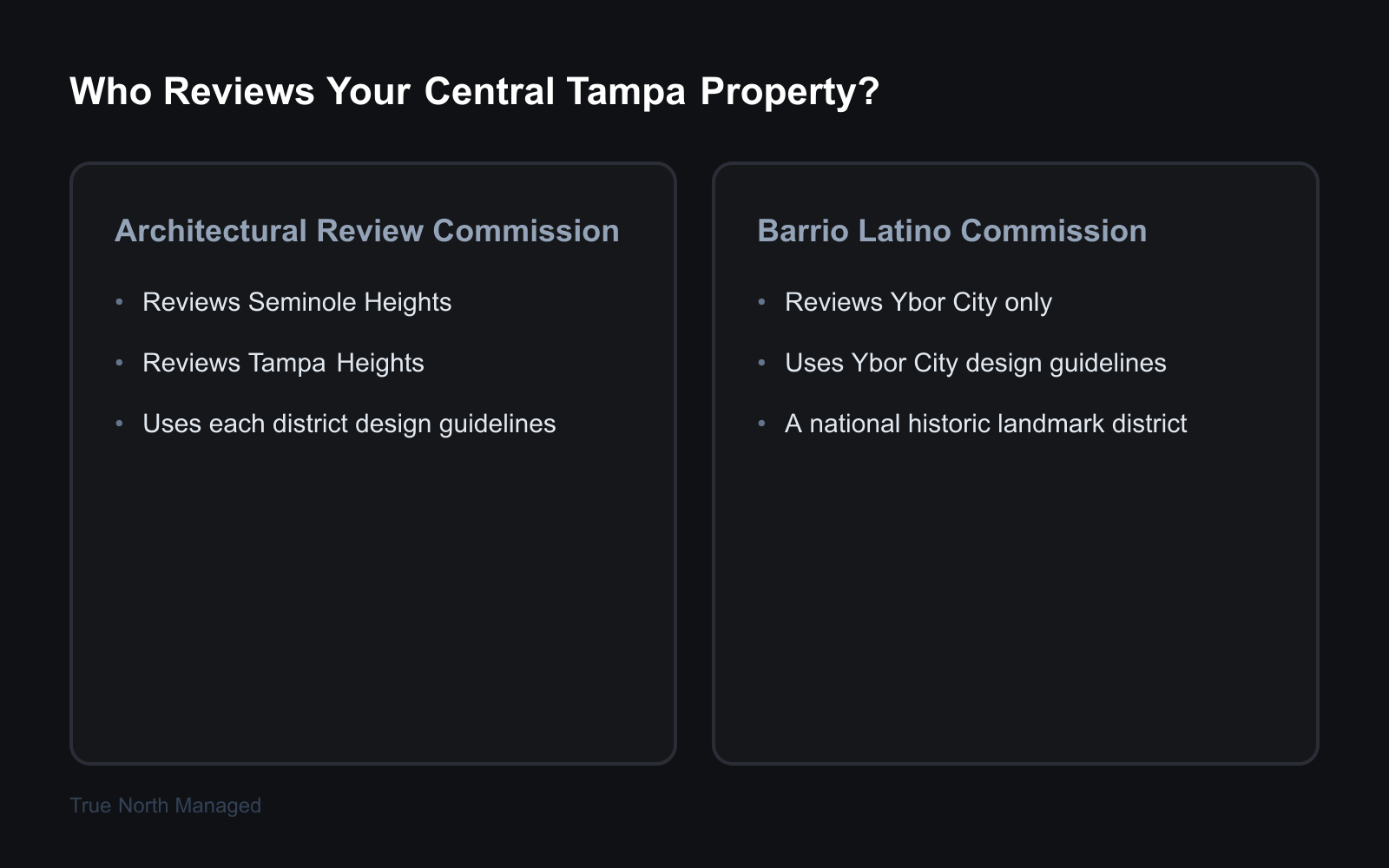
Seminole Heights and Tampa Heights are reviewed by the Architectural Review Commission — the ARC. Ybor City is reviewed by a separate body, the Barrio Latino Commission, which has its own guidelines written for Ybor's particular history — the cigar-factory architecture, the social clubs, the mixed-use main streets. Ybor is a national historic landmark district, and it's treated as one.
Practically, that means advice that's correct for a Seminole Heights bungalow may not transfer to an Ybor City property. Different commission, different guidelines, different review calendar. If you own in Ybor, get your information from the Barrio Latino Commission specifically — don't assume what worked for a friend's place in Tampa Heights applies to yours.
What this means for your renovation budget and timeline
The honest answer: historic review adds both cost and time, and you have to plan for it.
Say a tenant moves out and the front windows are original, drafty, and due for replacement. Outside a historic district, that's a quick turnover project. Inside one, it's an application, a design review, approval, then the work — and the review runs on the commission's schedule, not yours. Budget weeks, not days, and don't promise a new tenant a move-in date that assumes a same-week fix. Materials can cost more too, since a guideline-compliant window or roof isn't always the cheapest option on the shelf.
The flip side is real, though. The same rules that slow you down are the reason a renovated Seminole Heights bungalow holds its value and commands its rent. The character is the product. Smart Central Tampa landlords treat the guidelines as a renovation roadmap — they improve the property within the lines, and the neighborhood stays the kind of place tenants compete to live in.
How do you stay compliant — including as an out-of-state owner?
Three habits keep you out of trouble:
- Get the COA before the work, every time. Unpermitted exterior work in a historic district can mean fines and an order to undo what you did — far more expensive than the application would have been.
- Hire contractors who know historic districts. A contractor who regularly works in Seminole Heights or Ybor already knows the guidelines and the application process. One who doesn't will cost you a rejected application and a delay.
- Verify — don't assume — the permit was pulled. This matters most if you own from out of state. You can't see a stop-work notice taped to your rental's door from another state. Don't take "we'll handle the permit" on faith — ask your contractor or property manager for the COA number and confirm it before work starts. The owner is the one the city holds responsible.
Common mistakes Central Tampa landlords make
- Exterior work without a COA. "It's just windows" is exactly the project that draws a citation. Apply first.
- Assuming all three districts run the same way. Ybor City answers to the Barrio Latino Commission, not the ARC. Check the right rulebook for your property.
- Buying without checking historic status. Confirm whether the address is in a district — and whether the structure is contributing — before you close, not after you've planned a renovation.
Owning in Central Tampa, without the surprises
A Central Tampa rental in a historic district is a strong asset — steady demand, real appreciation, the kind of character that keeps good tenants in place. The rules aren't a reason to avoid these neighborhoods. They're just a part of the job you need to know before you own here, not after.
If you'd rather have someone who manages historic-district rentals every day handle the permitting and the contractor coordination, that's what we do. Our Free Rental Analysis is a straightforward place to start, and our latest Tampa market update has the current picture on rents and demand across the city.