

Orlando Rental Maintenance: Humidity, Storms, and Pest Reality
Central Florida humidity, summer storms, AC that runs 10+ months, and pest pressure. What Orlando landlords need to maintain year-round.

Central Florida Humidity: Mold Prevention Comes First
When in doubt, hire a professional.The cost of a licensed repair is less than the cost of a failed DIY and a habitability claim. Our Orlando hub links to local resources. FL landlords in Orlando and Tampa should check local requirements.
When to Call a Professional vs DIY
When in doubt, hire a professional.The cost of a licensed repair is less than the cost of a failed DIY and a habitability claim. Our Orlando hub links to local resources. FL landlords in Orlando and Tampa should check local requirements.
When in doubt, hire a professional. The cost of a licensed repair is less than the cost of a failed DIY and a habitability claim. OurOrlando hublinks to local resources.
Minor tasks like changing HVAC filters, replacing light bulbs, and unclogging drains with a plunger are safe for landlords to handle. Electrical work beyond a simple switch, plumbing beyond a clog, and any roof or structural issue require licensed contractors. Florida law doesn't require you to do repairs yourself, but you must make sure they're done correctly. A botched DIY repair can create liability. Ourvetting contractors guidecovers how to find reliable vendors.
Orlando sits in one of the most humid regions in the continental U.S. Summer dew points regularly hit 75°F. That moisture finds its way into walls, under sinks, and around AC units. Mold prevention isn't optional here -- it's the foundation of maintenance. Keep humidity below 60% inside. Make sure AC condensate drains are clear. Inspect for water intrusion after heavy rains. TheFlorida Building Commissionsets construction standards, but your job is ongoing vigilance.
Summer Storms and Lightning
Central Florida is the lightning capital of the country.Surge protectors on HVAC and major appliances are cheap insurance. After storms, check roofs and gutters. FL landlords in Orlando and Tampa should check local requirements.
Central Florida is the lightning capital of the country. Surge protectors on HVAC and major appliances are cheap insurance. After storms, check roofs and gutters. Tree limbs near the house can fall and damage siding or windows. Ourseasonal maintenance guidecovers the full Florida calendar -- Orlando's heat and storms add urgency to the summer months.
AC Runs 10+ Months a Year
Your AC doesn't get a winter break.In Florida, Filter changes every 30-60 days. Annual coil cleaning and refrigerant check. FL landlords in Orlando and Tampa should check local requirements.
Your AC doesn't get a winter break. Filter changes every 30-60 days. Annual coil cleaning and refrigerant check. A unit that fails in July is an emergency -- tenants have a right to habitable conditions. Schedule preventive service before peak season. Lake-adjacent properties in areas like Lake Nona or Dr. Phillips face extra moisture pressure. Dehumidifiers in crawl spaces or basements can help.
Pest Control: Termites, Palmetto Bugs, and Ants
Termites are active year-round in Orange County.Annual inspections are standard. Palmetto bugs (large roaches) and sugar ants are common. FL landlords in Orlando and Tampa should check local requirements.
Termites are active year-round in Orange County. Annual inspections are standard. Palmetto bugs (large roaches) and sugar ants are common. Preventive treatment around the perimeter and bait stations reduce callbacks. If tenants report pests, respond quickly -- delay can worsen infestations and tenant relations.
Irrigation and Lawn Care
Florida lawns need regular irrigation.Broken sprinkler heads waste water and create puddles that attract pests. Check the system quarterly. FL landlords in Orlando and Tampa should check local requirements.
Florida lawns need regular irrigation. Broken sprinkler heads waste water and create puddles that attract pests. Check the system quarterly. Overwatering near the foundation can cause moisture issues. Balance lawn health with moisture control.
Lake-Adjacent Moisture Issues
Properties near lakes or retention ponds see higher humidity and potential flooding.In Florida, Inspect grading and drainage. Make sure gutters direct water away from the foundation. FL landlords in Orlando and Tampa should check local requirements.
Properties near lakes or retention ponds see higher humidity and potential flooding. Inspect grading and drainage. Make sure gutters direct water away from the foundation. After heavy rain, walk the perimeter and look for standing water.
Orlando maintenance is predictable if you stay ahead of it. Humidity, storms, AC, and pests -- address each systematically. For a full picture of Orlando rental ownership, see ourOrlando property management guide. Need someone to handle the schedule?Get a free rental analysis.
Humidity and HVAC
Central Florida humidity runs 70-90% in summer.AC units must run regularly to control moisture; oversized units that short-cycle leave humidity high and encourage mold. Schedule annual HVAC service before peak season. FL landlords in Orlando and Tampa should check local requirements.
Central Florida humidity runs 70-90% in summer. AC units must run regularly to control moisture; oversized units that short-cycle leave humidity high and encourage mold. Schedule annual HVAC service before peak season. OurAC repair obligations guidecovers landlord duties under Florida law. Duct cleaning every 3-5 years helps airflow and indoor air quality.
Storm Prep and Documentation
Before hurricane season, document property condition with photos.Know your FEMA flood zone . Require tenants to have renters insurance. FL landlords in Orlando and Tampa should check local requirements.
Before hurricane season, document property condition with photos. Know yourFEMA flood zone. Require tenants to have renters insurance. After a storm, inspect roofs, windows, and exterior immediately. Report damage to your insurer and document everything. Ourhurricane prep checklistcovers the full process. For pest issues, seelandlord vs. tenant responsibilityin Florida.
Pest Prevention in Orlando
DIY maintenance has its limits in Florida rentals.Any work involving electrical panels, gas lines, roofing, or structural modifications requires a licensed contractor in Orange County. AC repairs on systems using refrigerant require EPA-certified technicians.
When to Call a Professional
DIY maintenance has its limits in Florida rentals.Any work involving electrical panels, gas lines, roofing, or structural modifications requires a licensed contractor in Orange County. AC repairs on systems using refrigerant require EPA-certified technicians.
DIY maintenance has its limits in Florida rentals. Any work involving electrical panels, gas lines, roofing, or structural modifications requires a licensed contractor in Orange County. AC repairs on systems using refrigerant require EPA-certified technicians. And any work that triggers a building permit can't legally be done by an unlicensed property owner on a non-owner-occupied property. Know the line between a quick fix and a code violation.
Palmetto bugs, ants, and occasional rodents are common in Central Florida. Quarterly pest control helps. Seal gaps around doors, windows, and foundation. Address moisture issues promptly -- pests seek water. Ourbed bugs guidecovers treatment responsibility. Thelandlord responsibilities guideoutlines habitability standards. For property management support, seeOrlando PM costsand theOrlando hub.
Seasonal Peaks
AC calls spike in summer.In Florida, Plumbing issues tend to show up in winter when pipes get stressed. If you're building a contractor network, know when to expect volume and plan ahead. FL landlords in Orlando and Tampa should check local requirements.
AC calls spike in summer. Plumbing issues tend to show up in winter when pipes get stressed. If you're building a contractor network, know when to expect volume and plan ahead. Some HVAC companies have longer wait times in July and August.
Preventive maintenance helps smooth the curve. Replacing filters, cleaning coils, and checking drain lines before peak season can reduce emergency calls when everyone else is scrambling.
Humidity and HVAC
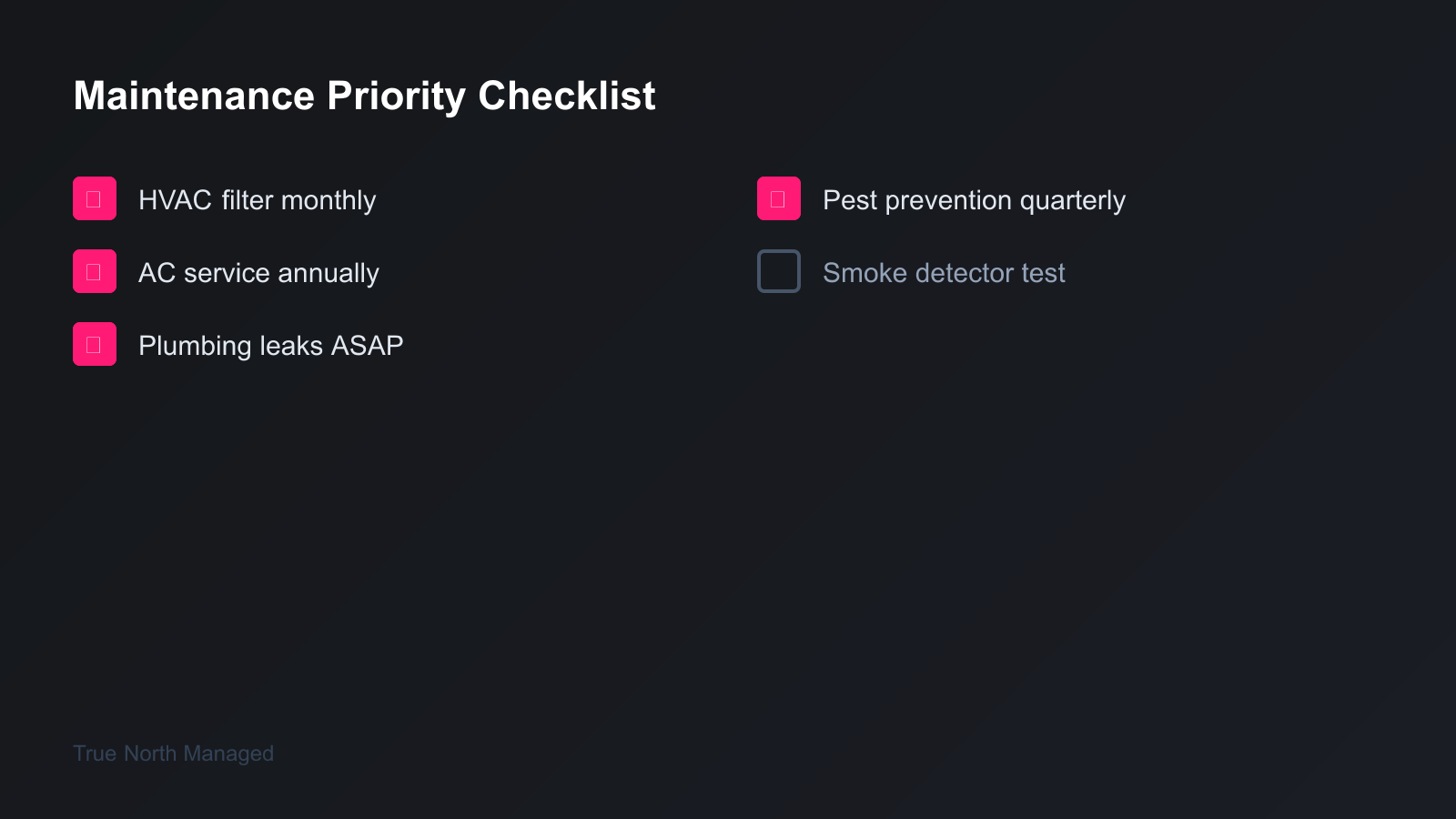
Florida humidity is the enemy. AC units run harder here than anywhere else. Change filters every 60 days—tenants won't do it. A clogged filter kills efficiency and can freeze the compressor. We put filter delivery in the lease—tenant replaces, we supply.
Pest control is non-negotiable. Roaches and ants love the humidity. Quarterly service runs $100–$150 per visit. Include it in your lease as landlord responsibility. It's cheaper than a tenant complaint or turnover caused by pests.
HVAC Maintenance Schedule
Service the AC twice a year—before summer and before winter. A tune-up runs $75-150. It catches small issues before they become $3,000 compressor replacements. We schedule it automatically for all our properties.
Clean the condensate drain. Clogged drains cause overflow and water damage. It's a $50 service call if you catch it early. Ignore it and you're replacing drywall.
Bottom Line
Humidity and humidity. Service AC twice a year. Change filters. Pest control quarterly. Orlando properties need more maintenance than most markets.
Orlando's rainy season runs May–October. Check gutters and drainage before it starts. Clogged gutters cause foundation and roof issues.
When in doubt, document it. Florida landlords who follow the process and keep a paper trail protect themselves when disputes arise. A few minutes of documentation can save months of headaches.
Florida's landlord-tenant statutes—particularly Chapter 83—govern most of what you'll encounter. Familiarize yourself with the notice requirements, timelines, and documentation rules. A well-documented process protects you when disputes arise. In Orlando and Tampa, local ordinances can add layers; check your county and city rules before you act.