
Orlando Rental Market Update — May 2026
Orlando's rental market is cooling like the rest of Florida — but with a tailwind Tampa doesn't have. Here's the May 2026 picture for landlords.

Orlando's rental market is cooling. That's not news — most of Florida is. What's different about Orlando is that it's cooling with a tailwind.
Here's the short version. Orlando apartment rents entered 2026 down about 2.4% from a year earlier. But Orlando has something Tampa doesn't: Epic Universe, which opened in May 2025. Add in the national split between houses and apartments, and single-family landlords here are in steady shape.
What changed in Orlando's rental market?
RentCafe's December 2025 figure put the average Orlando apartment rent at $1,785 a month, down 2.44% from a year earlier.
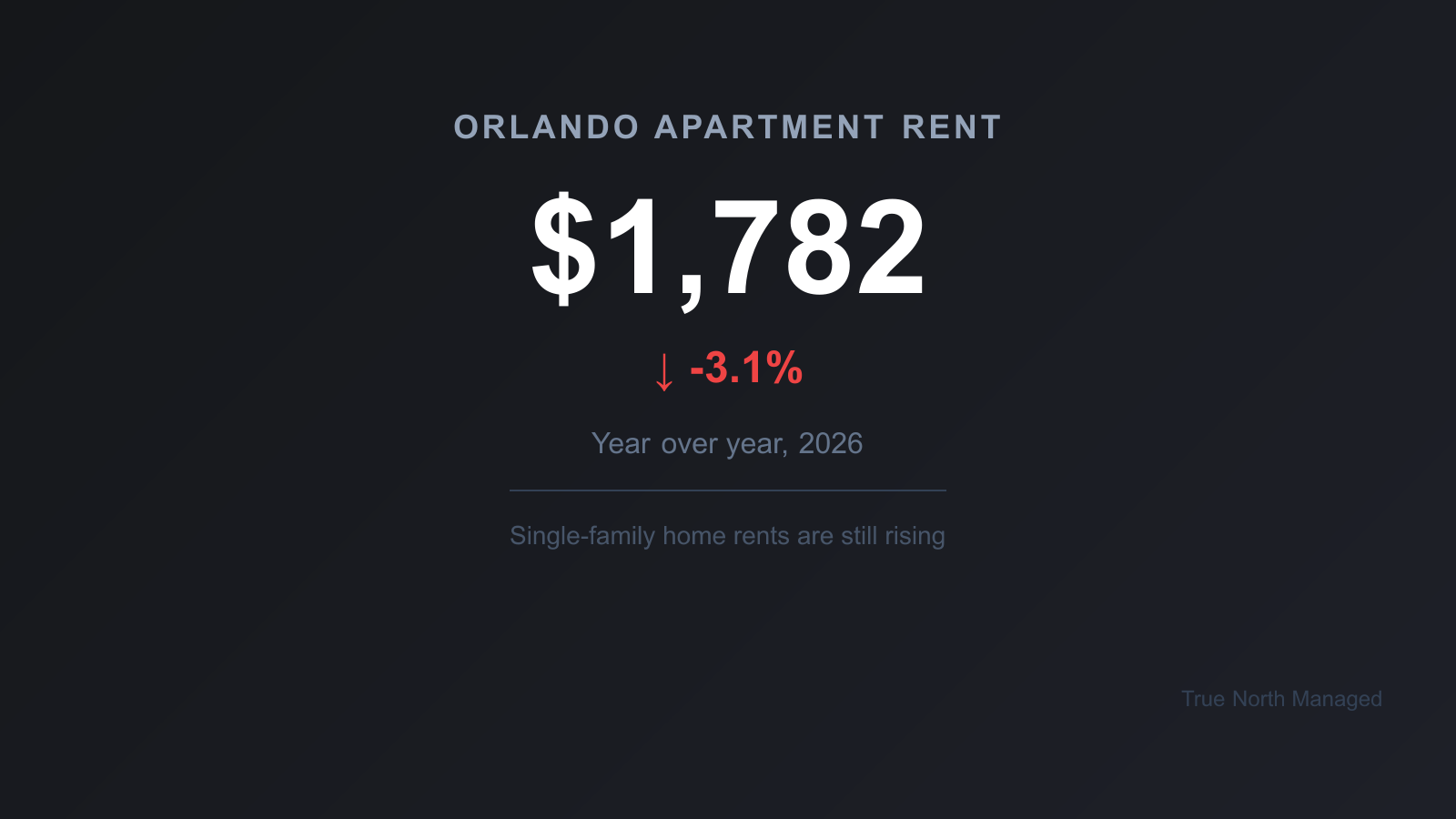
That's the apartment story, and it's the one in the headlines. Houses are different. Nationally, single-family rents rose about 2.6% over the past year, per Cotality's Single-Family Rent Index, and detached houses outpaced apartments by a wide margin. Orlando's single-family market has tracked that pattern — house rents held up while apartment towers competed on price. Our April market update flagged the same divide, and it hasn't closed.
Why is Orlando cooling more gently than Tampa?
Two reasons: supply that's already easing, and a demand engine that's still running.
On supply, Orlando rode the same Sun Belt apartment-building wave as Tampa — but Orlando's construction pipeline has contracted from its peak. Fewer new units are landing, so the oversupply pressure is fading faster here than in Tampa, where vacancy hit a record.
On demand, Orlando has Epic Universe. The park opened in 2025, and 2026 is its first full operating year. Leisure and hospitality was one of the region's two dominant job creators in 2025, and the sector "appears to have benefited from the opening of Universal’s Epic Universe in May 2025", according to the Orlando Economic Partnership. Jobs fill rentals, and Orlando's broader economy added work too. Mortgage rates have eased to 6.36%, per Freddie Mac, down from 6.81% a year ago.
What does this mean if you rent out a house in Orlando?
Your house is not the apartment market. The cooling rent numbers describe apartment towers — they don't describe single-family homes, which rent at far lower vacancy and held their rents through the softening.
But the apartment market still shapes what your tenant expects. Plenty of Orlando apartment communities are running move-in specials, and your applicant has seen them. They walk into your house thinking the whole market is soft. It isn't — not for houses. Price like you know the difference: to real single-family comps, not to the apartment headlines.
What should Orlando landlords do now?
Three moves. Price to single-family comps, run the renewal math before you raise rent, and — if you're buying or selling — read the balance right.
First, pricing. A well-priced Orlando house still rents. Pull three or four recently leased single-family homes near yours — actual signed prices, not asking prices — and price to those. Don't anchor to your 2024 number, and don't panic to the apartment number.
Second, renewals. With apartment specials everywhere, even a fair increase can send a good tenant shopping. Run it first: a $60-a-month bump is $720 a year, but one vacant month plus turnover costs runs well past $2,000. Keeping a reliable tenant at a modest renewal is usually the better deal — decide it on the math.
Third, buying or selling. If you're shopping, Orlando's sale market is close to balanced, and rates near 6.3% give you room to negotiate. The Epic Universe hiring wave is strengthening demand on the east and southeast sides especially. If you own a house and you're weighing a sale, there's no distress signal here: Orlando is stabilizing, not falling. A realistic price beats a panic one — worth weighing against when it actually makes sense to sell an Orlando rental.
The throughline: price to what Orlando houses actually do, not what apartments are doing. That's the whole job in a cooling market — and it's exactly what a rental analysis gives you. If you'd like a clear read on what your Orlando home should rent for today, our team's Free Rental Analysis walks it through comp by comp. For more on pricing, see our breakdown of average rent across Orlando's neighborhoods.