

When to Sell Your Orlando Rental Property: 5 Signals
Cap rate compression, major capital needs, personal changes, market peaks, and 1031 opportunities. When selling beats holding.

Five Signals It's Time to Sell
Holding an Orlando rental forever isn't always the right move. Cap rate compression, major capital needs, personal situation changes, market peak indicators, and 1031 opportunities can make selling the smarter play. Here's how to read the signals.
Cap Rate Compression
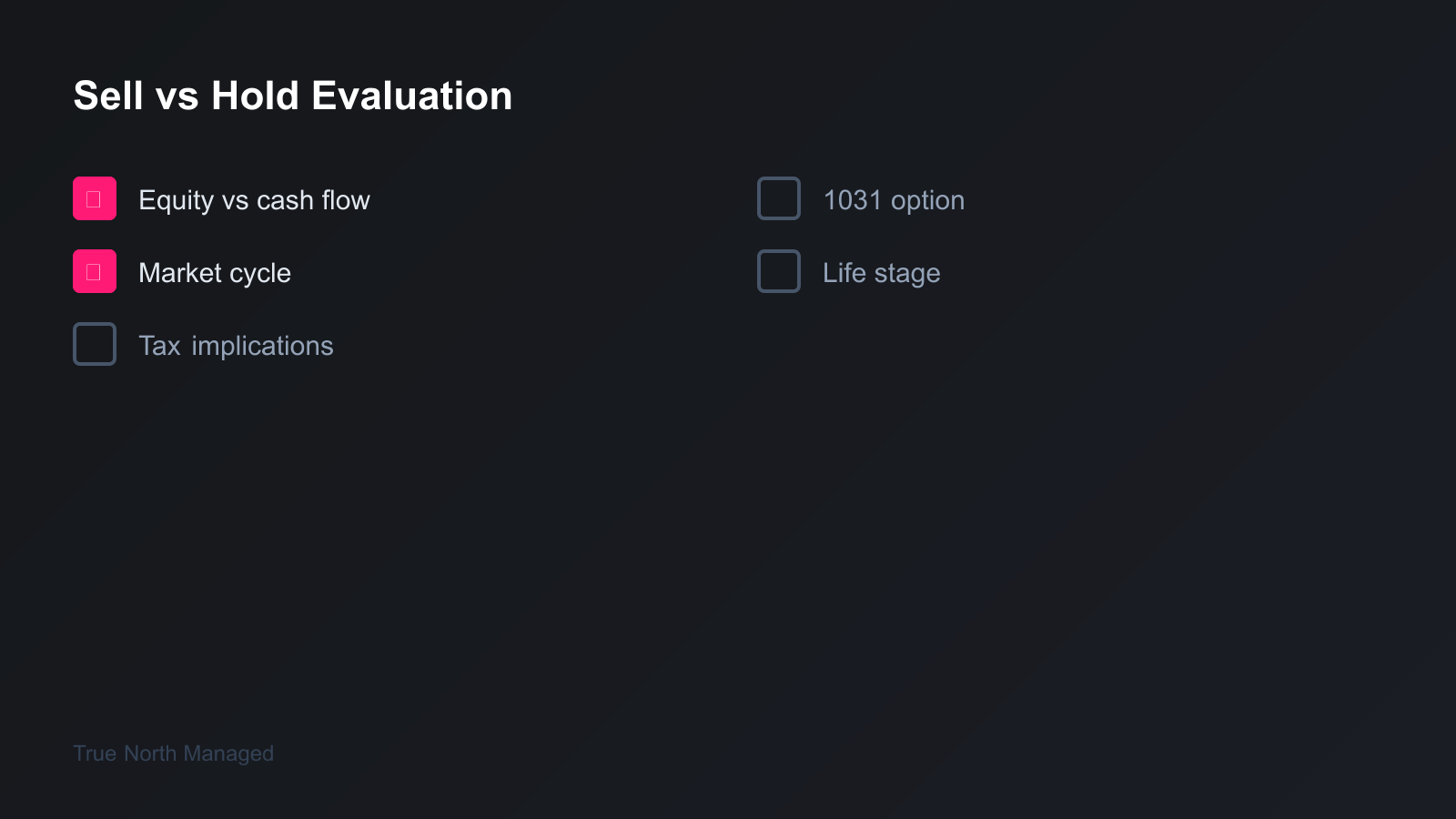
When property values rise faster than rents, cap rates compress. Your $275,000 duplex that generated 5.5% when you bought might now be worth $340,000 and yielding 4.2%. If appreciation has run ahead of income growth, selling and redeploying capital elsewhere can improve returns. Run the numbers -- don't assume holding is always best.
Major Capital Needs
Roof replacement, foundation repair, or a full AC overhaul can cost $15,000-$40,000. If the property has deferred maintenance and you're facing a large bill, compare the cost of repair plus holding versus selling as-is. Some buyers will pay for the upside. Our guide on selling a rental with tenants in Florida covers cash-for-keys and other options when the property is occupied.
Personal Situation Change
Relocation, health issues, or a need for liquidity can override investment logic. Selling is a valid choice. Plan for tax implications -- depreciation recapture and capital gains -- but don't let taxes alone dictate a decision that no longer fits your life.
Market Peak Indicators
If rents have flattened, inventory is rising, and cap rates are at historic lows, the market may be near a peak. No one times it perfectly, but if multiple indicators align, consider taking gains.
1031 Exchange Opportunity
A 1031 exchange lets you defer capital gains by reinvesting in like-kind property. If you've found a better opportunity -- different submarket, better cap rate, or property type that fits your goals -- selling and exchanging defers the gain; it doesn't reset your basis. 26 U.S.C. 1031(d): "If property was acquired on an exchange described in this section, section 1035(a), section 1036(a), or section 1037(a), then the basis shall be the same as that of the property exchanged, decreased in the amount of any money received by the taxpayer and increased in the amount of gain or decreased in the amount of loss to the taxpayer that was recognized on such exchange." The subsection adds: "For purposes of this section, section 1035(a), and section 1036(a), where as part of the consideration to the taxpayer another party to the exchange assumed (as determined under section 357(d)) a liability of the taxpayer, such assumption shall be considered as money received by the taxpayer on the exchange." In plain terms, the replacement property takes your old property's basis, adjusted for any money you received (including debt the other side takes over) and any gain or loss you recognized, so the deferred gain carries forward with it. The IRS has strict rules on timing and qualified intermediaries. Work with a tax professional.
Each signal alone may not justify selling. Combined, they can. Run the numbers, factor in taxes, and decide based on your situation. For more on Orlando rental ownership, see our Orlando guide. Considering your options? Get a free rental analysis and we'll walk you through the numbers.
Orlando Market Context
Orlando's rental market is driven by tourism, healthcare, and UCF. Check Orange County property records and recent sales in your area before listing. Our Lake Nona and Horizon West profiles show how growth corridors perform.
Selling With Tenants
If you sell with tenants in place, the lease survives the sale. Buyers may want vacant possession. Cash-for-keys negotiations, early termination clauses, or waiting for lease end are options. Our selling with tenants guide covers the legal framework. For a broader sell-vs-hold analysis, see sell or keep your rental.
Tax and Timing
Capital gains apply when you sell. A 1031 exchange defers tax if you reinvest in like-kind property. Our 1031 exchange guide covers the rules. Time the sale to avoid peak vacancy seasons. Orlando's summer leasing season means listing in spring can attract buyers who want to close before fall. The Orlando hub has market updates and neighborhood data.
1031 Exchange Timing
If you're trading up, the 1031 clock starts at closing. You have 45 days to identify replacement property and 180 days total to close. Miss either deadline and the deferral is gone. Line up your replacement before you list -- the best deals go fast. A qualified intermediary holds the proceeds; never take constructive receipt of the cash.
Capital Gains Calculation
Long-term gains on real estate are taxed at 0%, 15%, or 20% depending on income, plus depreciation recapture at a maximum 25% rate. Run the numbers with your CPA before you list. Sometimes selling in a lower-income year helps.
Market Indicators
Rising rates, flattening rents, and increasing inventory can signal a good time to sell. So can life events -- retirement, relocation, or cashing out for a 1031 into a larger asset. Don't sell into panic; sell when the math and your goals align.
Capital Gains Math for Orlando Properties
Before listing, run the tax numbers. If you've owned the property for more than a year, you qualify for long-term capital gains rates (0%, 15%, or 20% depending on your income bracket). A 1031 exchange lets you defer those gains entirely by rolling into another investment property within 180 days. But the exchange rules are strict -- you need a qualified intermediary, and the replacement property must be identified within 45 days. Start that conversation with your CPA before you talk to a listing agent.
Selling during a tenant dispute or eviction. Buyers shy away from problem tenancies. Not factoring capital gains and 1031 options. Our 1031 exchange guide covers deferral. Overpricing and letting the listing sit. Stale listings signal something wrong. Finally, skipping the pro forma. Run the numbers -- sell vs. hold depends on your situation. See our sell or keep guide and Orlando hub for market context.
Orlando Market Signals
Zillow's rent index put the typical Orlando-metro rent at about $1,942 in August 2026, up 0.7% from a year earlier. Property tax increases in Orange County have hit some landlords hard.
Another signal: you're tired. If you're managing from out of state and every repair is a crisis, selling and reinvesting in a REIT or a managed fund might make more sense.