
St. Pete Missing-Middle Housing: Four Homes on One Lot
St. Petersburg now lets some owners put up to four homes on a single-family lot — a preview of where Florida density is heading, and what Orlando and Tampa owners should watch.
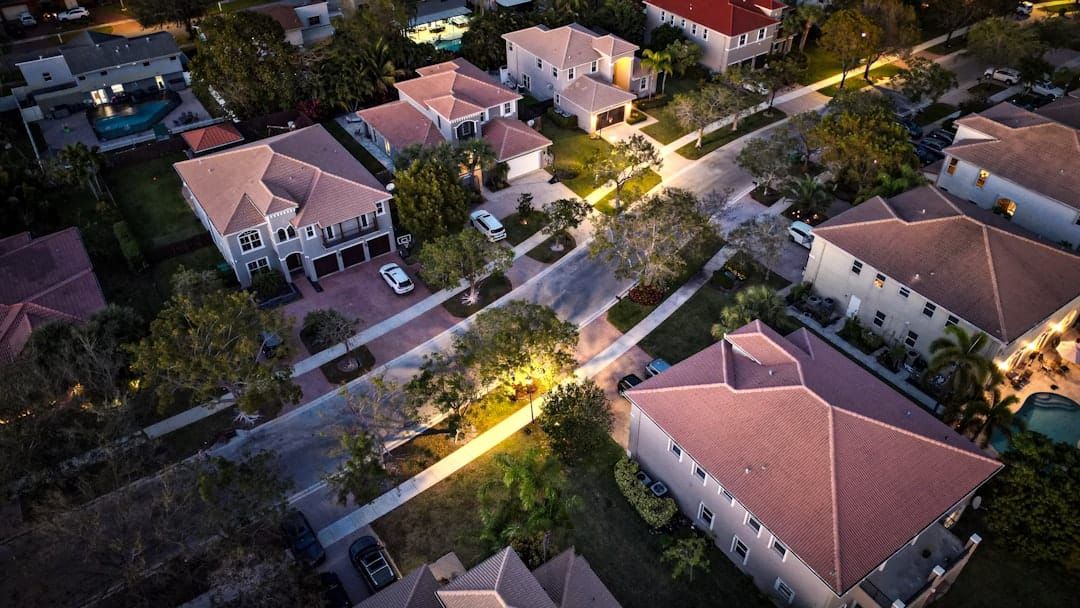
You're scrolling listings across the bay in St. Petersburg and a line in the property details stops you: "zoned NTM-1 — up to four units permitted." On a regular single-family lot, in a regular neighborhood. Your first thought is that someone fat-fingered the listing. They didn't.
St. Pete really did change the rules. On about 2,895 properties, an owner can now turn one house into as many as four homes — a garage apartment, a duplex, a triplex, or a small fourplex. It's the city's bet on "missing middle" housing, the small-scale rentals that sit between a single house and a big apartment complex. We don't manage rentals in St. Pete, so this isn't a pitch to go buy there. It's a signal worth reading, because what one Florida city tries on a few thousand lots has a way of becoming what the whole state argues about a year later. And the argument is already statewide.
What did St. Pete's missing-middle rule actually change?
In March 2023, the St. Petersburg City Council voted 7–1 to create a new zoning category called NTM-1 — Neighborhood Traditional Mixed Residential — that lets eligible owners build up to four homes on a typical single-family lot. This is the housing type most American zoning quietly outlawed decades ago: more than one home, but nowhere near an apartment tower.
The details matter more than the headline. Per the city's own housing initiatives pages, the rezoning touched roughly 2,895 properties in the city core — not the whole city. To qualify, a lot generally has to sit within 175 feet of a major or planned-major street and have alley access so the extra parking doesn't spill onto the block. And the form is capped hard: no more than four units per building, a maximum of 30 units per acre, 24 feet of height, and 40 feet of width. In plain terms, the finished product has to look like a large house, not an apartment block dropped into a bungalow neighborhood.
That's the whole design. Add homes where there's already a road and an alley to absorb them, keep the buildings house-sized, and let the market do the rest. St. Pete has kept tuning the rules since — a residential code update worked its way through Council into 2025 — which tells you the city sees this as a living policy, not a one-time vote.
Why is this bigger than one city?
Because the bottom-up experiment in St. Pete is happening at the same time as a top-down push from Tallahassee, and together they point the same direction: Florida is making it easier to add homes, with or without the local government's blessing.
The state's vehicle is the Live Local Act. It started in 2023, got teeth in 2024, and grew again when Governor DeSantis signed SB 1730 on June 24, 2025, effective that July. Where St. Pete's NTM-1 is voluntary and neighborhood-scale, Live Local is a preemption — it overrides local zoning, density, and height limits for qualifying affordable housing on commercial, industrial, and now religious-institution land, as long as "at least 40 percent of the residential units in a proposed multifamily development are rental units that, for a period of at least 30 years, are affordable as defined in s. 420.0004."
Two different tools, one trend. One says "you may add homes here." The other says "you will allow homes there." And the market is responding nationally: missing-middle construction hit an 18-year high in 2025, climbing from roughly 18,000 to 19,000 units across the country — the strongest year since 2007, per National Association of Home Builders data relayed by the Tampa Bay Builders Association. When Florida's policy and the national permit numbers point the same way in the same year, that's not a blip. That's a direction.
Does the math actually work for an owner?
Here's where a real operator earns their keep, because the honest answer is: sometimes, and far less often than the listing language implies. "Up to four units" is a ceiling, not a promise, and the path to it is narrow.
Start with eligibility. St. Pete's rule reaches a specific 2,895 parcels with the right road frontage and alley access — not every house in the city, and certainly not every house you'll see advertised as a "redevelopment opportunity." A lot that misses the corridor-and-alley test gets none of this. Then add the form limits: four units crammed under 24 feet of height and 40 feet of width is a tight box, and small-footprint construction costs more per square foot than a tract home. Then add the part most people skip — the financing. Lenders price a two-to-four-unit build differently than a single-family flip, and a half-built triplex is a lot harder to exit than a half-finished house. In practice, most owners who use a rule like this don't build the full fourplex at all — they add one accessory unit over a garage and call it a win, because that's the version that pencils on a normal lot with a normal budget.
The state-level incentive has its own asterisk. Live Local's property-tax break exempts "Seventy-five percent of the assessed value of the units in multifamily projects that meet the requirements of this subsection and are used to house natural persons or families whose annual household income is greater than 80 percent but not more than 120 percent of the median annual adjusted gross income for households within the metropolitan statistical area," but only for units "within a newly constructed multifamily project that contains more than 70 units dedicated to housing natural persons or families meeting the income limitations provided in paragraph (d)" (a lower, more-than-10-unit threshold applies only in a designated area of critical state concern). A garage apartment or a fourplex is nowhere near that, so this tax break won't make the numbers work on a missing-middle lot. None of this kills the opportunity. It just means the people who win with missing middle are the ones who underwrite it like a small development deal, not a lottery ticket. The hidden costs that quietly eat a Florida rental's returns apply double when you're putting four doors where one used to be.
What does this mean if you own in Orlando or Tampa?
If you own in the markets we actually manage, the lesson isn't "do what St. Pete did" — it's "watch your own city's zoning, because density rules are the new property-tax rate: a quiet line item that changes what your lot is worth."
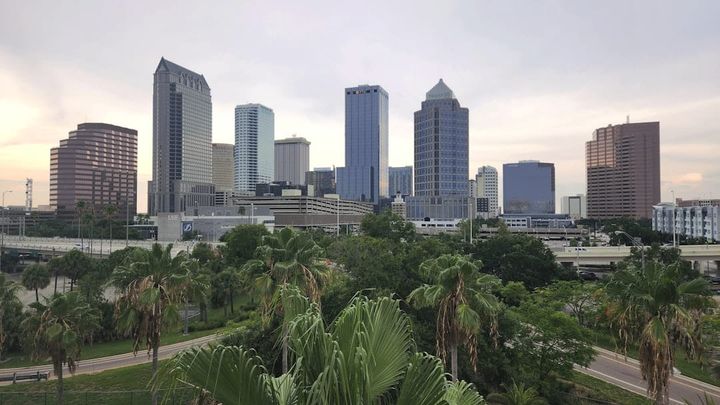
The two metros already sit in very different places. Orlando is the more permissive of the pair on the smaller version of this idea — accessory dwelling units. The city allows ADUs across all of its residential districts — capped at 500 square feet on a standard lot, and up to 1,000 only on larger lots that clear the city's size and setback thresholds, per the Orlando ADU ordinance. Tampa is far tighter, permitting ADUs only inside a defined ADU-eligible area and requiring a special-use permit for each one. Same state, same housing pressure, two very different answers — which is exactly why a blanket "Florida is upzoning" headline can mislead you. The rule that matters is your parcel's rule.
For an owner sitting on a well-located lot, the move right now is boring and smart: find out what your zoning allows today, and watch what your city council files next. An extra legal unit — even a single ADU — can turn a marginal rental into a real cash-flow property, and the option costs nothing to understand. If you're weighing whether to add a unit or convert what you have, our guide on turning a Tampa home into a rental walks the practical version of that decision.
If you're an out-of-state investor comparing Florida metros
For the investor in New York or Chicago choosing between Florida markets from a thousand miles away, the missing-middle story is a useful lens — and a trap if you read it wrong.
The lens: a metro that's loosening density rules is a metro betting on population growth, and that's the bet you want your money riding behind. The trap: a zoning change you can't see, in a market you can't drive, executed by a contractor you've never met, is exactly how remote deals go sideways. The reason out-of-state landlords get burned in Florida is rarely the strategy — it's the lack of local eyes on the ground between the spreadsheet and the keys. The same logic separates a long-term hold from a short-term play: the further you are from the property, the more the boring, durable strategy wins.
So treat missing middle as a signal in your market-selection model, not a construction plan you run by remote control. The places worth your capital are the ones adding homes, adding people, and keeping the rules legible enough that an out-of-town owner can actually follow them.
The bottom line
St. Pete didn't just tweak a zoning map. It ran a small, public experiment in what Florida neighborhoods are allowed to become — and the state, through Live Local, is running a much larger one over the top of it. Whether you own one house or four, the takeaway is the same: in Florida right now, the rules about what you can build are moving faster than rents, taxes, or insurance, and they're moving in the direction of more.
We manage rentals in Orlando and Tampa, and we read these signals so our owners don't get surprised by them. If you own in either market and want to know what your lot can legally become — or you're an out-of-state investor trying to pick the right Florida metro before you wire a deposit — that local read is the part worth getting right. Start with our Florida Owner's Guide for the on-the-ground version, and keep an eye on this Florida Watch series for where the rest of the state is heading next.