

The Florida Landlord Tax Filing Guide for 2025
Schedule E walkthrough, common deductions, depreciation, and when to hire a CPA. A practical guide for Florida landlords filing 2025 rental income.

Florida landlords file rental income on the same federal forms as everyone else—but the state's no-income-tax advantage makes the math simpler than in most states. For the 2025 tax year, filed in early 2026, here's what you need to know: Schedule E (see Publication 527; 2025 mileage rate is 70 cents per mile for rental activity), common deductions, depreciation, and when it makes sense to hire a CPA.
Schedule E: Where Rental Income Lives
Schedule E is where rental income and expenses live on your tax return. Rent goes on line 3; mortgage interest, insurance, repairs, and depreciation below. Florida has no state income tax, but federal rules apply.
Rental income and expenses go on IRS Schedule E. You report gross rent received, minus allowable expenses. Mortgage interest, property taxes, insurance, repairs, maintenance, utilities you pay, property management fees, and depreciation all reduce your taxable income. The IRS Publication 527 walks through each line in detail. For most Florida landlords with one or a few properties, Schedule E is straightforward—the complexity comes from knowing what qualifies as a deduction and what doesn't.
Common Deductions Florida Landlords Miss
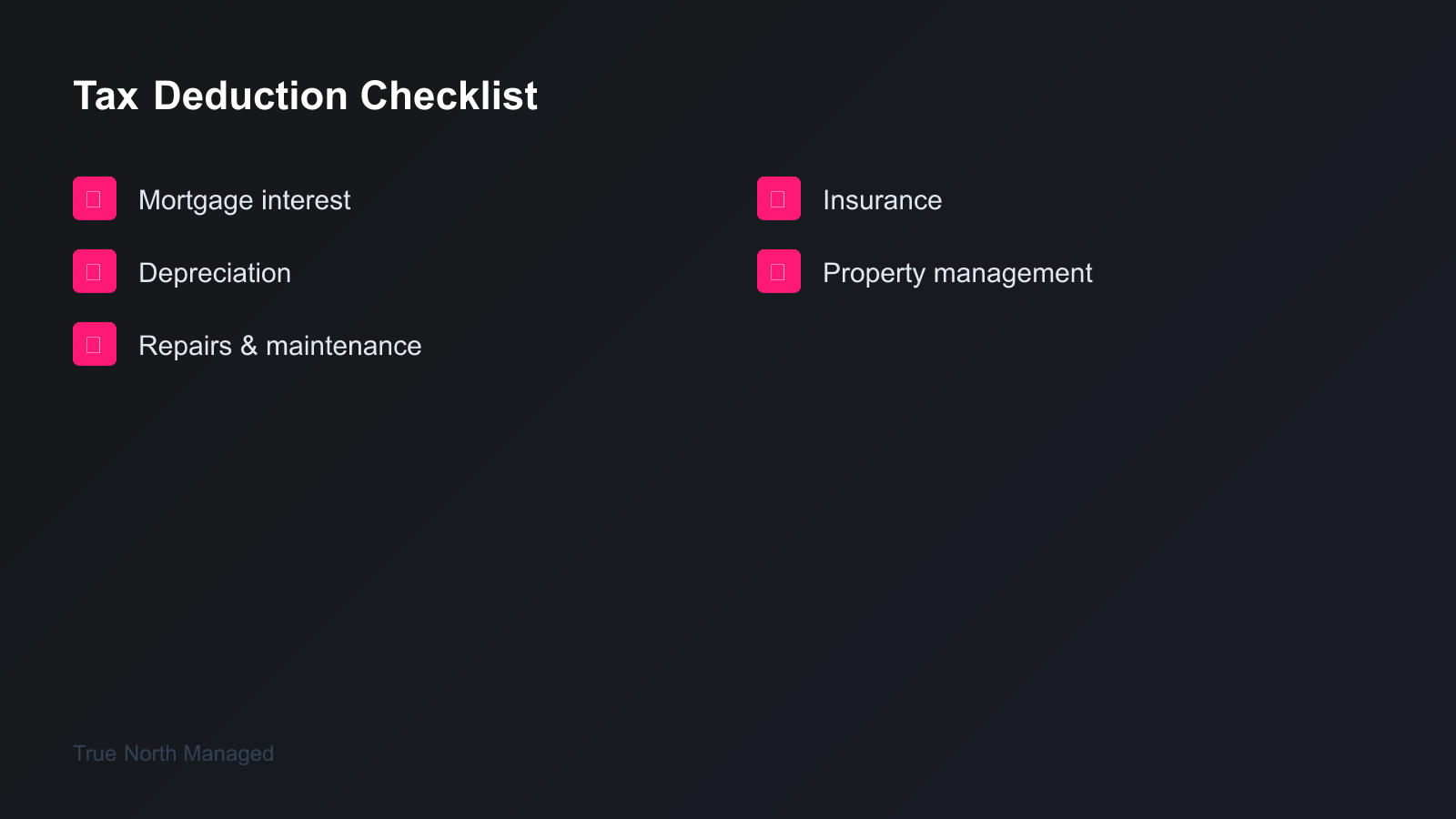
Common deductions landlords miss: travel, home office, and depreciation. Mileage for property visits, a portion of your home office if you manage from home, and 27.5-year depreciation on the building.
Travel to inspect or manage your property is deductible—but the rules tightened after 2017. You can deduct mileage or actual expenses for trips that are primarily for rental business. Home office deductions apply if you've a dedicated space used exclusively for rental management. Advertising, legal fees, and professional services (accounting, property management) are all deductible. Our rental tax deductions checklist covers the full list. The biggest mistake landlords make is mixing personal and rental expenses—keep separate records and receipts from day one.
Depreciation: The 27.5-Year Rule
Depreciation: residential rental buildings depreciate over 27.5 years. Land doesn't depreciate. A $250K Orlando property with $50K land = $200K building value / 27.5 = ~$7,273/year depreciation. It's a paper deduction.
Residential rental property depreciates over 27.5 years. You can't depreciate the land—only the structure and improvements. For a $300,000 property with land worth $80,000, your depreciable basis is $220,000. That gives you roughly $8,000 per year in depreciation as a non-cash deduction. It reduces your taxable income even when you're cash-flow positive. The downside: when you sell, depreciation recapture applies—you'll pay tax on the amount you claimed. That's a future problem; for now, depreciation is one of the -- strongest tax benefits of rental ownership.
Repairs vs Improvements
Repairs are deductible in the year incurred; improvements are depreciated. Fixing a leak = repair. Replacing the roof = improvement. The IRS distinction matters.
Repairs are deductible in the year you incur them. Replacing a broken AC compressor, fixing a leak, repainting a room—these are repairs. Improvements add value or extend the life of the property and must be depreciated. A new roof, a kitchen remodel, or adding a bathroom are improvements. The IRS has guidance on the distinction, but the line can be fuzzy. When in doubt, document the work and keep receipts. A CPA can help classify borderline cases correctly.
Passive Activity Rules
Passive activity rules can limit losses if you're not a real estate professional. $25K passive loss allowance phases out above $100K income. Florida has no state income tax, but federal rules still apply.
Rental income is generally passive unless you're a real estate professional. Passive losses can be used to offset passive income—not W-2 wages or other active income. If you've passive losses and no passive income, they carry forward until you've passive income or sell the property. For most part-time landlords, this means losses from one rental can offset income from another rental. It doesn't mean you can't deduct expenses—it means the timing of when -- losses can be used is restricted.
Florida's No-State-Income-Tax Advantage
Florida's no-state-income-tax advantage means you keep more of what you earn. No state return to file for rental income. Federal Schedule E still applies.
Florida has no state income tax. That means rental income is taxed only at the federal level. Landlords in New York, California, or Illinois pay federal plus state tax on the same income. For a landlord with $50,000 in net rental income, the difference can be thousands of dollars per year. It's one reason Florida remains a magnet for rental investors—the tax burden -- is lower than in most states.
Estimated Taxes
Estimated taxes: pay quarterly if you'll owe $1,000+. Rental income can push you into estimated payment territory. Plan for it.
If you expect to owe $1,000 or more at tax time, the IRS wants quarterly estimated payments. You pay in April, June, September, and January of the following year. Underpaying triggers penalties. Many landlords use the prior year's tax as a baseline and adjust for changes in income. A CPA can project your liability and set up a payment schedule for you.
When to Hire a CPA
Hire a CPA when you have 3+ properties, complex deductions, or entity questions. Florida CPAs know the landlord rules. Worth it for peace of mind.
If you've multiple properties, passive losses, or a complex situation (1031 exchange, partnership, LLC), hire a CPA. The cost is usually $500–$1500 for a typical return. A good CPA will find deductions you'd miss and keep you compliant. For a single rental with straightforward income and expenses, DIY or TurboTax may be enough—but if you're unsure, the -- upfront cost of a CPA is usually worth it.
Next Step
Run your numbers with a tax pro. True North Managed can't give tax advice, but we can help you understand rental income and expenses.
Tax filing is one piece of managing rental property. If you're evaluating a property or want to see what your numbers could look like, get a free rental analysis. We pull comps across Orlando and Tampa and help you position for the year ahead.
Schedule E Basics
Schedule E basics: rent in, expenses out. Mortgage interest, insurance, repairs, depreciation. Keep records.
Rental income and expenses go on Schedule E. Income includes rent, fees, and any payments for lease modifications. Expenses include mortgage interest (not principal), property tax, insurance, repairs, maintenance, and management fees. The IRS Publication 527 is the authoritative reference. Keep records for at least three years.
Common Deductions
Common deductions: interest, insurance, repairs, depreciation, travel. Don't miss the small ones.
Repairs that maintain the property are deductible in the year incurred. Improvements that add value or extend life are depreciated. Travel to manage your property is deductible, but the rules are strict. See our depreciation guide for improvement vs repair. The IRS has specific guidance on rental deductions.
State Filing
State filing: Florida has no state income tax. You'll still file federal. Schedule E.
Florida has no state income tax, so you don't file a state return for rental income. You may still have local obligations: property tax, tangible personal property tax for furnishings in STRs, and sales/tourist tax for short-term rentals. Our STR vs LTR tax comparison covers the differences. For property tax specifics, see Florida property tax for rentals.
Schedule E Basics
Schedule E: rent in, expenses out. Mortgage interest, insurance, repairs, depreciation.
Rental income and expenses go on Schedule E. Income includes rent, fees, and any payments for lease modifications. Expenses include mortgage interest (not principal), property tax, insurance, repairs, maintenance, and management fees. The IRS Publication 527 is the authoritative reference. Keep records for at least three years.
Common Deductions
Deductions: interest, insurance, repairs, depreciation. Keep receipts.
Repairs that maintain the property are deductible in the year incurred. Improvements that add value or extend life are depreciated. Travel to manage your property is deductible, but the rules are strict. See our depreciation guide for improvement vs repair. The IRS has specific guidance on rental deductions.
State Filing
Florida: no state income tax. Federal only.
Florida has no state income tax, so you don't file a state return for rental income. You may still have local obligations: property tax, tangible personal property tax for furnishings in STRs, and sales/tourist tax for short-term rentals. Our STR vs LTR tax comparison covers the differences. For property tax specifics, see Florida property tax for rentals.
For 2025, the standard mileage rate for business use of your vehicle is 67 cents per mile. If you're driving to Orlando or Tampa properties for showings, repairs, or inspections, you can deduct that. A 20-mile round trip twice a month adds up—track it in a spreadsheet or app.
Depreciation and Cost Segregation
Your rental property depreciates over 27.5 years for residential. A $275,000 building (minus land value) might depreciate at $10,000/year. Cost segregation lets you front-load depreciation on components like fixtures, appliances, and finishes. A study might cost $1,500–3,000 but can accelerate $30,000+ in depreciation to year one.
2025 tax rules: the Section 199A deduction for pass-through income still applies. If your rental qualifies as a trade or business (not passive), you may deduct up to 20% of qualified business income. Talk to a CPA who does rental real estate.