
Renting Near UCF: Student Tenant Guide for Orlando Landlords
UCF student rentals: lease timing, co-signers, roommate situations, summer vacancy, furnishing, and noise management. What Orlando landlords need to know.

The University of Central Florida is one of the largest universities in the country, and that enrollment is a built-in tenant pool for landlords. Properties within a few miles of campus lease fast. But renting near UCF isn't like renting to a family in a suburb — the academic calendar, roommate dynamics, parent guarantors, and summer vacancy all change how you write the lease and screen applicants. Here's what works.
Is renting near UCF a good move for Orlando landlords?
Renting near UCF gives you steady, predictable demand — the student population refreshes every year, and properties within a few miles of campus lease quickly, especially in the August rush. The tradeoff is more turnover and a leasing cycle that runs on the academic calendar instead of the regular rental market.
There's a fresh tailwind in 2026. The UCF Board of Trustees approved the first major on-campus housing rate increase in roughly 12 years for the 2026–27 year — single rooms climbing from about $3,500 to $4,375 per semester. Students are already weighing off-campus options to blunt the cost. For a landlord with a house near campus, that's more applicants competing for your unit. The student-housing market near UCF is also getting more competitive on the supply side, so a well-priced, well-maintained off-campus home stands out.
How should you time a lease for UCF students?
UCF students almost always want an August move-in to match the start of the fall semester. A 12-month lease running August to August lines up with the academic year and keeps your unit full through the school year. Turnover clusters in July and August, so plan your renewal conversations for May.
Summer is the soft spot. Some students leave for internships or go home, and an unfurnished unit can sit empty for a month or two. You have two ways to handle it. Allow summer sublets through a sublet addendum with your approval — the lease stays in force, the original tenant stays liable, and you keep the rent flowing. Or price the property for ten months of rent and accept two months vacant. The sublet route costs you less; most landlords near campus run August-to-August and accept some summer churn. Build the math into your asking rent either way.
Should you require a parent guarantor for student tenants?
Yes — for undergraduate students, require a parent or guardian guarantor. Most students don't have the income history or credit to qualify on their own, and a guarantor bridges that gap. The guarantor should sign a separate guaranty agreement making them jointly and severally liable for the full lease, not just for missed payments.
Screen the guarantor like any other applicant: credit check, income verification at roughly 3x rent from steady employment, and identity confirmation. A parent in New Jersey who guarantees the lease is still on the hook if the student skips — and that's not theoretical. Landlords near campus do collect from guarantors when a student leaves mid-lease, which is exactly why the guaranty has to be written tightly.
One fair housing note: if you reject a student for thin credit but offer the guarantor option to some applicants and not others, you've created an inconsistency that can become a fair housing problem. Apply the guarantor requirement the same way to everyone. Our tenant screening and fair housing guide covers how to keep your criteria consistent.
How do you screen a student applicant with no rental history?
Student applicants usually have limited credit and no prior landlord references, so screening leans on the guarantor and on proof of enrollment. Require a UCF enrollment confirmation, financial aid award letters where they apply, and the same credit and income check on the guarantor that you'd run on a primary applicant.
Financial aid changes the rent rhythm. Aid disburses periodically, not monthly, so a student may pay in lump sums around disbursement dates. Set clear due dates and late fee terms in the lease and lean on the guarantor to cover any gaps. Our Orlando tenant screening guide covers the Orange County specifics, and the fair housing guide keeps your criteria defensible.
How do you handle roommate leases near UCF?
Multiple students renting one house together is the norm near UCF. The cleanest structure is one lease with every roommate's name on it and joint and several liability — meaning each tenant is legally responsible for the full rent, not just their share. If one roommate leaves, the others cover the shortfall or find a replacement you approve.
The alternative — a master tenant with a roommate addendum — puts one person in charge and the rest as occupants. It's simpler to administer but concentrates your risk on one tenant. Whichever you choose, document which bedroom each tenant occupies. It heads off deposit disputes at move-out when four people are pointing at the same wall.
Should you furnish a rental near UCF?
Furnishing is worth considering specifically to fight summer vacancy. Unfurnished units near UCF often sit empty over the summer, while furnished units pull in international students, graduate students, and tenants on short summer internships who don't want to buy furniture for a few months.
Furnishing isn't free — it adds upfront cost and ongoing wear, and you'll replace pieces every few turnovers. Run the numbers for your specific property: if furnishing fills two summer months that would otherwise be vacant, it can pay for itself. Some landlords skip furnishing and instead offer a modest summer discount to keep a current tenant from leaving. Either approach beats an empty house from May to August.
How do you manage noise and parties in a student rental?
Put a clear noise clause in the lease with defined quiet hours, then enforce it consistently. Document every complaint in writing and send written notices. A first incident is usually a warning; repeated, documented violations can support lease termination under your lease terms.
Timing helps. Know the UCF academic calendar — finals weeks and move-out periods are high-stress stretches when complaints spike. Steady communication and consistent enforcement do more than aggressive penalties. A landlord who responds to the first noise complaint quickly and in writing rarely has a second one.
Which neighborhoods near UCF are best for rentals?
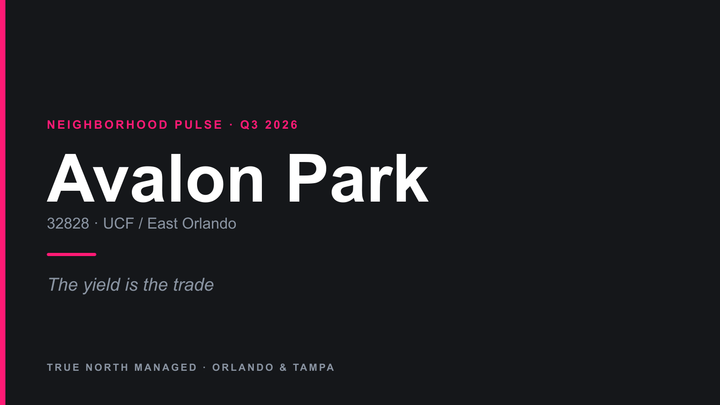
Oviedo, Avalon Park, and Waterford Lakes are the primary rental corridors for UCF students and staff. Each draws a slightly different tenant. Oviedo is family-oriented with strong schools and tends to attract graduate students, staff, and students who want a quieter setting. Avalon Park has newer inventory and walkable retail. Waterford Lakes sits closest to campus and leases fastest to undergraduates.
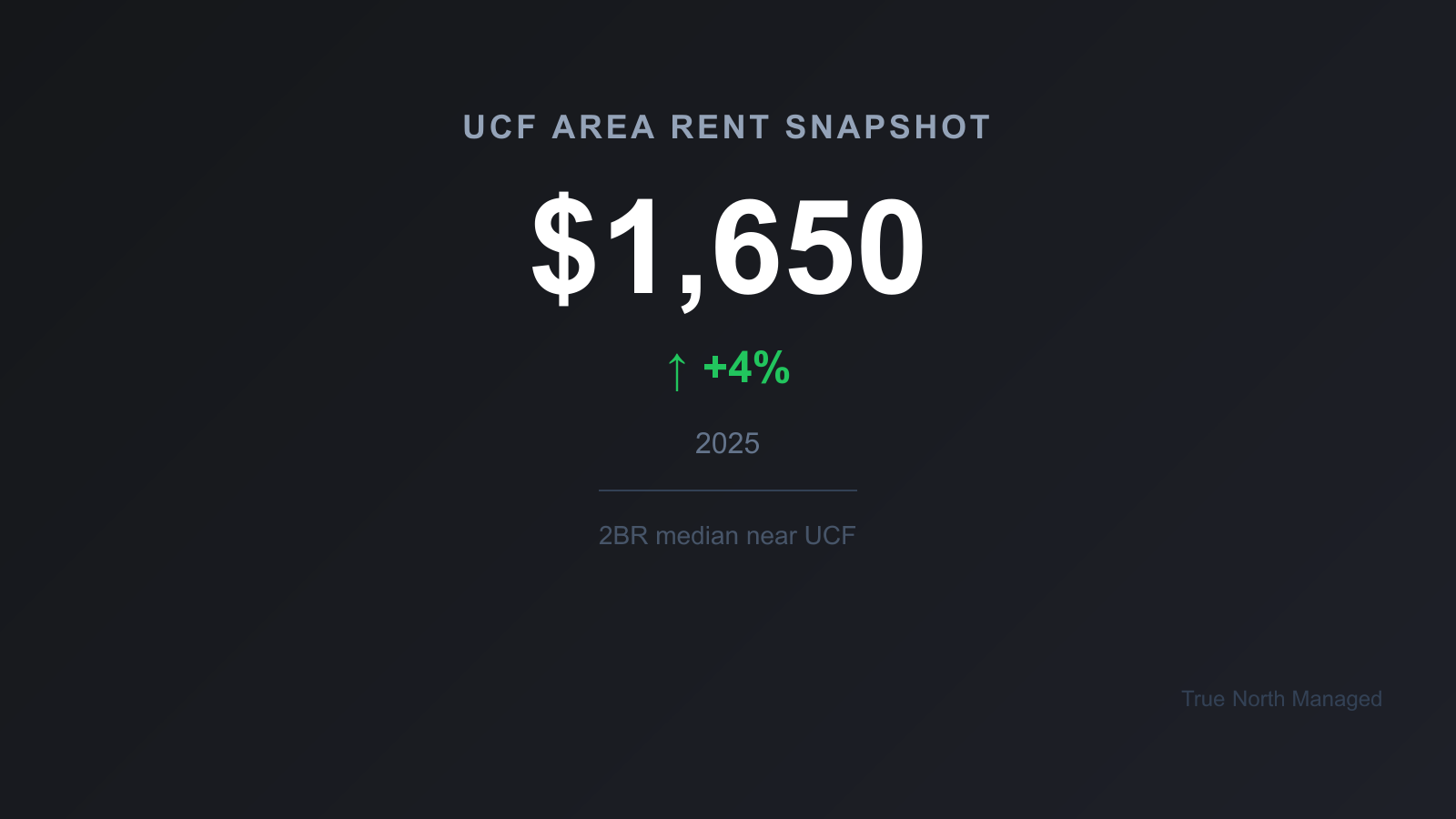
Rent ranges track the tenant profile and proximity. A three-bedroom home near Research Park can lease in under a week during the July–August peak in the $2,100–$2,400 range, and a four-bedroom near campus can reach $2,500–$3,000 a month. Check current comps on Zillow and Apartments.com for the 32826 and 32817 ZIP codes before you set a price. For submarket detail, see our Oviedo investment profile and Avalon Park profile, and price with the Orlando rent pricing guide.
Common mistakes landlords make with UCF rentals
- Skipping the guarantor. Renting to a student on thin credit with no guarantor leaves you with no one to collect from if they leave.
- Mistiming the lease. A lease that ends in October or February forces you to re-lease off-cycle, when there's almost no student demand.
- Not documenting move-in condition. With three or four roommates, a vague move-in record turns into a deposit fight. Our move-in inspection checklist covers what to capture.
- Inconsistent enforcement. Applying noise rules or guarantor requirements to some tenants and not others creates fair housing exposure.
- Ignoring the summer gap. Pricing for 12 months of rent when the unit realistically fills 10 leaves you short.
Own one rental near UCF? You don't have to manage it alone.
Plenty of UCF-area landlords own a single property — a house bought near campus, or one a family already owned and decided to rent. Student rentals carry more moving parts than a standard lease: the academic calendar, guarantor agreements, roommate turnover, the August scramble. You don't need a portfolio to get help with any of it.
We manage single properties across the UCF and East Orlando area, and that includes the student-rental specifics — guarantor screening, lease timing, turnover, and pricing. If you'd rather hand off the operational side, get a free rental analysis and we'll walk through what your property near UCF can rent for and what managing it well looks like. For broader Orlando guidance, the Orlando property management hub has neighborhood guides and market updates.
Sources: UCF Student Legal Services — lease review, UCF Housing and Residence Life.