
Orlando Rental Market Update — October 2025
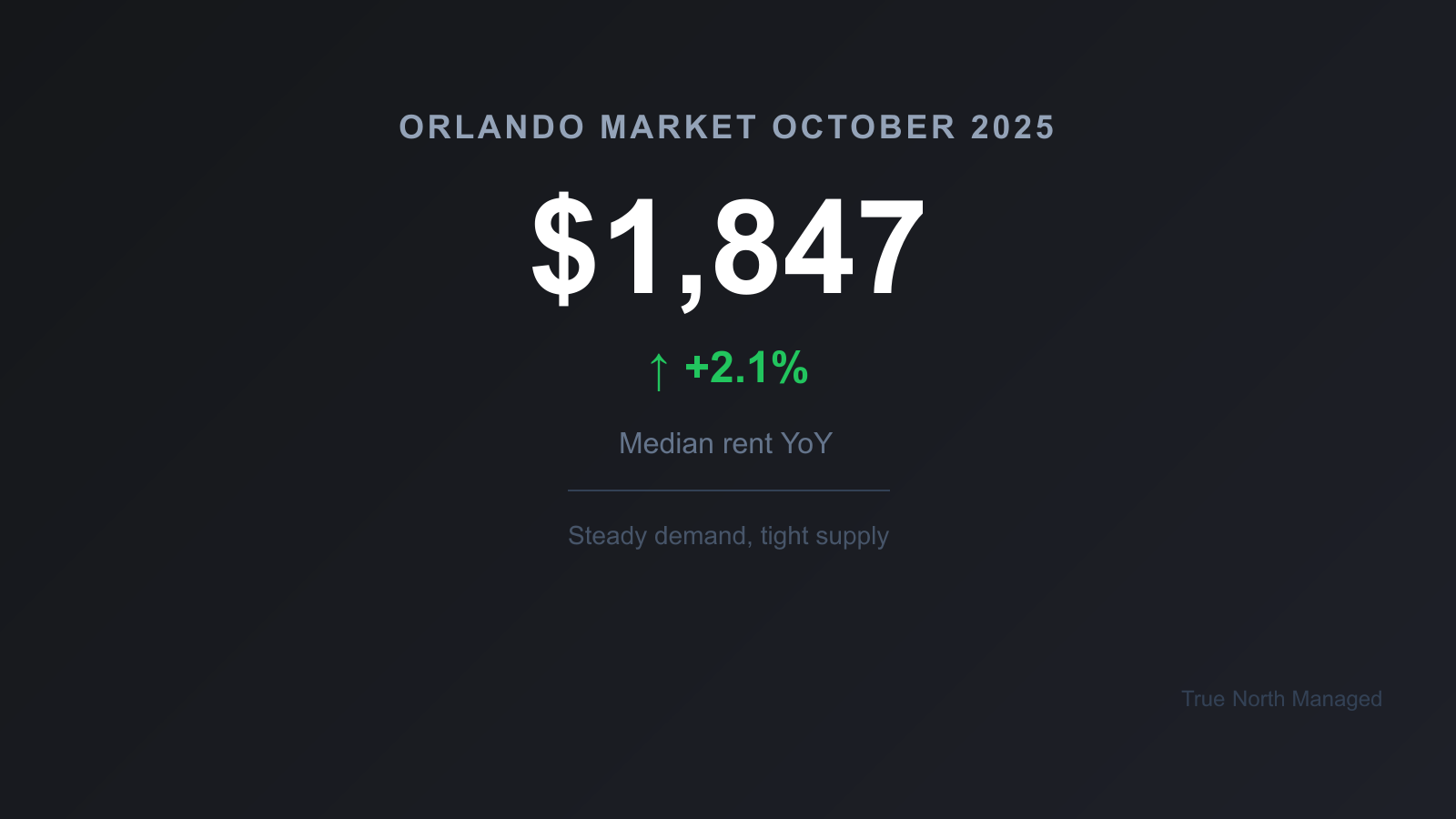
October brought the usual fall cooling to Orlando rents after the summer peak. Back-to-school settling, UCF calendar shifts, and theme park hiring shaped demand.

October marks the transition from Orlando's peak summer leasing season into a more measured fall. For landlords watching the Orlando market, October offered a clearer picture of where demand stands as the academic and tourism calendars shift.
Fall Cooling After the Summer Peak
Rental demand in Orlando typically peaks in late summer when families lock in housing before the school year and when theme park seasonal hiring ramps up. By October, that surge has passed. Properties that sat vacant through September often saw renewed interest as tenants who had been waiting for fall pricing began to move. Vacancy tightened from summer levels in many areas, though the improvement was uneven across neighborhoods.
UCF and the Academic Calendar
The University of Central Florida drives a distinct demand cycle in east Orlando and Oviedo. Fall semester starts in late August; by October, most students have secured housing. Landlords near UCF saw demand settle into a steadier pattern—fewer frantic applications, more lease renewals and mid-term turnover. Properties within a short commute of campus continued to command a premium, with rents holding above pre-pandemic norms. The academic calendar creates a secondary mini-peak in December and January for spring enrollees, so October is often a planning month for landlords targeting that segment.
Theme Park Seasonal Hiring
Orlando's theme parks and hospitality employers ramp up hiring in the fall for the holiday season. That creates a steady stream of new arrivals looking for rentals—often short-term or month-to-month initially. Landlords willing to work with seasonal workers or offer flexible lease terms found consistent demand in October. The tradeoff is higher turnover; many of these tenants leave by spring. For investors focused on stability, the fall hiring wave is a factor to weigh against the reliability of year-round tenants.
New Construction Pipeline
Central Florida's multifamily and single-family rental pipeline remained active into the fourth quarter. New deliveries in Lake Nona, Horizon West, and along the I-4 corridor added supply, though absorption kept pace in most submarkets. Landlords with older inventory faced more competition from newer units with modern finishes and amenities. Pricing held in well-located properties; pressure was felt more in areas with concentrated new supply. The Census Bureau's new residential construction data provides context on national trends; local absorption varies by submarket.
What October Means for Your Numbers
If you're evaluating rent levels or considering a lease renewal, October data suggests the Orlando market remained landlord-favorable. Vacancy improved from summer. The seasonal slowdown was modest compared with historical patterns—demand held up better than in typical pre-pandemic Octobers. For a data-driven view of what your property could command, get a free rental analysis. We pull comps across Orlando submarkets and help you position for the year-end renewal cycle.
Insurance and Operating Costs
Landlord insurance rates in Central Florida continued to pressure margins through the fall. Carriers tightened underwriting in wind-exposed areas. Properties in FEMA flood zones faced higher premiums. Our Orlando landlord insurance guide covers local considerations. For lease renewal strategy, see when to renew, raise, or let go.
Supply and Absorption
New multifamily deliveries in Lake Nona and Horizon West added supply, though absorption kept pace in most submarkets. Landlords with older inventory faced more competition from newer units. Our Lake Nona and Horizon West profiles cover those corridors. A free rental analysis helps you position for the year-end renewal cycle.