
Someone Cloned Your Rental Listing: How the Scam Works and How to Shut It Down
Scammers copy your real rental listing, post it cheap on Facebook, and pocket deposits — then the angry calls come to you. Here's how to shut a clone down fast.
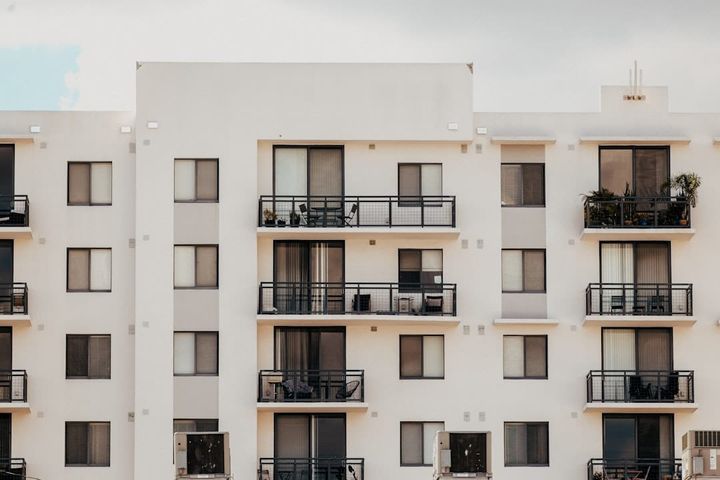
The call comes out of nowhere: someone you've never spoken to says they wired a $1,800 deposit for your rental and wants to know when they can pick up the keys. You didn't list it on Facebook. You didn't ask anyone for a wire. But your photos, your address, and your house are all over a post you never made — priced a few hundred below market to reel people in. Your listing got cloned, and now a stranger's loss is landing on your doorstep.
Nationally, people have reported about $65 million in rental-scam losses to the FTC since 2020, according to its December 2025 Data Spotlight — and the cruel twist is that the better your listing looks, the better the bait. The good news is you can spot a clone fast, get it taken down, and keep would-be victims from showing up at your door. Here's how the scam runs and exactly what to do about it.
How does a cloned-listing scam work?
Scammers copy a real rental's photos, description, and address from a legitimate site, then repost it as their own — usually on Facebook Marketplace, often at a suspiciously low price. They swap in their own phone number or email, send a stolen video walkthrough instead of meeting in person, and collect an application fee, deposit, or first month's rent by wire, gift card, Zelle, or crypto. Then they vanish.

The whole con runs on borrowed credibility. Your listing did the hard work — professional photos, an accurate description, a real address someone can drive past — and the scammer just bolts their contact info onto it. The FTC's rundown of rental listing scams describes the pattern, and the Better Business Bureau's study found it's one of the most common housing frauds going. In 2026 it got worse: AI now generates convincing video walkthroughs and fake "verification" documents, so a renter doing a casual check can still get fooled.
The tell that protects everyone is simple — the scammer can't let anyone inside, because they don't have the keys. Every red flag downstream traces back to that one fact.
Why is your real listing the scammer's target?
Because your listing is the asset they're stealing. A polished, accurate rental ad on a trusted platform is exactly what a scammer needs to look legitimate — and you're the one left dealing with the wreckage. The victim loses money to a stranger, but the confusion, the angry calls, and the people showing up at your property all land on you.
Timing makes it worse. Cloning spikes during the busy summer leasing season, when more listings are live, more renters are scrambling to move before a school year or a job start, and a too-good price is more likely to override someone's caution. If you're advertising a vacancy between late spring and early fall, assume your listing is a more attractive target than usual and watch for it accordingly.
It plays out in predictable ways. You get calls and texts from people who "already paid" and think you're their landlord. Strangers drive by or knock, expecting to move in. Your actual applicants get spooked when they find two versions of the same listing at different prices and can't tell which is real. None of it is your fault, but all of it is your problem — and if you don't get ahead of it, it can stall your real lease-up and dent your reputation in the neighborhood. That's why catching a clone early matters as much for you as it does for the renter who almost got taken.
How do you shut down a clone of your listing?
Move fast: find it, report it, and get it taken down before it collects a victim. Platforms remove cloned listings when they're reported, but they won't act on a scam they don't know about — so the speed of your response is what limits the damage.
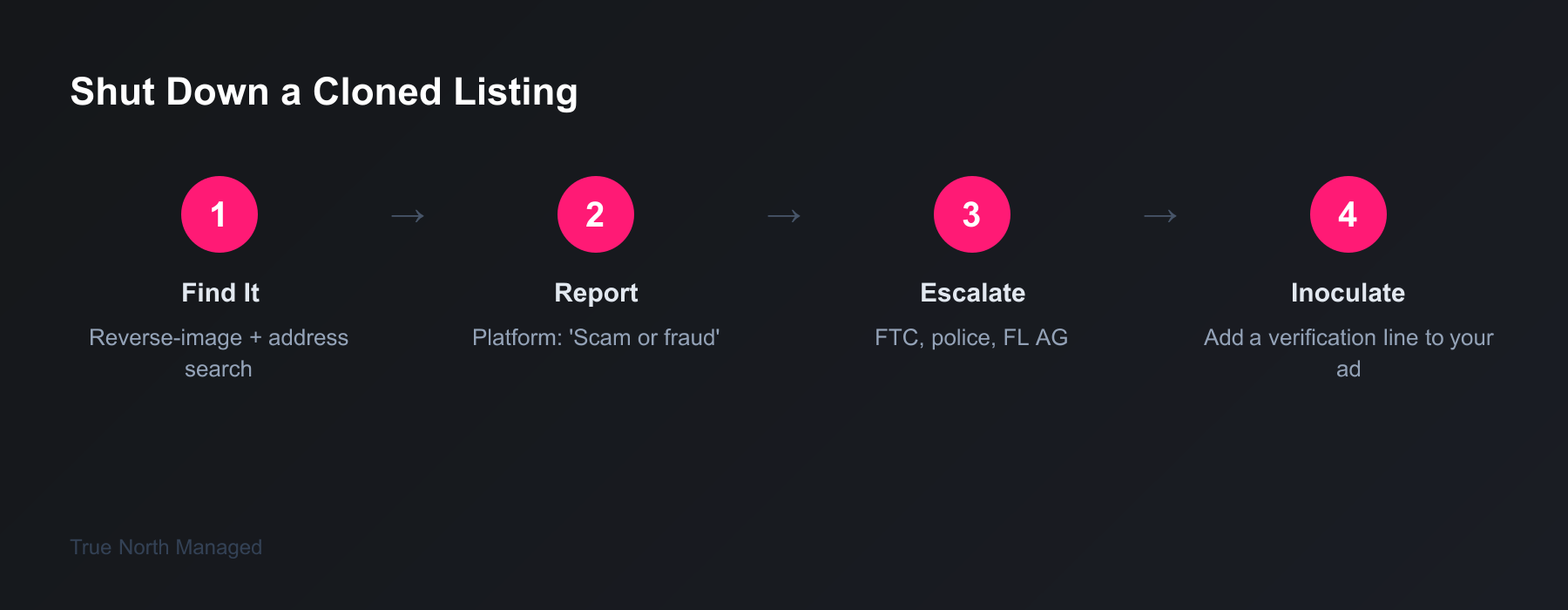
Here's the playbook:
- Watch for it. Run a reverse image search on your listing photos every so often, and periodically search your property's address plus "for rent." A second ad for your address under a different name or a lower price is a clone.
- Report it on the platform. On Facebook Marketplace, open the listing, tap the three dots, choose "Report listing," then "Scam or fraud." Most platforms pull a reported clone quickly.
- Escalate the fraud. Report it to the FTC at reportfraud.ftc.gov, to local police, and to the Florida Attorney General. Save the listing URL and screenshots — that's what investigators and banks need.
- Inoculate your real listing. Add a short verification line to your genuine ad: that you never ask for a deposit or wire before an in-person or live video showing, and how to confirm you're the real landlord. Watermarking your photos makes them harder to reuse cleanly.
A property manager handles this as a matter of course — monitoring for clones, filing the takedowns, and fielding the "I already paid" calls so they never reach you at dinner. If you self-manage, build the monitoring into your routine the same way you'd check on rent.
What should you tell prospective renters?
Give them the three checks that defeat every version of this scam: verify the owner, see it in person, and never pay before you do. A renter who follows those three rules can't be cloned-listing-scammed, and steering your applicants toward them protects your real lease-up too.
Share these plainly with anyone inquiring:
- Verify who owns it. Look up the address on the county property-appraiser site. If the "landlord" won't match the record — or the same address is advertised under a different name — walk away.
- Insist on seeing it. No real landlord needs your money before you've stood in the unit or done a live video tour. "I'm out of town, just send the deposit" is the scam, every time.
- Never wire, gift-card, Zelle, or crypto a stranger. Those payments don't come back. A legitimate Florida landlord uses a normal application and a traceable payment method.
This is also where your own anti-fraud habits matter on the back end. The same scammers who clone listings also send fake applications, so pair listing vigilance with solid screening against rental application fraud. And if your concern is a stranger physically taking over a vacant property rather than scamming a renter online, that's a different threat covered in our guide to the fake-lease scam and the new fraudulent-entry law.
What if a renter already paid the scammer?
Be kind, be clear, and point them to recovery — fast action is the only thing that helps. The person calling lost real money to someone impersonating you, so treat them as a victim, not a nuisance. Tell them plainly: that listing wasn't yours, you never received their money, and here's what to do right now.
The recovery steps are time-sensitive. They should contact their bank or payment app immediately to try to stop or reverse the transfer — wires and Zelle move fast, but a same-day catch sometimes works. They should file a police report, report the fraud to the FTC at reportfraud.ftc.gov and the FBI's Internet Crime Complaint Center, and save every message and the listing URL for investigators. Zillow's guide to spotting rental scams is a solid plain-English resource to send them. You can't refund money you never collected, but a two-minute, compassionate call that routes someone to the right agencies turns an angry caller into a person who tells their friends you did right by them — and it gets the fraud reported, which is what eventually gets these rings shut down.
Common mistakes landlords make with cloned listings
Ignoring it because "it's the renter's problem." It's your address, your reputation, and your lease-up that suffer. Report and take down every clone you find.
Arguing with the victims. The person calling about a deposit isn't the scammer — they're out money and embarrassed. Be brief and kind: it wasn't your listing, you're sorry it happened, and here's where to report it.
Leaving your real listing un-inoculated. A one-line "we never take a deposit before a showing — verify us here" note costs nothing and quietly defuses the whole con for anyone comparing your ad to the fake.
Keep your listing working for you, not a scammer
A cloned listing is a tax on having a good one — and the way you beat it is the same discipline that runs a rental well: watch your property, respond fast, and make it easy for honest renters to tell real from fake. Catch the clone early and it's a five-minute report; ignore it and it's a steady drip of angry calls and stalled showings.
If you'd rather not be the one monitoring Facebook Marketplace and fielding scam calls, that's part of what we handle for owners. Start with a free rental analysis and we'll show you what your Orlando or Tampa property should rent for — and help keep your listing from being turned against you — and keep your real applicants from getting scared off by a cheaper fake next door.