

Neighbor Complaints About My Tenant: Florida Landlord Liability
Noise, parking, pets, property maintenance. When are you liable for tenant behavior? HOA enforcement, documentation, and when you can evict.
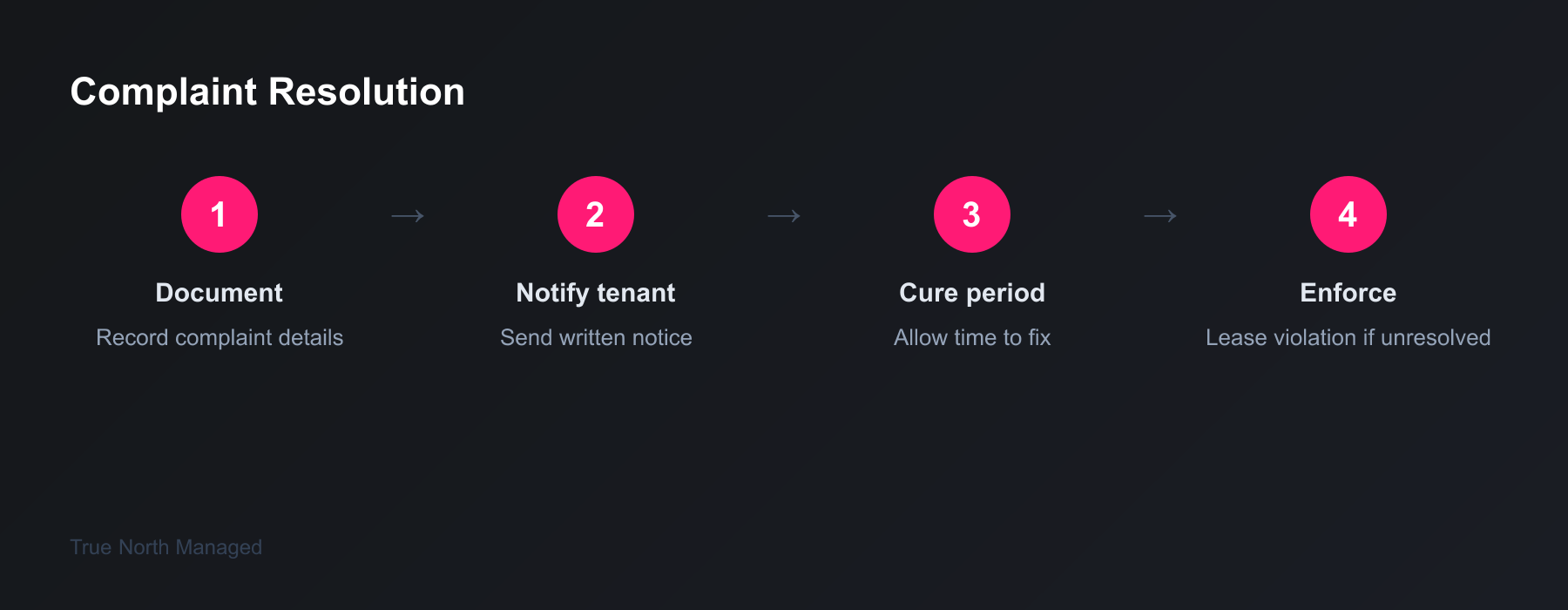
Follow the cure process in your lease before escalating to eviction. A 7-day notice to cure gives the tenant a chance to correct the behavior. Document the notice and the outcome.
Document every complaint: date, time, source, and what was reported. Send the tenant a written notice that complaints have been received. Keep a log. If you eventually terminate the lease, this record supports your decision. Ourillegal activity guidecovers when complaints escalate.
The neighbor calls again. Loud music at 2 AM. Cars blocking the driveway. Dog barking all day. You're the landlord, and the complaints are landing on you. In Florida, when are you liable for your tenant's behavior, and what can you actually do?
Landlord Liability for Tenant Behavior
You're not automatically liable for everything your tenant does.In Florida, But you can be liable if you knew about a problem and failed to take reasonable action. If complaints are documented and you ignore them, a court could find you negligent.
You're not automatically liable for everything your tenant does. But you can be liable if you knew about a problem and failed to take reasonable action. If complaints are documented and you ignore them, a court could find you negligent. The key: respond. Document. Take steps. Even if you can't evict immediately, showing you addressed the issue matters.
Noise, Parking, and Pet Complaints
Noise complaints are common.Florida doesn't have a statewide noise ordinance; cities and counties set their own. Check local rules. FL landlords in Orlando and Tampa should check local requirements.
Noise complaints are common. Florida doesn't have a statewide noise ordinance; cities and counties set their own. Check local rules. If the tenant is violating them, that can support acure notice. Parking disputes often involve HOA rules or lease terms. Pet complaints may relate to yourpet policyor nuisance. Each situation needs documentation. Ask complainants to put it in writing. Log dates and details.
HOA and Code Enforcement
If the property is in an HOA, the association may send violation notices to you.In Florida, You're responsible for ensuring tenant compliance with HOA rules. Forward notices to the tenant with a cure deadline.
If the property is in an HOA, the association may send violation notices to you. You're responsible for ensuring tenant compliance with HOA rules. Forward notices to the tenant with a cure deadline. If they don't comply, you may have lease violation grounds. Code enforcement complaints (overgrown lawn, trash, unpermitted modifications) follow a similar path. See ourHOA rental restrictions guidefor how associations enforce rules.
When You Can Evict
Eviction requires a lease violation or statutory ground.Repeated noise violations after written warnings can support a cure-or-quit notice. If the tenant doesn't cure, you can terminate. FL landlords in Orlando and Tampa should check local requirements.
Eviction requires a lease violation or statutory ground. Repeated noise violations after written warnings can support a cure-or-quit notice. If the tenant doesn't cure, you can terminate. For serious or ongoing disturbances,Florida Statute 83.56may allow a 7-day unconditional quit. The bar is higher than a simple neighbor dispute. You need evidence: police reports, HOA violation letters, multiple documented complaints.
Documentation Trail
Keep a log. Date, complainant, nature of complaint, action taken. Send written notices to.In Florida, Date, complainant, nature of complaint, action taken. Send written notices to the tenant. FL landlords in Orlando and Tampa should check local requirements.
Keep a log. Date, complainant, nature of complaint, action taken. Send written notices to the tenant. Give them a chance to cure. If the pattern continues, you've a record for eviction. Without documentation, you're relying on memory and he-said-she-said. Ourguide on handling tenant disputescovers de-escalation and when to escalate.
Neighbor complaints require a balanced response: take them seriously, document everything, and use your lease and Florida law to address repeat offenders. If you're managing rentals in Orlando or Tampa and need help with a difficult tenant situation,get a free rental analysisand we can discuss your options.
Noise and Nuisance
Noise complaints are common.In Florida, Document each complaint: date, time, source, and what was reported. Send the tenant a written notice that complaints have been received and that continued violations may result in lease termination.
Noise complaints are common. Document each complaint: date, time, source, and what was reported. Send the tenant a written notice that complaints have been received and that continued violations may result in lease termination. Many leases include a nuisance clause. Follow the cure process in your lease before escalating to eviction.
HOA Enforcement
If the property is in an HOA, the association may send violation notices to you as the owner.In Florida, You're responsible for ensuring tenant compliance. Forward notices to the tenant and require correction. FL landlords in Orlando and Tampa should check local requirements.
If the property is in an HOA, the association may send violation notices to you as the owner. You're responsible for ensuring tenant compliance. Forward notices to the tenant and require correction. If the HOA fines you, you can often pass those costs to the tenant per the lease. See ourHOA rental restrictions guidefor context.
When to Involve an Attorney
If you're in an HOA, the association may get complaints about your tenant before you do.In Florida, Respond quickly. HOA fines can land on you, and repeated violations can trigger action against the property.
HOA Complaint Handling
If you're in an HOA, the association may get complaints about your tenant before you do.In Florida, Respond quickly. HOA fines can land on you, and repeated violations can trigger action against the property.
If you're in an HOA, the association may get complaints about your tenant before you do. Respond quickly. HOA fines can land on you, and repeated violations can trigger action against the property. Document your response and any corrective steps. If the tenant is the problem, address it per the lease.
Documentation and Escalation
Log every complaint: date, source, what was alleged.In Florida, Give the tenant written notice and a chance to respond. If it continues, escalate per your lease -- warnings, then lease termination if the conduct violates the agreement.
Log every complaint: date, source, what was alleged. Give the tenant written notice and a chance to respond. If it continues, escalate per your lease -- warnings, then lease termination if the conduct violates the agreement. Nuisance clauses and quiet enjoyment obligations give you grounds. Act before the neighbor files a formal complaint with the city or HOA.
Building a Documentation Timeline
When neighbor complaints start rolling in, your documentation timeline becomes your best legal protection.Log every complaint with the date, source (neighbor, HOA, law enforcement), and the specific allegation. Send your tenant a written notice referencing the lease clause they're violating -- Florida Statute 83.
When neighbor complaints start rolling in, your documentation timeline becomes your best legal protection. Log every complaint with the date, source (neighbor, HOA, law enforcement), and the specific allegation. Send your tenant a written notice referencing the lease clause they're violating -- Florida Statute 83.56(2)(b) gives you the right to issue a 7-day cure notice for non-compliance. Keep copies of every notice and the method of delivery. If the situation escalates to eviction, the judge wants to see a clear pattern and reasonable opportunity to cure.
Documentation That Protects You
When a neighbor complains, document it. Get it in writing—email or letter. Note the date, time, and nature of the complaint. If the noise or behavior continues, you can use that as grounds for a lease violation notice.
You're not liable for tenant behavior you didn't enable. But you do have a duty to address lease violations. If you ignore repeated complaints, the neighbor could argue you're negligent. A 7-day notice to cure or quit shows you're taking it seriously.
When to Escalate
If the tenant doesn't cure after a 7-day notice, you can proceed with eviction. Document that you gave them a chance. The court will want to see that you tried to resolve it before filing.
If the complaint is about noise and the tenant claims it's normal living, you have a judgment call. Get the neighbor's complaints in writing. Multiple complaints over time strengthen your case. One complaint might not be enough.
Bottom Line
Document complaints. Serve a 7-day notice if the tenant violates the lease. Escalate if they don't cure. Paper trail protects you.
Florida's nuisance laws can hold landlords liable for repeated tenant behavior. Address it proactively.
When in doubt, document it. Florida landlords who follow the process and keep a paper trail protect themselves when disputes arise. A few minutes of documentation can save months of headaches.
If complaints persist after written notices and the tenant won't cure, consult an attorney before terminating the lease. Eviction for lease violations requires proper notice and documentation. Ourtenant disputes guidecovers de-escalation strategies. For serious violations, seeillegal activity in rentals.