

Illegal Activity in My Rental: What Florida Landlords Can Do
Drug activity, prostitution, stolen property. FL 83.56(2)(a) allows a 7-day unconditional quit for material destruction or ongoing disturbances. Your options.
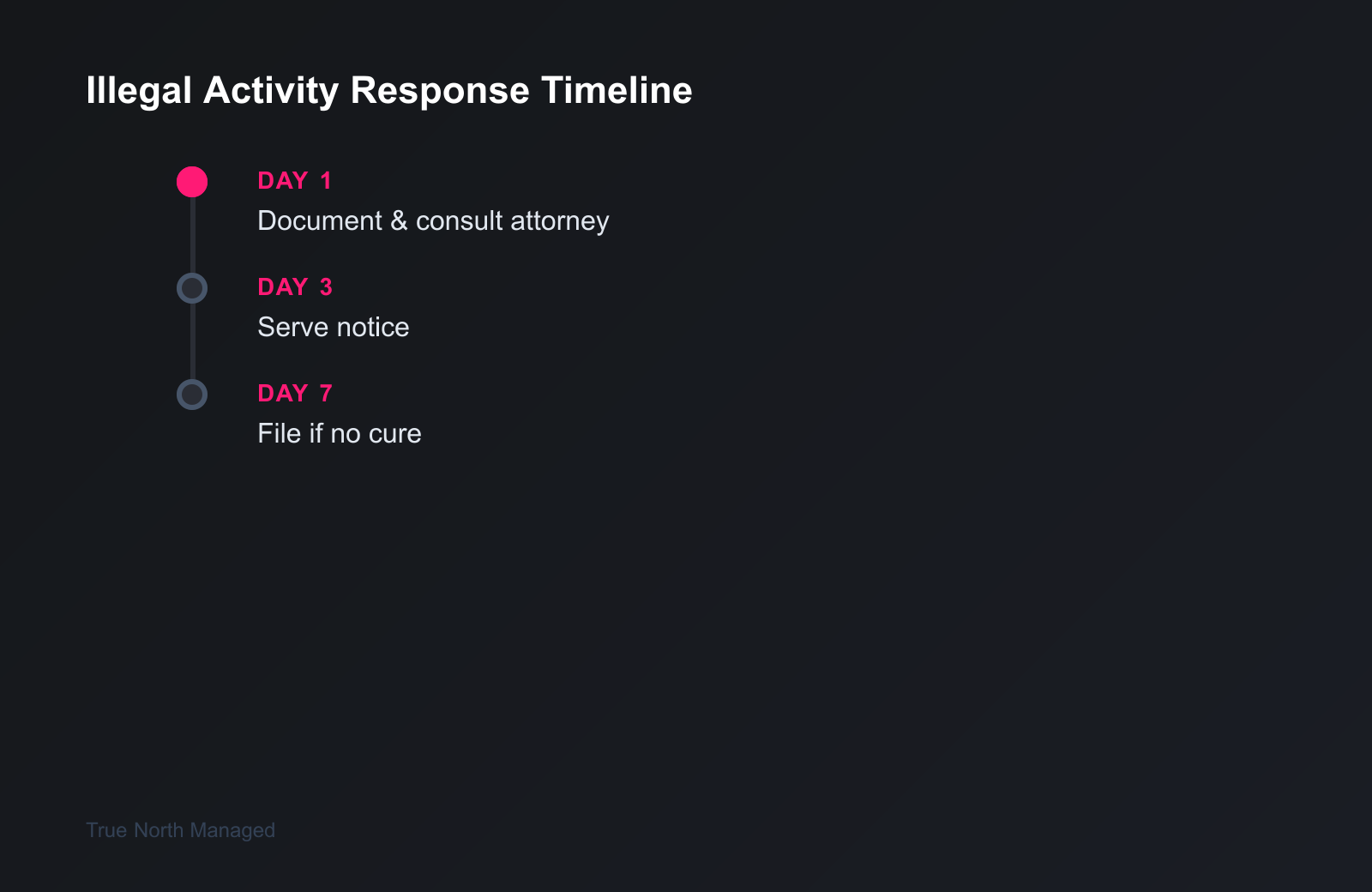
Serve the 7-day unconditional quit as soon as you've credible evidence. Don't delay. The court process typically takes 2-4 weeks in most Florida counties.
Landlords can face liability if they knew of illegal activity and failed to act. Document what you know and when you knew it. Serve the 7-day unconditional quit promptly. Consult an attorney if the situation is complex. Ourdangerous tenant guidecovers escalation options.
Neighbors report suspicious traffic. You see unfamiliar cars at odd hours. Law enforcement is involved. Illegal activity in your rental puts you, your property, and your other tenants at risk. Florida gives landlords tools to act quickly. Here's what you can do.
Florida Statute 83.56(2)(a): The 7-Day Unconditional Quit
Florida Statute 83.56 allows a 7-day notice to quit without an opportunity to cure when the tenant has destroyed, damaged, or defaced the premises, or when the tenant's conduct constitutes a nuisance. Drug activity, prostitution, and harboring stolen property can qualify.
Florida Statute 83.56allows a 7-day notice to quit without an opportunity to cure when the tenant has destroyed, damaged, or defaced the premises, or when the tenant's conduct constitutes a nuisance. Drug activity, prostitution, and harboring stolen property can qualify. The notice is unconditional: the tenant must vacate. No second chance. You must have evidence. Hearsay from a neighbor isn't enough; police reports, arrests, or code enforcement citations strengthen your case.
Working With Law Enforcement
Cooperate with police.In Florida, If they're investigating, ask for documentation: incident reports, arrest records, search warrants. That documentation supports your notice and any eviction action. FL landlords in Orlando and Tampa should check local requirements.
Cooperate with police. If they're investigating, ask for documentation: incident reports, arrest records, search warrants. That documentation supports your notice and any eviction action. Don't try to investigate yourself. Don't confront the tenant about criminal activity. Let law enforcement do their job. Your role is to protect the property and terminate the tenancy through proper legal channels.
Nuisance Abatement Laws
Florida has nuisance abatement statutes that allow local governments to take action against properties.If the property is designated a nuisance, you may face fines or forfeiture. Terminating the tenancy and remediating the property is the fastest way to avoid that.
Florida hasnuisance abatement statutesthat allow local governments to take action against properties used for drug activity, prostitution, or other illegal purposes. If the property is designated a nuisance, you may face fines or forfeiture. Terminating the tenancy and remediating the property is the fastest way to avoid that. Act before the city or county gets involved.
Documentation and Timing
Document everything: dates, reports, witness statements.Serve the 7-day notice correctly. Florida requires hand delivery, posting, or certified mail. FL landlords in Orlando and Tampa should check local requirements.
Document everything: dates, reports, witness statements. Serve the 7-day notice correctly. Florida requires hand delivery, posting, or certified mail. If the tenant doesn't leave, file for eviction. Don't accept rent after serving the notice; accepting rent can waive your right to proceed. See ourguide on dangerous tenantsfor the full process.
Neighbor Safety and Liability
you've a duty to other tenants and neighbors.In Florida, If you know about illegal activity and do nothing, you could face liability. Act promptly. FL landlords in Orlando and Tampa should check local requirements.
you've a duty to other tenants and neighbors. If you know about illegal activity and do nothing, you could face liability. Act promptly. Communicate with affected neighbors that you're taking action. Keep records. Ournon-payment action plancovers the notice and eviction basics; illegal activity uses the same court process but different notice grounds.
FL 83.56(2)(a) in Practice
Florida Statute 83.56(2)(a) lets you terminate the tenancy immediately when the tenant uses the premises for illegal activity. No cure period. FL landlords in Orlando and Tampa should check local requirements.
Florida Statute 83.56(2)(a)lets you terminate the tenancy immediately when the tenant uses the premises for illegal activity. No cure period. The notice must describe the conduct and give the tenant 7 days to vacate. If they don't leave, you file for eviction. The statute covers drug activity, prostitution, and other criminal use. Document everything -- dates, what you observed or were told, and any police reports.
Evidence and Documentation
Keep a log of incidents: date, time, what happened, who reported it.In Florida, If neighbors complain, get written statements. If you see suspicious activity, note it. FL landlords in Orlando and Tampa should check local requirements.
Keep a log of incidents: date, time, what happened, who reported it. If neighbors complain, get written statements. If you see suspicious activity, note it. Police reports are strong evidence -- call non-emergency and request a report number. Don't confront the tenant alone or enter without proper notice. Your goal is a clear paper trail that supports the eviction if it goes to court.
Law Enforcement Coordination
You're not required to involve police, but it helps.In Florida, A police report gives you documentation and can speed up the eviction. Some landlords notify the sheriff or local PD before serving the notice so they're aware of the situation.
You're not required to involve police, but it helps. A police report gives you documentation and can speed up the eviction. Some landlords notify the sheriff or local PD before serving the notice so they're aware of the situation. If the activity involves drugs, the police may have their own timeline -- your eviction can proceed in parallel. Don't wait for a criminal conviction to act; the civil eviction is separate.
Notice and Timing
Serve the 7-day notice as soon as you've enough evidence.In Florida, Use certified mail or a process server. The 7 days run from delivery. FL landlords in Orlando and Tampa should check local requirements.
Serve the 7-day notice as soon as you've enough evidence. Use certified mail or a process server. The 7 days run from delivery. If the tenant doesn't vacate, file the eviction complaint. Courts move faster on illegal activity cases than on non-payment. Have your documentation ready for the hearing.
What to Watch
Don't take the law into your own hands.No self-help evictions, no changing locks, no shutting off utilities. That's illegal and can get you sued. FL landlords in Orlando and Tampa should check local requirements.
Don't take the law into your own hands. No self-help evictions, no changing locks, no shutting off utilities. That's illegal and can get you sued. Follow the statutory process. If the tenant leaves before the 7 days, document the surrender and handle the security deposit per Florida law.
If you're unsure whether the conduct qualifies under 83.56(2)(a), consult an attorney. The statute is specific about what counts. Guessing wrong can delay your eviction or give the tenant grounds to challenge the notice.
Documentation That Protects You
When you suspect illegal activity, document everything before you act. Date, time, what you observed, and any neighbor or police reports. Florida courts expect landlords to have a reasonable basis before taking action. A single complaint from a neighbor isn't enough—you need corroboration.
Serve the 7-day notice for non-compliance (FL 83.56) and keep a copy of the proof of service. If the tenant cures, you can't evict for that incident. If they don't, you've built the record for an eviction. Never change locks or shut off utilities—that's self-help eviction and it backfires.
Working With Law Enforcement
If you suspect drug activity or violence, contact the local police. Get a report number. That documentation strengthens your case if you need to evict. Don't confront the tenant yourself—that creates liability.
Some jurisdictions have nuisance property ordinances. If your property gets too many police calls, the city can fine you or require remediation. Staying on top of tenant issues protects you from that. Document every complaint and every action you take.
Bottom Line
Document first. Serve proper notices. Work with law enforcement when needed. Never take matters into your own hands—self-help eviction will backfire in Florida court.
Florida Statute 83.56 governs lease violations. Follow it exactly. The notice period, service method, and cure language all matter.
When in doubt, document it. Florida landlords who follow the process and keep a paper trail protect themselves when disputes arise. A few minutes of documentation can save months of headaches.
Florida's landlord-tenant statutes—particularly Chapter 83—govern most of what you'll encounter. Familiarize yourself with the notice requirements, timelines, and documentation rules. A well-documented process protects you when disputes arise. In Orlando and Tampa, local ordinances can add layers; check your county and city rules before you act.
True North Managed helps Orlando and Tampa landlords navigate these issues every day. When you need local expertise, we're here.
Illegal activity demands a swift, documented response. Serve the notice, work with law enforcement, and proceed to eviction if the tenant doesn't leave. If you're in Orlando or Tampa and need help managing a crisis tenant,get a free rental analysisand we can walk through your situation.