

Annual Landlord Checklist: 12 Things to Do Every Year in Florida
Insurance review, tax appeal window, hurricane prep, HVAC service, lease renewals, rent comps—a month-by-month rhythm that keeps you ahead.

Why an Annual Checklist Matters
An annual checklist keeps you on top of insurance, taxes, leases, and maintenance. Florida's hurricane season, tax deadlines, and lease renewal cycles don't wait. Orlando and Tampa landlords who systemize avoid costly oversights. Rental properties don't run themselves. Insurance lapses. Property taxes creep up. HVAC systems fail when you skip service. Lease renewals slip. A
An annual checklist keeps you on top of insurance, taxes, leases, and maintenance. Florida's hurricane season, tax deadlines, and lease renewal cycles don't wait. Orlando and Tampa landlords who systemize avoid costly oversights.
Rental properties don't run themselves. Insurance lapses. Property taxes creep up. HVAC systems fail when you skip service. Lease renewals slip. A yearly checklist keeps you ahead of the curve instead of reacting to crises.
January: Insurance and Tax Prep
January: review insurance, gather tax docs, and plan for 1099s. Your CPA needs Schedule E info. Renew or shop your landlord policy before it lapses. Florida insurers are tightening -- don't let coverage slip. Review your landlord insurance. Has your coverage kept pace with replacement costs? Are you properly covered for flood if you're in
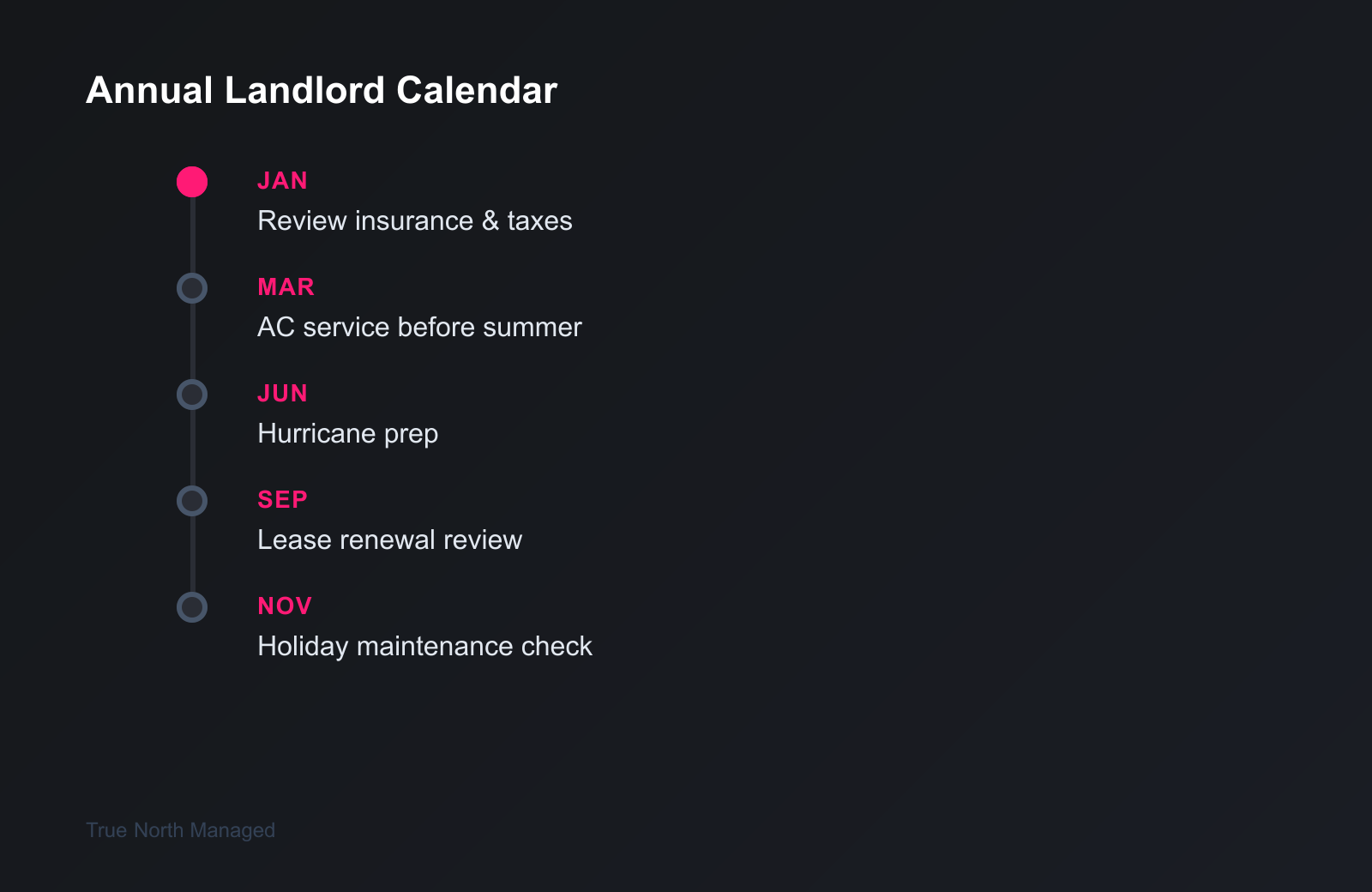
January: review insurance, gather tax docs, and plan for 1099s. Your CPA needs Schedule E info. Renew or shop your landlord policy before it lapses. Florida insurers are tightening -- don't let coverage slip.
Review your landlord insurance. Has your coverage kept pace with replacement costs? Are you properly covered for flood if you're in a zone? Compare quotes—rates change. See our guide on landlord insurance in Florida for what to look for.
Property tax appeal windows vary by county. In Orange and Hillsborough, you typically have a limited window after the TRIM notice. Mark it. If your assessment jumped, consider an appeal.
February–March: Lease Renewal Season
February–March: focus on lease renewals. Most Orlando and Tampa leases renew in spring. Send renewal offers 60-90 days out. Decide on rent increases based on comps. Tenants on annual leases often renew in spring. Decide: renew, raise rent, or non-renew? Our lease renewal strategy guide walks through the timing and notice requirements. Send renewal offers 60–90 days before lease end if you want to lock in good tenants.
April–May: Rent Comp Analysis
April–May: run rent comps for the coming year. Use Zillow, CoStar, or a local PM for Orlando and Tampa data. Adjust rents at renewal if the market supports it. Pull comps. What are similar units renting for in your submarket? Zillow, Apartments.com, and local MLS data help. If you're 5–10% below market, you've got room. If you're above, expect longer vacancies. Adjust your pricing strategy before the summer rush.
June: Hurricane Prep
June: hurricane prep. Trim trees, check shutters, verify insurance. Florida's season runs June–November. One storm can wipe out a year of profits if you're not ready. Hurricane season starts June 1. Review your hurricane prep checklist for Florida rentals . Trim trees, check shutters or impact windows, verify insurance, and make sure tenants know the drill. Do it before the first storm watch.
July–August: HVAC Service
July–August: HVAC service. AC failure in Florida is an emergency. Schedule annual maintenance before summer peak. Orlando and Tampa tenants expect working AC -- it's in the lease. AC runs hardest in summer. Schedule annual HVAC service—filter change, coil cleaning, refrigerant check. Add it to your preventive maintenance calendar . A $150 service call beats a $3,000 replacement when the unit dies in July.
September–October: Fall Maintenance
September–October: fall maintenance and lease prep. Check roofs, gutters, and exterior. Plan for winter renewals. Get ahead of repairs before the holidays. Inspect roofs, gutters, and exterior. Fall storms can expose weaknesses. Check for pest entry points. Service water heaters if they're due. Order any capital improvements before the holidays.
November–December: Year-End Wrap-Up
November–December: year-end wrap-up. Finalize tax deductions, order 1099s for contractors, and plan January renewals. Close the books clean. Review expenses for tax planning. Depreciation, repairs vs. improvements—your CPA will want the numbers. Send holiday maintenance reminders (don't pour grease down the drain, test smoke detectors). Plan for January renewals. Twelve months, twelve focus areas. Stick to the rhythm and your properties run smoother. Need someone to handle the calendar? Get a free rental analysis and see how we keep Orlando and Tampa rentals on track.
January Through March
Q1 (Jan–Mar): insurance, taxes, lease renewals. This is the busiest planning season for Florida landlords. Don't let it slide. Review insurance coverage and compare quotes. Florida rates change annually. Send rent increase notices if your lease terms require 60–90 days. Schedule HVAC maintenance before cooling season. File your taxes: rental income and expenses go on IRS Schedule E . See our rental tax deductions checklist so you don't miss anything.
April Through September
Q2–Q3 (Apr–Sep): comps, hurricane prep, HVAC, maintenance. Florida's heat and storms demand attention. Stay on schedule. Hurricane prep: trim trees, verify shutters, document condition. Review lease renewal terms 60–90 days before expiration. Inspect properties for pest issues. Check that tenants have renters insurance if required by lease.
October Through December
Q4 (Oct–Dec): fall maintenance, year-end, and planning. Wrap up repairs and get ready for the next cycle. Budget for the next year. Plan capital improvements. Review property tax assessments; appeal if overvalued . Send holiday maintenance reminders (HVAC filters, garbage disposal care). Order 1099s for any contractor paid $600 or more. Bottom line: spread tasks across 12 months so nothing gets missed. Insurance and tax reviews in Q1. Hurricane prep in Q2. Renewal decisions in Q3. Year-end budgeting in Q4. Block time on your calendar—treat it like a business. Set calendar reminders for each task. "Insurance review—January 15." "Hurricane prep—May 1." "Renewal notices—60 days before lease end." Treat property management like a business with recurring deadlines. Missing one can cost more than the time to schedule it. Review your lease annually. Laws change. Your experience may reveal clauses that need updating. Add electronic notice if you haven't. Clarify maintenance response times. A stale lease creates ambiguity. Update it, have a lawyer review if needed, and use the -- new version for the next tenant.
Common Checklist Mistakes
Common mistakes: skipping insurance review, forgetting 1099s, and letting leases renew without a rent check. Orlando and Tampa markets move -- your checklist should too. Skipping the insurance review. Florida rates change annually; a policy that was adequate last year is underinsured this year. Not sending renewal notices early enough--60-90 days before lease end gives
Common mistakes: skipping insurance review, forgetting 1099s, and letting leases renew without a rent check. Orlando and Tampa markets move -- your checklist should too.
Skipping the insurance review. Florida rates change annually; a policy that was adequate last year is underinsured this year. Not sending renewal notices early enough--60-90 days before lease end gives tenants time to decide. Forgetting to order 1099s for contractors paid $600 or more. The IRS expects them by January 31. Finally, treating the checklist as optional. Block time on your calendar. Missing one task can cost more than the 30 minutes to do it. See our tax deductions checklist so nothing falls through.
Common Checklist Mistakes
Don't skip the checklist. One missed insurance renewal or tax deadline can cost more than a full day of planning. Systemize it.
Common Mistakes to Avoid
One of the biggest mistakes we see: skipping the written notice. Florida law is strict about documentation. If you don't have a paper trail—or email trail that meets SB 716's requirements—you can lose an eviction or deposit dispute. Document everything. Another mistake: underbudgeting for turnover. A typical Florida turnover runs $1,500–$3,000 when you include paint,
One of the biggest mistakes we see: skipping the written notice. Florida law is strict about documentation. If you don't have a paper trail—or email trail that meets SB 716's requirements—you can lose an eviction or deposit dispute. Document everything.
Another mistake: underbudgeting for turnover. A typical Florida turnover runs $1,500–$3,000 when you include paint, carpet, cleaning, and minor repairs. If you're only setting aside 5% of rent for maintenance, you're short. Plan for 8–12% in year one until you know your property.
Third: treating every tenant the same. A military family near MacDill has different needs than a UCF grad student. Screen for fit, not just credit score. The right tenant in the right property stays longer and costs you less.
Florida-Specific Considerations
Florida Statute 83 applies to residential tenancies. Know the notice requirements: 3 days for non-payment (soon 5 under SB 716), 7 days for cure or vacate for lease violations, 15 days for month-to-month termination. Wrong notice = delayed eviction.
Insurance is another Florida reality. Wind and flood can double your premium in certain zones. Run quotes before you buy. A $200/month insurance difference changes your cash flow by $2,400/year.
Finally, property taxes. Homestead doesn't apply to rentals. You'll pay non-homestead rates. In Florida County, that's typically 1.2–1.5% of assessed value. Appeal if your assessment seems high—many landlords overpay.
When to Get Help
If you're out of state, hire a local property manager. The 8–10% fee pays for itself in faster leasing, better screening, and someone who can show up when the AC dies at 10 PM. Self-managing from another state is a recipe for deferred maintenance and tenant frustration.
For legal issues—evictions, deposit disputes, lease breaks—consult a Florida-licensed attorney. Landlord-tenant law has traps. A $500 consult can save you $5,000 in a botched eviction. We've seen it.
Finally, for complex financial decisions—1031 exchanges, LLC structuring, depreciation—talk to a CPA who works with rental owners. The tax code rewards those who plan. Don't wing it.
When to Get Help
If you're out of state, hire a local property manager. The 8–10% fee pays for itself in faster leasing, better screening, and someone who can show up when the AC dies at 10 PM. Self-managing from another state is a recipe for deferred maintenance and tenant frustration.
For legal issues—evictions, deposit disputes, lease breaks—consult a Florida-licensed attorney. Landlord-tenant law has traps. A $500 consult can save you $5,000 in a botched eviction. We've seen it.
Finally, for complex financial decisions—1031 exchanges, LLC structuring, depreciation—talk to a CPA who works with rental owners. The tax code rewards those who plan. Don't wing it.
Skipping the insurance review. Florida rates change annually; a policy that was adequate last year is underinsured this year. Not sending renewal notices early enough--60-90 days before lease end gives tenants time to decide. Forgetting to order 1099s for contractors paid $600 or more. The IRS expects them by January 31. Finally, treating the checklist as optional. Block time on your calendar. Missing one task can cost more than the 30 minutes to do it. See our tax deductions checklist so nothing falls through.