
Renting New Construction in Southeast Orlando: Warranties, CDDs, and What the Builder Won't Tell You
Builder warranties, CDD assessments, HOA turnover risks, and the lease-up strategy most new-construction landlords in Lake Nona and Horizon West miss.
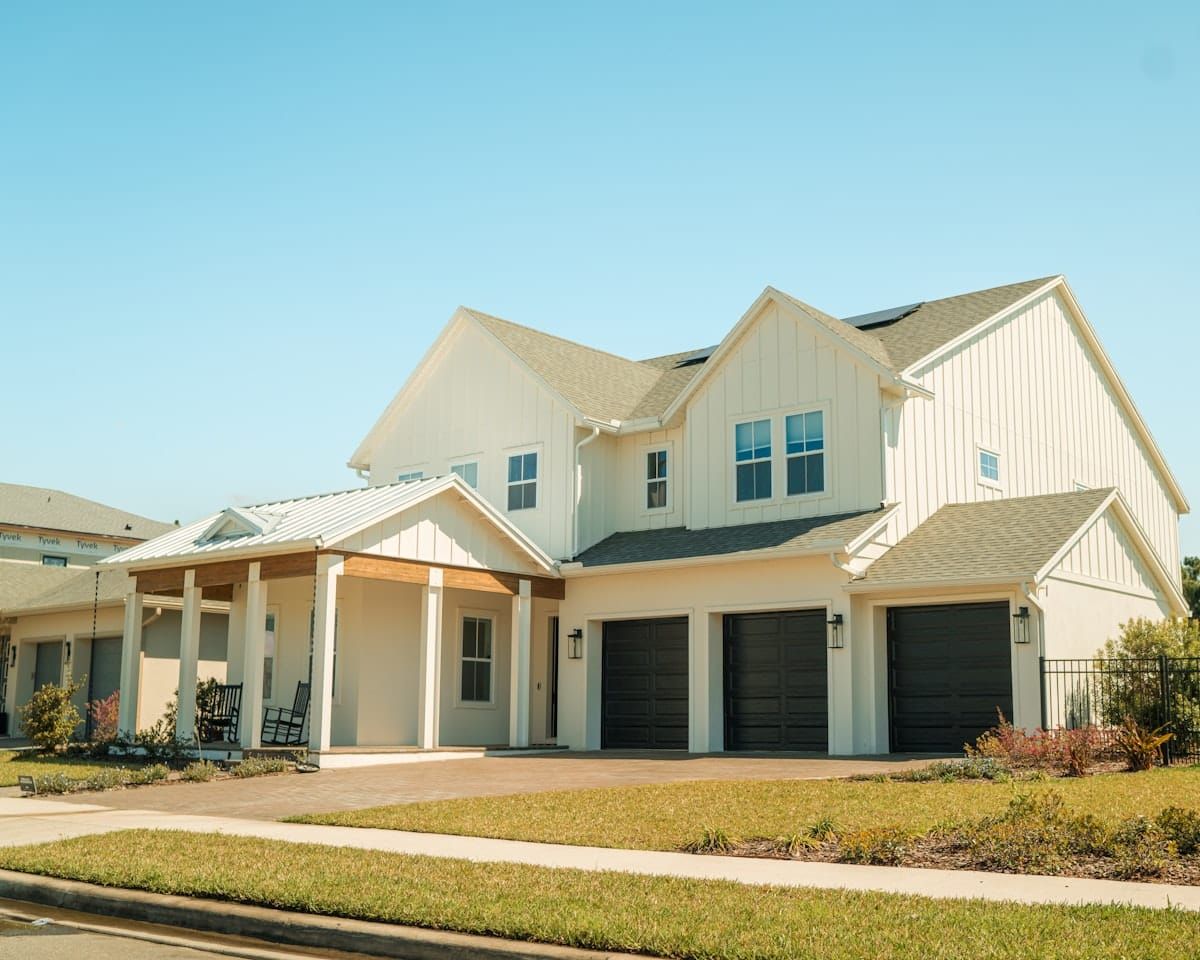
Southeast Orlando is building fast, and so is Horizon West in southwest Orange County, which keeps adding townhome and multifamily communities. Narcoossee's corridor is filling in with new subdivisions aimed squarely at the Medical City workforce. If you're buying new construction as a rental investment in this market, the homes are modern, the tenants are stable, and the numbers can work — but the carrying costs and regulatory layers are different from buying resale.
Builder warranties, CDD assessments, developer-controlled HOAs, and construction defect timelines all affect your bottom line in ways that don't show up on the MLS listing. Here's what you need to know before closing.
What does the builder warranty actually cover for landlords?
Florida's new statutory warranty law (FL 553.837) took effect July 1, 2025. Every new home now carries a mandatory one-year warranty covering material violations of the Florida Building Code — defects in equipment, materials, or workmanship that could cause physical harm or significant damage to building performance.
The clock starts at the earlier of title conveyance or initial occupancy. The warranty transfers automatically if you sell the property within that first year, which matters if you're flipping to another investor.
Here's what the statutory warranty doesn't cover: normal wear and tear, normal settling within acceptable trade practices, appliances under manufacturer warranty, defects from owner modifications, and acts of God. It's a floor, not a ceiling.
Major builders in Southeast Orlando offer their own warranties beyond the statutory minimum:
- Pulte offers a 10-year structural warranty — the strongest in the market — plus one year on materials and workmanship
- Toll Brothers runs a tiered 1/2/10 structure: one year workmanship, two years on certain systems, ten years structural
- DR Horton uses a multi-tier system with one to five years depending on the component
- Taylor Morrison provides standard structural coverage, though they've had documented warranty complaints in Florida communities including Bartram Springs
When your tenant reports a problem — a crack in the drywall, an HVAC that won't hold temperature, water pooling against the foundation — you file the warranty claim as the owner. Tenants have no direct relationship with the builder. Document the tenant's report in writing, contact the builder's warranty department, and coordinate access for inspection. If the builder refuses or drags their feet, Florida's Chapter 558 pre-suit process requires a 60-day notice before filing a lawsuit.
How do CDD assessments affect the investment math?
Community Development Districts are special-purpose government entities that finance infrastructure — roads, stormwater systems, utilities, parks — through municipal bonds. Property owners repay those bonds through annual assessments that appear on your tax bill alongside property taxes.
In Southeast Orlando and Horizon West, CDDs are nearly universal in new communities. You'll pay two components: bond debt service (fixed annual payments over 20–30 years) and operations and maintenance (adjusts annually for landscaping, lakes, amenities, insurance).
Amounts vary by district and lot size, so pull the figure for your parcel from its tax bill or the district's own budget:
Horizon West: check the district's own published budget and assessments; they differ village by village.
Lake Nona / Narcoossee: the Narcoossee CDD posts its budget and assessments on its district site.
Stack that against property tax (a rental pays the full non-homestead millage: under 2025 rates, about 16.1–17.3 mills in most unincorporated Orange County districts and 18.1–19.3 inside Orlando city limits, so check your parcel's tax district) and monthly HOA dues, and total carrying costs climb fast. An older community without a CDD skips that line entirely.
CDD assessments are tax-lien senior — they have priority over your mortgage if you fall behind. That makes them non-negotiable in your cash flow projections.
What are the risks of buying during the developer-controlled HOA phase?
Every new community starts with a developer-controlled HOA board. Under FL Statute 720.307, the developer maintains control until the earliest of: three months after 90% of parcels are conveyed to non-developer owners, or developer abandonment or bankruptcy. In practice, this means the developer runs the HOA for years — sometimes five to seven years in large master-planned communities like Lake Nona and Horizon West.
During developer control, three risks compound:
Underfunded reserves. During developer control, boards often set low assessments to make the community attractive to buyers. Once owners take over, they discover deferred maintenance and thin reserves, and assessments jump. Florida law (FL 720.303(6)) lets an HOA budget include reserve accounts, and "An association is deemed to have provided for reserve accounts upon the affirmative approval of a majority of the total voting interests of the association." Once established, they "must be funded or maintained or have their funding waived in the manner provided in paragraph (f)," and paragraph (f) says the membership, "upon a majority vote at a meeting at which a quorum is present, may provide for no reserves or less reserves than required by this section. If a meeting of the parcel owners has been called to determine whether to waive or reduce the funding of reserves and such result is not achieved or a quorum is not present, the reserves as included in the budget go into effect. After the turnover, the developer may vote its voting interest to waive or reduce the funding of reserves. Any vote taken pursuant to this subsection to waive or reduce reserves is applicable only to one budget year." So even established HOA reserves can be cut one budget year at a time, and the developer period is when the gap forms.
Deferred maintenance and amenity delays. Pools, clubhouses, and parks may not be complete. Landscaping isn't fully established. These affect your property's rental appeal — tenants in Lake Nona and Horizon West expect resort-level amenities, and "coming soon" doesn't help your listing.
Assessment increases post-turnover. When the owner-controlled board takes over, assessments often rise to fund deferred work and proper reserves. Budget for this in your long-term projections.
How should you handle the lease-up on a brand-new property?
Start marketing 30–60 days before closing. Some investors negotiate the right to begin showing the property during the final construction phase, though most builders resist this. The goal is zero vacancy between closing and your first tenant.
New construction in Southeast Orlando commands a rent premium over comparable resale. Tenants pay more for modern finishes, builder warranty coverage, energy efficiency, and that new-home feel. In ZIP 32827 (Lake Nona), Zillow's rent index put the typical rent at about $2,472 in August 2026, down 1.9% from a year earlier. That index covers all rental types, so price a specific new home against current comps.
Horizon West is more affordable on the entry side.
For your lease-up strategy in a brand-new subdivision with limited established amenities:
- Lead with new construction, warranty coverage, and modern finishes in your listing
- Target Medical City healthcare workers — nurses, physicians, researchers — who value move-in ready homes
- Price competitively against resale inventory to fill quickly, then adjust rent at renewal once the community matures
- Document the "placed in service" date when the property is ready for rent — this affects your depreciation start for tax purposes
What construction defects should you watch for?
Florida new construction defects follow predictable patterns. The most common in Southeast Orlando:
- Grading and drainage — improper lot grading causes water to pool near the foundation, leading to water intrusion and mold risk in Florida's humidity
- Foundation settling — concrete shrinkage and inadequate soil prep produce drywall cracks and uneven floors
- Water intrusion — roof leaks, window and door seal failures, and foundation cracks
- HVAC issues — dirty ductwork from construction debris and condensation overflow from clogged drain lines
- Plumbing — reversed hot and cold connections and hidden leaks behind walls
Florida's deadline for a construction defect lawsuit is in FS 95.11(3)(b), which SB 360 cut from a ten-year to a seven-year repose period in 2023. An action "founded on the design, planning, or construction of an improvement to real property" must be brought within four years, "with the time running from the date the authority having jurisdiction issues a temporary certificate of occupancy, a certificate of occupancy, or a certificate of completion, or the date of abandonment of construction if not completed, whichever date is earliest; except that, when the action involves a latent defect, the time runs from the time the defect is discovered or should have been discovered with the exercise of due diligence. In any event, the action must be commenced within 7 years after the date the authority having jurisdiction issues a temporary certificate of occupancy, a certificate of occupancy, or a certificate of completion, or the date of abandonment of construction if not completed, whichever date is earliest." For permitted, certified construction, "the correction of defects to completed work or repair of completed work, whether performed under warranty or otherwise, does not extend the period of time within which an action must be commenced," and "If a newly constructed single-dwelling residential building is used as a model home, the time begins to run from the date that a deed is recorded first transferring title to another party." In plain terms: four years, counted from discovery only for a hidden defect, and no later than seven years after the earliest occupancy or completion certificate, with warranty repairs leaving that clock alone. Before you can sue, Chapter 558 requires a 60-day pre-suit notice. The builder gets 30 days to inspect and 45 days to respond with an offer to repair, settle, or dispute.
Document everything from day one. Photograph the property at closing and after every tenant move-out. Keep a written log of all maintenance requests and builder communications. If a defect surfaces during the warranty period, report it immediately — waiting can weaken your claim.
What about landscaping and sod warranty?
Most builders in Southeast Orlando install initial sod, irrigation, and base landscaping as part of the purchase. But the warranty is thin: sod typically gets 30 days, plants get one year, and hardscapes (pavers, walkways) get two years. The sod warranty is usually conditioned on the buyer applying fertilizer, insecticide, and fungicide within five business days of installation.
Florida law requires working rain sensors on automatic irrigation systems.
The HOA won't give you a grace period while your landscaping establishes. If the sod dies or plants fail and you don't replace them within the cure period, the association can fine you. Under Florida law (FL 373.185), HOAs can't prohibit Florida-Friendly landscaping — native, water-efficient alternatives — but they can require you to maintain whatever's there to community standards.
For landlords, the practical advice: budget $500–$1,000 in the first year for landscaping establishment on top of what the builder installs. Make your tenant responsible for regular irrigation and mowing in the lease, but keep the owner's obligation for replacement sod and major plantings.
What insurance considerations apply to new construction rentals?
New construction landlords get a modest insurance advantage. Homes built within the last five years typically qualify for preferential rates — they meet current Florida Building Code for wind resistance, which earns significant wind mitigation credits. Impact windows, hip roofs, and modern roof-to-wall connections all reduce premiums.
You'll want a standard DP-3 landlord policy covering the dwelling, liability, and loss of rental income. Transition from builder's risk (which covers the construction phase) to your landlord policy at closing — any gap between them means no coverage.
Flood zones matter in Southeast Orlando. Lake Nona Estates carries about 38% moderate flood risk per Augurisk data, but falls in FEMA Zone X (500-year risk), meaning flood insurance isn't mandatory. That said, the cost of optional flood coverage is modest compared to the risk of a major storm event in a low-lying area. Check your specific address through FEMA's flood map portal.
If you're weighing new construction against resale for your next rental property in the Medical City corridor, the numbers are different than what you see at a glance. CDD assessments, HOA trajectory, and warranty coverage all factor into the real return. We run those numbers for owners regularly — get a free rental analysis and we'll break down the full carrying cost.