
Orlando Section 8 Housing: What Landlords Should Know
How the voucher process works, payment standards, HQS inspections, and the pros and cons of participating in Orlando.
Section 8 in Orlando: The Process
Section 8 in Orlando runs through the Orlando Housing Authority (OHA). Orange County's Housing and Community Development Division runs a separate voucher program. Landlords who participate receive a portion of rent directly from the housing authority. The tenant pays the remainder. Each housing authority sets its own payment standards from HUD's fair market rents, and they vary by bedroom count and zip code.
HQS Inspections: What to Expect
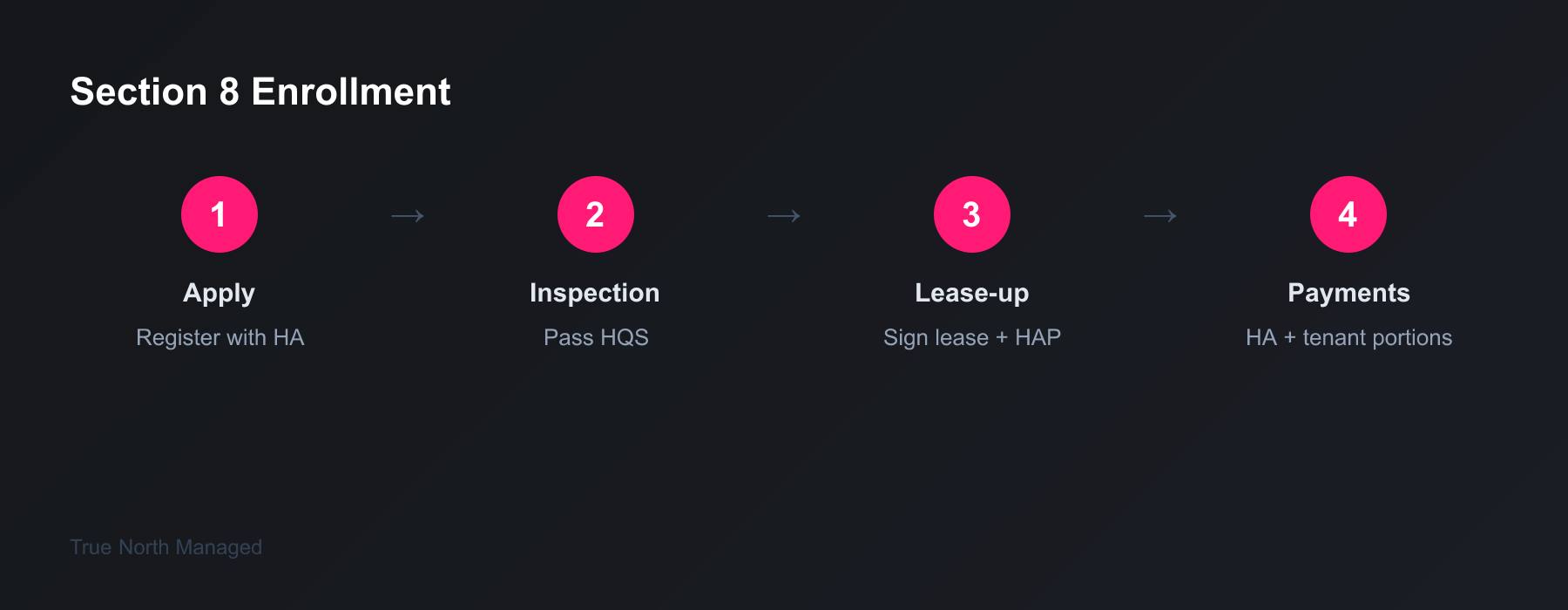
Before a tenant moves in, the unit must pass a Housing Quality Standards (HQS) inspection. The housing authority checks for working heat, safe electrical, no lead hazards, secure doors and windows, and adequate sanitation. Failures are common on first pass -- peeling paint, missing smoke detectors, or minor repairs. Fix issues and request a reinspection. Plan for 2-4 weeks from application to approval.
Pros: Guaranteed Portion of Rent
The housing authority pays its share on time, typically via direct deposit. That portion is guaranteed even if the tenant doesn't pay their portion. For landlords who've been burned by non-payment, that predictability matters. Section 8 tenants often stay longer -- moving is harder when you're voucher-dependent.
Cons: Inspections and Payment Processing
HQS inspections add friction. Annual recertifications require another inspection. Payment processing can lag -- if the tenant's portion is late, you still have to follow Florida eviction procedures. Some landlords find the paperwork and inspection cycle not worth the guaranteed portion.
Application Process and Common Misconceptions
Florida law doesn't require you to accept Section 8. Florida Statute 83.425 says "The regulation of residential tenancies, the landlord-tenant relationship, and all other matters covered under this part are preempted to the state." Whether that reaches a local source-of-income rule is unsettled. Federal fair-housing law still applies to its protected classes either way, so check with your city or county before you turn down a voucher. If you do participate, you must treat voucher holders like any other applicant -- screen for income, rental history, and references. HUDprovides guidance on landlord participation. The main misconception: that Section 8 tenants are inherently risky. Screen them the same way you'd screen any tenant.
Section 8 is a business decision. Weigh the guaranteed payment against inspection and administrative overhead. For more Orlando landlord guidance, see ourOrlando hub. Need help evaluating your property for Section 8?Get a free rental analysis.
Pros and Cons for Orlando Landlords
Section 8 offers guaranteed rent for the voucher portion and tenants who have passed HA screening. The tradeoffs: inspection requirements, paperwork, and potential delays in HA processing. Ourstatewide Section 8 guidecovers the full picture. For Orlando-specific landlord resources, see theOrlando hub. Afree rental analysiscan help you evaluate whether your property fits the program.
Payment Standards and Lease Requirements
Payment standards vary by ZIP code and bedroom count. The HA publishes them annually. Your lease must use the HA's model lease addendum. Rent increases require HA approval. Ourrent increase notice guidecovers state rules. For tenant screening with Section 8 applicants, seeOrlando tenant screening. TheOrlando rent pricing guidehelps you compare market rent to payment standards.
Payment Standards and HQS
Housing vouchers have payment standards -- the max the housing authority will pay for a given bedroom count. The tenant pays 30% of income; the voucher covers the rest up to the standard. The unit must pass HQS inspection: working systems, no lead or safety hazards. Fail and you fix before the tenant moves in.
HQS Inspections: What Fails Most Often
Housing Quality Standards inspections trip up Orlando landlords on the same items every time: missing or expired smoke detectors, peeling exterior paint, GFCI outlets not installed near water sources, broken window locks, and missing handrails on stairs. These are all cheap fixes -- a $50 trip to Home Depot before the inspector arrives can save you a failed inspection and a 30-day delay in lease-up. Schedule your own walkthrough using the HUD inspection checklist before requesting the official housing authority inspection.
Not passing the HQS inspection before the first lease. The Housing Authority inspects; failures delay payment. Skipping your own screening. The HA screens for program eligibility, not tenant quality. You still verify income, rental history, and references. And not budgeting for inspection repairs. The HA may require fixes before approval. Ourstatewide Section 8 guideandOrlando tenant screeningcover the process.A free rental analysisevaluates whether your property fits the program.
Check the current year's payment standard schedule before you set rent—if you're above the payment standard, the tenant pays the gap. We've helped several Orlando owners handle their first Section 8 lease.
Housing Authority Inspections and Turn Times
Your unit has to pass a Housing Quality Standards (HQS) inspection before the Housing Choice Voucher can be used. That means working smoke detectors, no peeling paint in pre-1978 units, secure windows and doors, and functioning utilities. Orlando's Housing Authority typically schedules inspections within 10–14 business days of your request. Fail the first time, and you're looking at a reinspection and another 2-week wait.
We've seen landlords lose a month's rent because the water heater wasn't strapped or the GFCI outlet in the kitchen failed. Fix those before you submit. You can charge above the payment standard, but the tenant pays the difference, and two limits apply. The Orlando Housing Authority says the contract rent "must be determined 'reasonable' based on location, unit size, age of the unit, unit type, amenities and utilities provided by the property owner." And HUD's rule at 24 CFR 982.508: "At the time the PHA approves a tenancy for initial occupancy of a dwelling unit by a family with tenant-based assistance under the program, and where the gross rent of the unit exceeds the applicable payment standard for the family, the family share must not exceed 40 percent of the family's adjusted monthly income." So a rent above the standard only works at move-in if the tenant's share stays within that 40% limit.