
Downtown Orlando Rental Investment: Central Orlando's Best Cap Rates
Downtown Orlando condos start under $350K with rents hitting $2,900/mo — the best cap rates in the Central Orlando corridor. But HOA fees and new supply change the math.
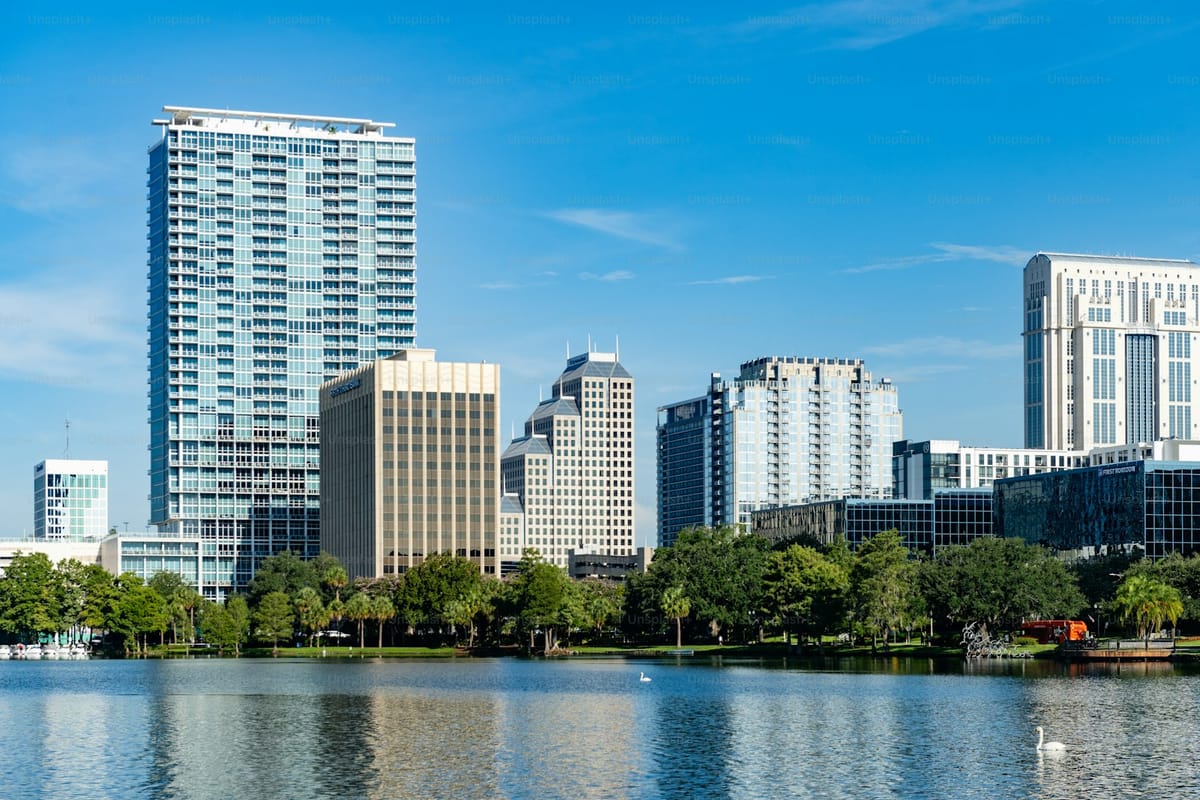
Downtown Orlando isn't a single-family market. If you're looking at rental investment here, you're looking at condos — high-rise towers, urban lofts, and the occasional townhome. That changes everything. Entry prices run $327K–$358K for a 2BR, down about 17% year-over-year. Rents hold steady at $2,900–$3,000 for a 2BR, with projections pushing toward $3,200 by end of 2026. The cap rates (3–4.5%) beat every other Central Orlando neighborhood because you're buying at a lower price point than Winter Park or Thornton Park. But HOA fees, new construction, and Florida's condo insurance squeeze add risk. Here's what the numbers actually say.
Where Is Downtown Orlando?
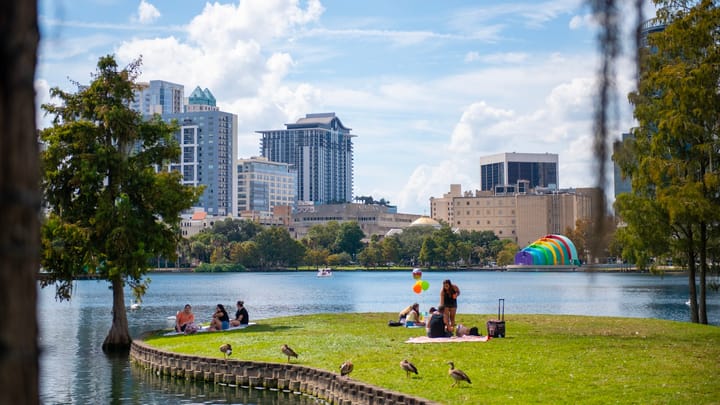
Downtown Orlando sits in Orange County's urban core, roughly bounded by I-4 to the west, SR 408 to the south, and Lake Eola to the east. The Orange County Property Appraiser parcels in ZIP 32801 cover most of the CBD. Lake Eola Park anchors the east side; Church Street and Wall Street Plaza define the entertainment district. SunRail's Lynx Central Station sits at the heart of the transit network. Check FEMA's flood map portal for your specific building — most of downtown is Zone X, but some parcels near Lake Eola edges fall in AE.
What Does the Downtown Orlando Market Look Like Right Now?
Quick answer: Downtown Orlando is a condo market with median 2BR prices around $350K, rents at $2,900–$3,000/mo, and cap rates of 3–4.5%. Walk Score 85 (Very Walkable), Transit Score 68, Bike Score 81. Property taxes run ~2.1% non-homestead. HOA fees ($250–$800/mo) are the biggest variable — they cover insurance, water, and amenities but eat into cash flow. Vacancy has normalized but runs higher than suburban neighborhoods. Condos are sitting longer on market in 2025 as new towers deliver.
| Stat | Value |
|---|---|
| Median 2BR condo price | $327,500–$358,000 |
| Median rent (1BR) | $1,800–$2,100/mo |
| Median rent (2BR) | $2,900–$3,000/mo |
| Projected 2BR rent (end 2026) | ~$3,200/mo |
| Cap rate | 3–4.5% |
| Walk Score | 85 (Very Walkable) |
| Transit Score | 68 |
| Bike Score | 81 |
| Property tax | ~2.1% non-homestead |
| Condo HOA | $250–$800/mo |
| Flood zone | Zone X (most); AE near Lake Eola edges |
| Schools | Blankner K-8 (7/10); OCPS magnet options |
| Days on market | Variable; condos sitting longer in 2025 |
How Does the Investment Math Work for a Downtown Orlando Condo?
Quick answer: A $350K 2BR condo at $2,900/mo rent generates roughly 3.5–4% cap rate after expenses. HOA fees ($400–$500/mo) are the largest line item. Cash flow is thin or negative with financing; the play is appreciation and lower entry cost than other Central Orlando neighborhoods.
Here's a worked example for a typical 2BR condo:
| Line Item | Annual |
|---|---|
| Purchase price | $350,000 |
| Gross rent ($2,900/mo) | $34,800 |
| Property taxes (2.1% non-homestead) | −$7,350 |
| Insurance | −$2,200 |
| Maintenance (5%) | −$1,740 |
| Property management (10%) | −$3,480 |
| Vacancy (6%) | −$2,088 |
| HOA fees ($450/mo) | −$5,400 |
| Net Operating Income | $12,542 |
| Cap rate | 3.6% |
What's good or bad? Orlando condo cap rates typically run 3–5%. Downtown's 3–4.5% range is solid for the urban core — you're getting better yields than Thornton Park or Winter Park because entry prices are lower. The trade-off: HOA fees consume 15–20% of gross rent, and special assessments can wipe out years of returns. Budget for HOA increases of 3–5% annually. With 20% down and a 6.5% rate, cash flow is often negative; the play here is lower entry cost and long-term appreciation, not monthly cash.
What Should Condo Investors Know Before Buying Downtown?
Quick answer: Request the HOA reserve study and recent special assessments. Check rental restrictions — some buildings cap investor ownership. Factor SunRail proximity into rent premiums. Budget for condo insurance increases; Florida's post-2022 crisis has hit high-rises hard.
- HOA financials matter more than unit finishes. In a condo market, the building's reserve fund and deferred maintenance drive your investment. Ask for the reserve study and any special assessments from the last five years. Buildings with aging elevators, facades, or parking structures will levy $10K–$30K per unit — that's years of cash flow gone.
- Rental restrictions vary by building. Some downtown towers cap the percentage of units that can be rented. Others require board approval or waiting periods. Verify before you offer.
- SunRail proximity commands a rent premium. Tenants who work in Lake Mary, Sanford, or the Medical City corridor pay more for walkable access to Lynx Central. Units within 0.3 miles of the station lease faster.
- Condo insurance is a moving target. Florida's reinsurance crisis has pushed master policy costs up 15–25%. Those flow through to HOA fees. Budget conservatively.
- Amenities drive rent, but so does parking. A dedicated garage or assigned space adds $100–$200/mo to achievable rent. Buildings that include one space in the HOA have an edge.
What Are the Biggest Risks for Downtown Orlando Condo Investors?
Quick answer: New supply from towers delivering in 2025–2026, HOA special assessments on aging buildings, rising condo insurance costs, and vacancy that runs higher than suburban neighborhoods. Condo prices dropped ~17% YoY — buying now means accepting potential near-term depreciation.
- Supply glut from new construction. Several new towers have delivered or are delivering, increasing rental supply. Downtown absorbs a disproportionate share. Expect flat-to-modest rent growth over the next 18 months. Urbanista Orlando's 2026 projections track the pipeline.
- HOA special assessments. Towers built in the mid-2000s are 15–20 years old. Post-Surfside inspection requirements (Florida SB 4-D) are accelerating facade, elevator, and structural work. Special assessments of $10K–$30K per unit are increasingly common.
- Condo insurance crisis. Master policy premiums have spiked. HOA fees will rise to cover them. Properties over 15 years old face stricter inspection requirements.
- Vacancy runs higher than suburbs. Downtown's tenant base skews young professionals and hospitality workers. Turnover and summer vacancy outpace suburban neighborhoods. Price leases to begin in September or October when possible.
- Days on market have stretched. Condos are sitting longer in 2025. The market has shifted from seller's to balanced. Plan for 5–7 months of supply when you sell — and factor that into your hold timeline if you're buying for appreciation.
How Does Downtown Orlando Compare to Neighboring Areas?
Quick answer: Downtown offers the lowest entry price and best cap rates in Central Orlando for condo investors. Thornton Park has more neighborhood character but higher prices. College Park has more single-family stock and lower walkability. South Eola is more affordable but less walkable.
| Neighborhood | Median Rent (2BR) | Cap Rate | Entry Price | Walk Score |
|---|---|---|---|---|
| Thornton Park | $2,600–$2,800 | 2–3% | $450K–$740K | 83 |
| College Park | $2,200–$2,500 | 3–4% | $350K–$550K | 72 |
| Downtown Orlando | $2,900–$3,000 | 3–4.5% | $327K–$358K | 85 |
| South Eola | $2,300–$2,600 | 3–4% | $350K–$500K | 72 |
Downtown is the best cap rate play in Central Orlando for condo investors willing to manage HOA and supply risk. If you want single-family or lower HOA exposure, College Park or Thornton Park are better fits.
Related Posts
Explore More of Central Orlando
Get a Free Rental Analysis
Want to see what your Downtown Orlando condo could rent for — or whether a specific building's numbers pencil out? We run free rental analyses for Orlando investors. No obligation, just real numbers.