
How to Prepare a House for Its First Rental Tenant
Preparing a Florida house for renters isn't a remodel — it's a risk-and-AC punch list. Here's what to fix, what to skip, and what tenants actually pay for.
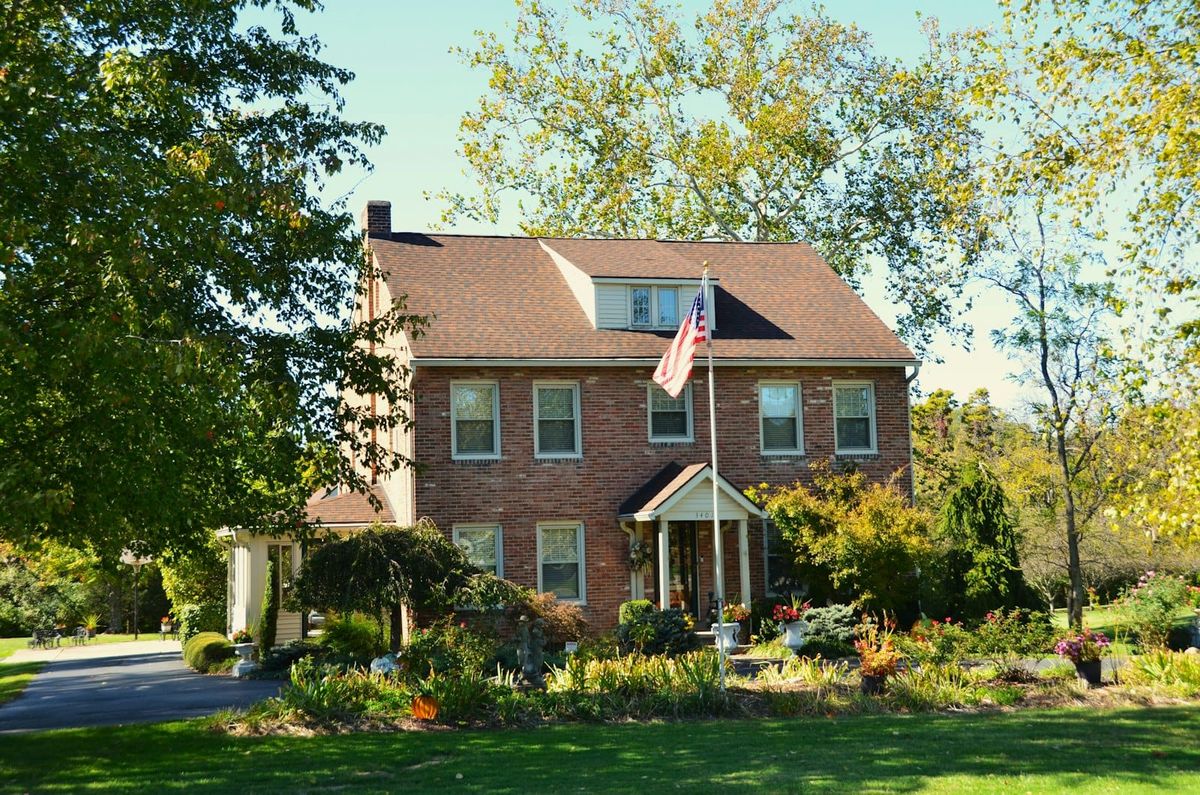
You're standing in a house you used to live in — or one a parent left you — and you want it to look good for whoever moves in next. So you start a list. New backsplash. Maybe re-do the bathroom vanity. That accent wall you always meant to paint.
Stop there for a second.
Here's the quick answer: preparing a house for its first rental tenant isn't a renovation project. It's a punch list, and a Florida punch list runs in a specific order — code and safety first, then habitability and durability, then a short list of cosmetic upgrades a renter will actually pay more for. The instinct to make the place "nice" by your own taste is the exact instinct that drains a first-time landlord's budget without moving the rent a dollar.
What you have to clear before you listWorking AC, recently serviced. In Florida this is the system most likely to trigger a legal repair demand.A smoke detector in every required spot. Florida Statute 83.51(2)(b) requires working smoke detection devices at the start of a single-family home or duplex tenancy, "unless otherwise agreed in writing."A carbon monoxide alarm if the home has a gas appliance, a fireplace, or an attached garage (required by statute in homes, and in additions, built on or after July 1, 2008).GFCI outlets in wet areas — kitchen, bathrooms, laundry, garage, exterior.Re-keyed locks. Every exterior door, before you hand over a single key.Landlord (DP-3) insurance in force. Your old homeowners policy won't cover a rental.A lead-based paint disclosure if the house was built before 1978.A local business tax receipt if your county or city requires one.
Let's go through it the way it actually matters.
Why does preparing a Florida rental work differently than fixing up your own home?
Preparing a rental is risk triage, not decorating. You're not building a house you'd want to live in — you're building a house that's safe, legal, durable, and clean enough to rent fast. In Florida, the floor for "rentable" is set by Florida Statute 83.51's warranty of habitability, not by your taste.
Most people reading this didn't plan to be landlords. You relocated for a job and couldn't sell. You inherited the house. You moved in with a partner and kept the old place. Whatever the path, you're now looking at a property through the wrong lens — the lens of someone who lived there.
Call it the Accidental Landlord Trap. The house you'd live in and the house you'd rent are two different projects. The first one rewards personality and high-end finishes. The second one rewards cash flow. A $4,000 kitchen refresh feels productive. It also, in most Orlando and Tampa rentals, adds roughly nothing to what a tenant will pay — those renters are comparing your house to five others in the same price band, and the granite isn't the tiebreaker.
The tiebreakers are unglamorous. Cold AC in July. A clean, neutral interior. No surprises on move-in day. Once you decide whether the house is even worth renting — and our guide to turning your home into a rental walks through that math — the prep work becomes a checklist, not a creative project. Here's the checklist.
What safety and code items have to be fixed before you list?
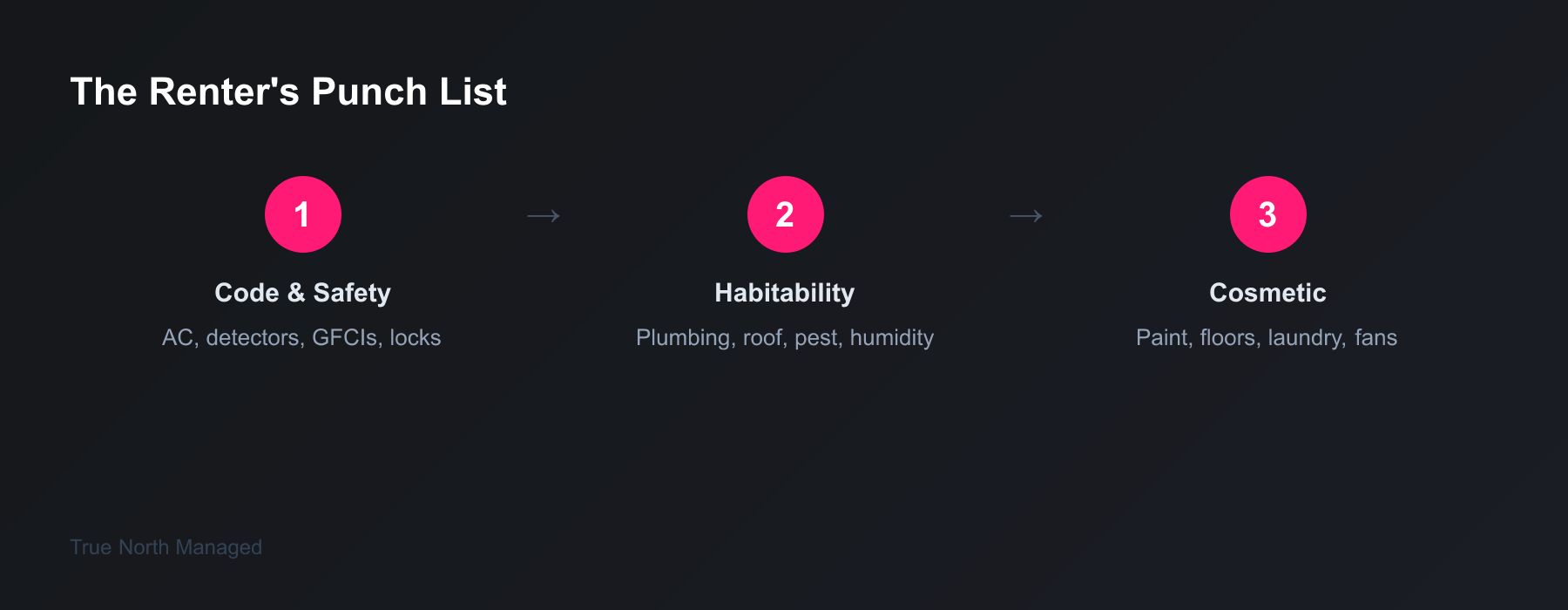
These come first, every time. Before paint, before cleaning, before photos: working AC, smoke detectors, a carbon monoxide alarm where the home needs one, GFCI outlets in wet areas, and re-keyed locks. These aren't upgrades. They're the line between a rentable house and a liability — and in Florida, several of them are written into statute.
Start with the air conditioning. A Florida rental's AC runs nine to ten months a year — two to three times the workload of a system up north. A unit that "worked fine" while you lived there gets a much harder test as a rental. And once you've provided AC, you're on the hook to keep it running: under Florida Statute 83.56(1), if the landlord "materially fails to comply with s. 83.51(1) or material provisions of the rental agreement within 7 days after delivery of written notice by the tenant specifying the noncompliance and indicating the intention of the tenant to terminate the rental agreement by reason thereof, the tenant may terminate the rental agreement". The clock is seven days to fix the problem, not seven days to start on it. Get the system serviced before you list. Change the filter, flush the condensate line, confirm it actually cools to the thermostat setting on a hot afternoon.
Don't skip smoke detectors. Florida Statute 83.51(2)(b) says: "Unless otherwise agreed in writing, at the commencement of the tenancy of a single-family home or duplex, the landlord shall install working smoke detection devices." A lease can change that, but there's no good reason to write it out of yours. Walk the house and put a working detector where the building code calls for one — typically each bedroom, outside each sleeping area, and on every level.
Carbon monoxide is conditional. Florida Statute 553.885(1) says: "Every separate building or addition to an existing building, other than a hospital, an inpatient hospice facility, or a nursing home facility licensed by the Agency for Health Care Administration, constructed on or after July 1, 2008, and having a fossil-fuel-burning heater or appliance, a fireplace, an attached garage, or other feature, fixture, or element that emits carbon monoxide as a byproduct of combustion shall have an approved operational carbon monoxide alarm installed within 10 feet of each room used for sleeping purposes in the new building or addition, or at such other locations as required by the Florida Building Code." In plain terms, the statute reaches homes built, or added onto, from mid-2008 on; an older house isn't covered by it, though the alarm is still worth installing. If your house has a gas range, a gas water heater, or an attached garage, install one. If it's all-electric with no fireplace or attached garage, you likely don't need one — but a $30 alarm is cheap peace of mind either way.
Then the outlets. Florida's building code requires GFCI protection for receptacles within about six feet of water — kitchens, bathrooms, laundry rooms, garages, and outdoor areas. Older Orlando and Tampa homes aren't forced to retrofit every outlet, but a missing GFCI in a wet area is a genuine shock hazard and a common write-up on insurance inspections. Swapping a standard outlet for a GFCI runs $20 to $40 in parts.
Last, re-key every exterior lock. You have no idea how many copies of the old keys exist — the neighbor, the dog walker, the contractor from three years ago. Re-keying a few locks costs far less than the risk of skipping it.
Should you get an inspection before renting the house out?
If the home is 20 years or older, yes — get a four-point inspection before you list. It covers the roof, electrical, plumbing, and HVAC, runs about $75 to $200, and most Florida insurers require one anyway before they'll write a landlord policy. It tells you what's actually wrong before a tenant does.
This matters more than the cosmetic list, and first-time landlords skip it constantly. The reasoning is always the same: "It worked fine when I lived here." But you lived there as one household. A rental gets harder use, less forgiving tenants, and a paper trail that a court can read later.
A four-point inspection flags the expensive problems early. Federal Pacific or Zinsco electrical panels. Aluminum branch wiring — common in Orlando and Tampa homes from the 1960s and 70s. Polybutylene plumbing. An aging water heater. A roof near the end of its life. Any one of these can fail an insurance inspection or, worse, fail on a tenant after move-in. Knowing about them now means you budget for them now, on your schedule — not at 9 PM in August when something gives out.
There's a Florida timing bonus here, too. Hurricane season starts June 1. An inspection that confirms your roof and openings are sound doubles as storm-readiness and as a selling point. While you're at it, review the full list of a Florida landlord's habitability obligations so nothing on the property catches you off guard once a tenant is in place.
What habitability and durability fixes actually matter to a tenant?
After safety and code, the next tier is the boring stuff that keeps a tenant from calling you in week one: leak-free plumbing, working drains, a sound roof, intact screens, a pest-free interior, and the right humidity controls for a Florida home. None of it is exciting. All of it shows up fast if you skip it.
Walk the plumbing with a critical eye. Run every faucet. Watch the drains — a slow bathroom sink that you learned to live with is a maintenance call waiting to happen. Check under cabinets for old leaks. Look at the water heater's age; if it's past 10 or 12 years, it's living on borrowed time. Screens matter more than people think in Florida — torn screens read as neglect and let the bugs in.
Speaking of bugs: get the house treated by a pest control company before anyone moves in. Florida's climate keeps roaches, ants, and rodents active year-round, and the first sign of a pest is an instant no for a prospective tenant. For a single-family rental, pest treatment isn't a statutory duty under Florida Statute 83.51(2)(a), whose extermination requirement covers only a unit other than a single-family home or duplex — but starting the tenant in a clean, treated house heads off the dispute entirely.
Then there's humidity, the quiet Florida problem. While the house sits empty waiting to lease, keep the AC running and the indoor humidity under 60 percent. Set the thermostat around 78 degrees rather than shutting the system off to "save money." A closed-up Florida house with no airflow can grow mold in 24 to 48 hours, and a mold smell on a showing kills the deal. When you do choose finishes, pick durable over pretty — luxury vinyl plank over delicate hardwood, semi-gloss paint that wipes clean, solid hardware. A rental gets used hard.
Which upgrades do renters actually pay more for?
Most of them, none. The cosmetic upgrades that move rent in Orlando and Tampa are a short list: fresh neutral paint, clean or refinished flooring, an in-unit washer and dryer, working ceiling fans, and decent lighting. High-end finishes, designer fixtures, and anything tied to your personal taste rarely earn back what they cost.
Here's the reframe a first-time landlord needs. A renter walking through your house is comparing it to four or five others at the same monthly price. They're not paying extra for the backsplash you agonized over. They're scanning for clean, bright, move-in-ready, and no obvious problems.
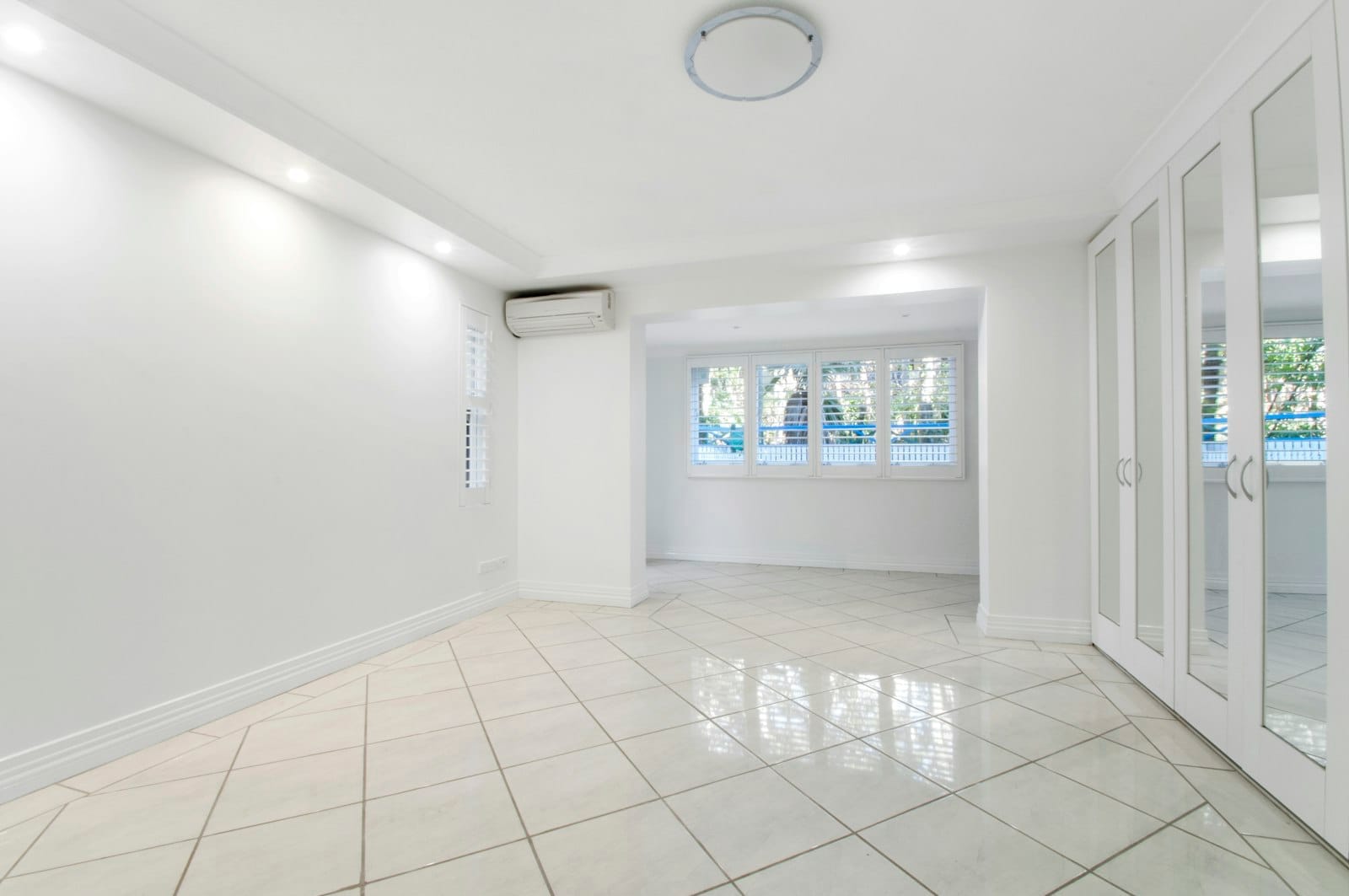
So spend where it counts. A fresh coat of neutral paint — white, greige, light gray — is the single highest-return cosmetic dollar you can spend; it photographs well and reads as cared-for. Clean floors, professionally if the carpet has seen better days. Working ceiling fans in the bedrooms and living room, which Florida renters expect. Good lighting, because dark rooms photograph badly and show worse.
The one amenity upgrade with a real, measurable return is in-unit laundry. Tenants will pay noticeably more for a house with its own washer and dryer versus a coin laundry down the road. On a Tampa single-family home renting in the low $2,000s, that's not a rounding error.
What to skip: a full kitchen remodel, quartz or granite when laminate is clean and intact, designer light fixtures, bold paint colors, and any finish you're choosing because you like it. If the existing kitchen is functional and clean, leave it. Put that money toward the AC service and the four-point inspection instead.
What do you need to handle before the listing photo goes live?
Three things, and they're administrative rather than physical: a landlord insurance policy that actually covers a rental, a lead-based paint disclosure if the house predates 1978, and a local business tax receipt if your county or city requires one. Miss any of them and you've got a legal gap before a tenant even applies.
Insurance first. The homeowners policy you've had for years is built for an owner-occupied home. The moment the house becomes a rental, that policy likely no longer fits — a claim can be denied because the occupancy doesn't match the form. You need a landlord policy, usually a DP-3 dwelling policy, which covers the structure, your liability, and lost rent. In Florida that runs higher than most states because of hurricane and reinsurance costs. Get the quote before you list so the number doesn't surprise your math.
Next, lead-based paint. If your house was built before 1978, federal law requires you to give every renter the EPA's "Protect Your Family From Lead in Your Home" pamphlet, disclose any known lead-based paint, and keep the signed disclosure for three years. It's a simple form. Skipping it is a real penalty risk.
Then the local business tax receipt — some Florida counties and cities require one for residential rental activity, so check with your county tax collector and your city. Quick to obtain, easy to forget.
Finish the prep with the handoff items: re-keyed locks, every detector tested, and a full set of dated condition photos of the empty house. Those photos become the baseline for the move-in inspection walkthrough you'll do with the tenant — and the evidence you'll want if a deposit dispute comes up later.
Common mistakes first-time landlords make preparing a house
Renovating to your own taste. The most expensive mistake, and the most common. You're not selling the house and you're not living in it. Spend on systems and safety, not on finishes that match your Pinterest board.
Skipping the inspection because "it worked when I lived here." A rental gets harder use than an owner-occupied home, and the problems a four-point inspection catches — old panels, aging plumbing, a tired roof — are the ones that cost thousands when they fail mid-lease.
Listing on a homeowners policy. A denied claim is a far worse surprise than a higher premium. Convert to a landlord policy before the first showing.
Forgetting the pre-listing pest treatment. In Florida, a single roach on a showing can lose you the applicant. Treat the house before anyone walks through.
Preparing a house for its first tenant comes down to one discipline: fix what protects you and the tenant, skip what only flatters your taste, and spend the difference on the systems that keep a Florida rental running. Do that and the house leases faster, the tenant stays longer, and you spend year one fielding fewer 9 PM phone calls.
If you'd rather not run the punch list yourself — or you're doing this from out of state and can't walk the property — that's exactly the work we handle. We manage single rentals, not just portfolios, across Orlando and Tampa. Get a free rental analysis and we'll tell you what your house should rent for and what it needs to get there. For the longer view on keeping the property healthy once a tenant moves in, our Florida rental maintenance calendar and the full Florida Owner's Guide cover the year-round side.