

Tenant Won't Let Me In for Repairs: Florida Right of Entry Rules
Your tenant won't let you in for repairs. Florida gives landlords access rights — but with rules. Here's what the law says and how to handle refusal.
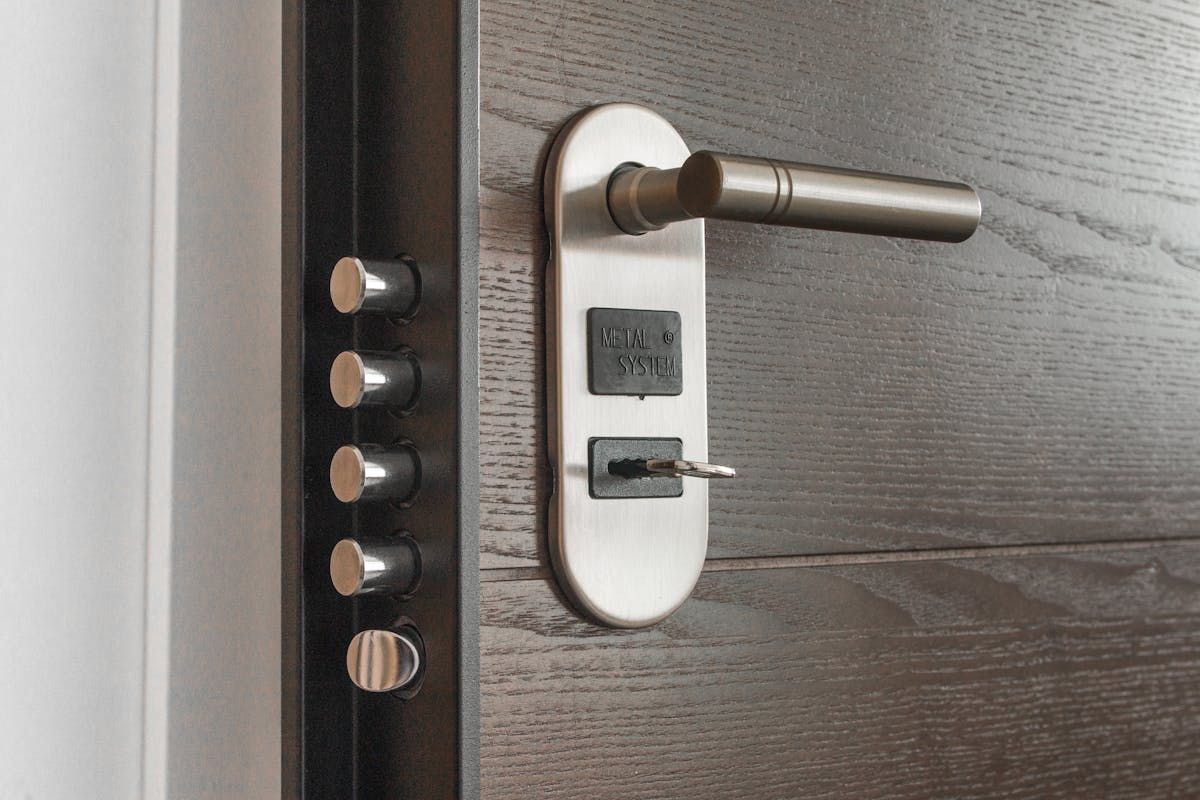
Your tenant won't let you in. The AC's been out for a week, you've sent three notices, and they're not answering the door. You know you're supposed to fix it—Florida Statute 83.51 requires you to keep the unit habitable—but you can't get inside. The repair request sits there, the clock ticks, and you're stuck. Here's what Florida law actually says about your right of entry, and what to do when a tenant blocks access.
Quick answer: To enter a rental for repairs, Florida landlords must give the tenant at least 24 hours' notice under Florida Statute 83.53, and entry must happen between 7:30 a.m. and 8:00 p.m. Inspections and showings don't run on that notice; they need one of the grounds in 83.53(2), set out below. No notice is needed for a genuine emergency. If a tenant unreasonably refuses lawful access, serve a 7-day notice to cure—and document every step.
What you must do — and by when
- Give at least 24 hours' notice before entering for repairs, and put it in writing so you can prove it. State the date, time window, and reason. The 24 hours is required by Florida Statute 83.53.
- Enter for repairs only between 7:30 a.m. and 8:00 p.m. The statute defines this as the only "reasonable time" for repairs. No exceptions for your convenience.
- Skip notice only for a true emergency—fire, flood, gas leak, burst pipe, or another immediate threat to safety or the property—or to protect or preserve the premises, which 83.53(2) allows at any time (see the storm section for the limit on it).
- If the tenant unreasonably refuses, serve a 7-day notice to cure under Florida Statute 83.56. If they don't comply, the lease can terminate and you can move to eviction.
- Document everything—every notice, every attempted entry, every refusal. Your paper trail is what protects you in court.
Governing law: Florida Statutes 83.53 and 83.56. Repair notice: at least 24 hours (put it in writing for proof).
What does Florida Statute 83.53 say about landlord entry?
Florida Statute 83.53 gives landlords a defined right to enter the rental unit—but only for listed reasons. The statute permits entry to inspect the premises, make necessary or agreed repairs, supply agreed services, or show the unit to prospective buyers, mortgagees, tenants, workers, or contractors. Your landlord responsibilities in Florida include keeping the property habitable—and you can't do that if you can't get in.
The key word is reasonable notice, and the statute defines it for repairs only: "'Reasonable notice' for the purpose of repair is notice given at least 24 hours prior to the entry, and reasonable time for the purpose of repair shall be between the hours of 7:30 a.m. and 8:00 p.m." An inspection isn't a repair, so 24 hours' notice alone won't get you in for one; see the grounds below. That standard took effect July 1, 2022—before that, the requirement was 12 hours. Some older articles and templates still say 12 hours. They're out of date. Use 24 hours, every time.
Notice can technically be verbal, but written notice is far smarter—it's proof. Include the date, the time window, the reason for entry, and who will be there (you, a contractor, an inspector). Email, text, or a notice posted on the door all count, as long as the tenant actually receives it.
Entry must also happen at a reasonable time, which the statute defines, for repairs, as between 7:30 a.m. and 8:00 p.m. You can't show up at 6 a.m. or 9 p.m., even with notice. That window protects the tenant's privacy and gives you a clear, defensible legal standard.
When can a landlord enter without notice in Florida?
Florida law lets a landlord enter without 24-hour notice in more situations than most owners realize. The first sentence of 83.53(2) allows entry "at any time for the protection or preservation of the premises", covered in the storm section below along with its limit in 83.53(3). For inspections, showings and the other purposes in subsection (1), the statute says: "The landlord may enter the dwelling unit when necessary for the further purposes set forth in subsection (1) under any of the following circumstances: (a) With the consent of the tenant; (b) In case of emergency; (c) When the tenant unreasonably withholds consent; or (d) If the tenant is absent from the premises for a period of time equal to one-half the time for periodic rental payments." Twenty-four hours' notice isn't on that list, so it won't get you in for a showing or an inspection; consent is the everyday route. Here's how the other three work.
1. Emergency. Fire, flood, gas leak, hurricane damage, a burst pipe, structural collapse—anything that threatens safety or the property. If water is pouring through the ceiling or you smell gas, you can enter immediately. Document the emergency with photos and a brief note. Don't abuse this. "I wanted to check on things" is not an emergency.
2. Tenant unreasonably withholds consent. Ground (c) reads "When the tenant unreasonably withholds consent". If you've asked for access for a valid reason (repairs, inspection, showing), have given 24 hours' notice where the reason is a repair, and the tenant refuses without a legitimate reason, the statute says you may enter. "I don't want you here" isn't a legitimate reason when you're fixing a broken AC. But be careful. If the tenant claims they never got notice or the time was unreasonable, you're now in a dispute. Document that you gave notice and attempted entry. If they physically block you, don't force your way in—move to the 7-day cure notice instead.
3. Tenant absent for half a rental period. Ground (d) covers a tenant who "is absent from the premises for a period of time equal to one-half the time for periodic rental payments"—about 15 days on a monthly lease. The statute then narrows it: "If the rent is current and the tenant notifies the landlord of an intended absence, then the landlord may enter only with the consent of the tenant or for the protection or preservation of the premises." So when a tenant is paid up and told you they'd be away, you need their consent unless you're entering to protect or preserve the premises. This is an entry rule, not a finding that the unit is abandoned; abandonment has its own test in 83.59(3)(c).
What if the tenant refuses access?
A tenant who refuses lawful entry after proper 24-hour notice is committing a lease violation—Florida tenants cannot unreasonably withhold consent to a landlord's lawful access. When that happens, you don't force the door. You build a paper trail and serve a 7-day notice to cure. Your Florida lease agreement should already tie access rights to the statute, which strengthens your position.
Step 1: Document. Log every notice (date, time, method, content), every attempt to enter (date, time, who was there), and every refusal (what the tenant said or did). Take photos of posted notices. Save emails and texts. If you had a witness—a contractor, another tenant—note that too.
Step 2: Serve a 7-day notice to cure. Use Florida's standard notice for noncompliance other than nonpayment. Cite the lease provision and Florida Statute 83.53. State that the tenant must allow access within 7 days or the lease will terminate. Deliver it "by mailing, delivering a true copy thereof, e-mailing in accordance with s. 83.505, or, if the tenant is absent from the premises, by leaving a copy thereof at the residence"—per Florida Statute 83.56(4). E-mail counts only if you and the tenant signed the electronic-notice addendum that Florida Statute 83.505 requires.
Step 3: Attempt access again. If they let you in within the 7 days, complete the repair and move on. If they refuse again, you've established a pattern, and the lease terminates at the end of the 7 days. If they don't vacate, you file for eviction.
Step 4: Don't waive your rights. If you let repeated refusals slide, a court may decide you've waived the right to enforce. Be consistent. Follow through every time.
One caution: if a tenant refuses access while demanding repairs, they may be setting up a habitability defense—"the landlord never fixed it." Document that you tried. A tenant who blocks access and then withholds rent for "uninhabitable conditions" is in a weak position, but only if you've proven you showed up. Our guide to the Florida AC repair obligation covers what you must maintain once the door finally opens.
Lease clauses that strengthen your access rights
Your Florida lease agreement can reinforce your right of entry. A solid access clause should reference Florida Statute 83.53, state that you'll give 24-hour written notice for repairs, and list the other valid reasons (inspections, showings). It should also say that unreasonable refusal is a lease violation subject to the 7-day cure process. Don't write language that goes beyond the statute—you can't contract away tenant rights—but you can make the rules clear so both sides know what's expected.
What should a landlord never do when a tenant blocks access?
When a tenant won't let you in, the fastest way to lose is to retaliate. Don't enter for a non-emergency repair without notice, don't change the locks, and don't force the door. Each of those turns a tenant's lease violation into your legal problem—and in Florida, the penalties for self-help are steep.
Don't enter without notice for non-emergency repairs. Even if the tenant once said "come anytime," give 24 hours for repairs. Verbal permission can be disputed. Written notice is proof.
Don't change the locks to "teach them a lesson." That's a self-help eviction—illegal under Florida Statute 83.67. Under 83.67(6), "A landlord who violates any provision of this section shall be liable to the tenant for actual and consequential damages or 3 months' rent, whichever is greater, and costs, including attorney's fees." Three months' rent is the floor, not the ceiling. Only the sheriff can remove a tenant, and only after a court order.
Don't force your way in. If the tenant is physically blocking the door, back off. Document the refusal and use the 7-day cure process. Forcing entry can lead to assault claims or an escalation you don't want.
Don't skip the repair because the tenant is difficult. You still owe habitability. If the AC is out and you can't get in, document your attempts. A tenant who blocks access and then claims "uninhabitable conditions" is in a weak position—but only if your records show you tried.
When should you escalate to court?
Escalate when the tenant has refused access through the full 7-day cure period and the lease has terminated—at that point, file for eviction. Also escalate sooner if the blocked repair is genuinely urgent (mold, no AC in summer, no hot water) and the refusal looks strategic, such as a tenant trying to manufacture a lease break or a rent dispute.
For a contested case, an eviction attorney can handle the complaint and the court process. In some situations a court can order the tenant to allow access or face consequences—an attorney can advise on your county's procedures, since eviction filing details differ between Orange, Hillsborough, Osceola, and Pinellas counties.
Whatever you do, stay inside the process. Document every notice, every attempt, every refusal. A clean paper trail either gets the repair done or hands you the grounds for a clean eviction.
Can you enter to prepare a rental for a storm?
Quick answer: Yes, and you don't need the emergency exception to do it. Florida Statute 83.53(2) opens by letting a landlord enter "at any time for the protection or preservation of the premises." Boarding a window or shutting a main protects the premises. That's a separate, standing authority from the 24-hour repair rule.
Hurricane season is where owners talk themselves out of rights they already have. The usual worry goes: a storm's three days out, it isn't an emergency yet, so I'd better wait. That reads the statute backwards.
Protection of the premises is its own route. It sits in the first sentence of 83.53(2), ahead of the notice requirement, and it is not conditioned on an emergency or on giving notice. Boarding windows, clearing a lanai of anything that'll become a projectile, shutting off a water main — that's preservation of the building, and the statute lets you in for it. Pre-storm photos are worth having too, but shoot those on your June walk-through, which runs on the tenant's consent, not on 24 hours' notice. Documentation isn't preservation, and it won't carry a no-notice entry.
The limit sits in the next subsection. FS 83.53(3): "The landlord shall not abuse the right of access nor use it to harass the tenant." Preservation entry is for the storm, not a standing key. Do the work, log what you did and why, and leave — abuse of access is what turns a lawful entry into a damages claim under 83.55.
A storm that is actually hitting is separately an emergency. Nobody will argue otherwise — if water is coming in, go in.
What genuinely isn't settled is narrower than most owners think. The preservation clause covers the building. It doesn't authorize entering an occupied unit over a tenant's objection for the tenant's own safety, and no Florida court has squarely decided that one. So don't enter to persuade someone to evacuate — that's not what the clause is for, and it's the one place the law really is untested.
Two things that bite operators every season. First, if a tenant refuses a pre-season inspection, your cure path runs seven days — assuming your lease carries the access clause above, since that's what the notice hangs on. Start it in June while the clock is cheap, not when a cone is on the map. Second, an evacuation order doesn't erase your statutory right — but the county controls the zone, and under a mandatory order you may be barred from the area yourself. Check re-entry status with emergency management before you drive out there; an access right doesn't override a road closure. And the order is aimed at the people inside, not at you: you can't compel a tenant to leave, and trying is how a landlord ends up on the wrong side of a lawsuit.
The practical version: don't hoard your entries for the emergency. Do the walk-through in June with the tenant's consent, and keep preservation in your pocket for the week the weather turns. Our pre-season checklist for a Florida rental covers the rest of the list — worth the ten minutes before you need it.
Frequently Asked Questions
How much notice does a landlord have to give before entering in Florida?
For repairs, at least 24 hours' notice. Florida Statute 83.53 set the 24-hour standard effective July 1, 2022, replacing the old 12-hour rule, and repair entry must occur between 7:30 a.m. and 8:00 p.m. That notice doesn't cover inspections or showings: for those, a landlord needs the tenant's consent, an emergency, a tenant who unreasonably withholds consent, or the tenant's absence for half a rental period. If the rent is current and the tenant has notified the landlord of an intended absence, the landlord may enter only with the tenant's consent or to protect or preserve the premises.
Can a landlord enter without permission in Florida?
Yes, but only on the grounds Florida Statute 83.53(2) lists. A landlord may enter at any time for the protection or preservation of the premises, and for repairs on at least 24 hours' notice between 7:30 a.m. and 8:00 p.m. For inspections, showings and the other purposes in 83.53(1), the landlord needs the tenant's consent, an emergency, a tenant who unreasonably withholds consent, or the tenant's absence for half a rental period. If the rent is current and the tenant has notified the landlord of an intended absence, the landlord may enter only with the tenant's consent or to protect or preserve the premises. Either way, 83.53(3) applies: "The landlord shall not abuse the right of access nor use it to harass the tenant." Entering outside these rules can expose the landlord to liability.
What hours can a landlord enter a rental in Florida?
Florida Statute 83.53 defines the reasonable time for repair entry as between 7:30 a.m. and 8:00 p.m. A landlord cannot enter for repairs before 7:30 a.m. or after 8:00 p.m., even with 24-hour notice.
Can maintenance come into a Florida rental without notice?
No. Maintenance workers and contractors are covered by the same rule as the landlord—at least 24 hours' notice for non-emergency work, and entry only between 7:30 a.m. and 8:00 p.m. The exceptions are a genuine emergency, such as a burst pipe or gas leak, and entry to protect or preserve the premises, which the statute allows at any time. Routine repairs still need the 24 hours, and 83.53(3) applies: "The landlord shall not abuse the right of access nor use it to harass the tenant."
What can a landlord do if a tenant refuses entry for repairs?
Document every notice and refusal, then serve a 7-day notice to cure under Florida Statute 83.56, citing the lease and Statute 83.53. If the tenant still refuses, the lease terminates and the landlord can file for eviction. Forcing entry or changing locks is illegal.
Is a text message valid notice of entry in Florida?
Yes, a text or email can serve as written notice of entry as long as the tenant actually receives it and the notice gives at least 24 hours and states the date, time window, and reason. Written notice in any form is far safer than verbal notice because it creates proof.
What is the penalty for a landlord entering illegally in Florida?
Unlawful entry is governed by Florida Statute 83.53, and the damages route is Florida Statute 83.55: "If either the landlord or the tenant fails to comply with the requirements of the rental agreement or this part, the aggrieved party may recover the damages caused by the noncompliance." Entry outside the rules in 83.53, including using access to harass the tenant, can be that kind of noncompliance, so the tenant can sue for the harm it caused. Repeated harassing entries can also support a tenant's claim for an injunction. A self-help eviction, such as changing the locks or cutting off utilities, is a separate violation with a higher price. Florida Statute 83.67(6): "A landlord who violates any provision of this section shall be liable to the tenant for actual and consequential damages or 3 months' rent, whichever is greater, and costs, including attorney's fees." Three months' rent is the minimum award, not the cap.
Florida gives you a real right to enter for repairs, inspections, and showings. Use it correctly: at least 24 hours' notice, in writing so you can prove it, and entry between 7:30 a.m. and 8:00 p.m. for repairs, consent or another 83.53(2) ground for inspections and showings, and a documented step at every stage. When a tenant refuses, the 7-day cure notice is your tool—not the lock or the door. Stay in the process and you'll either get the repair done or build clean grounds for eviction.
If you own one rental in Orlando or Tampa and access disputes like this are exactly the headache you didn't sign up for, you don't have to handle them alone. We manage single properties, not just portfolios—notices, contractor scheduling, and the documentation that protects you if it ever lands in court. Get a free rental analysis and see what hands-off management would look like for your property.