

Florida Rental Market 2025 Year in Review: Where the Numbers Landed
Post-pandemic normalization, insurance market changes, new construction impact, and rent growth moderation. A full-year look at Florida rental trends.
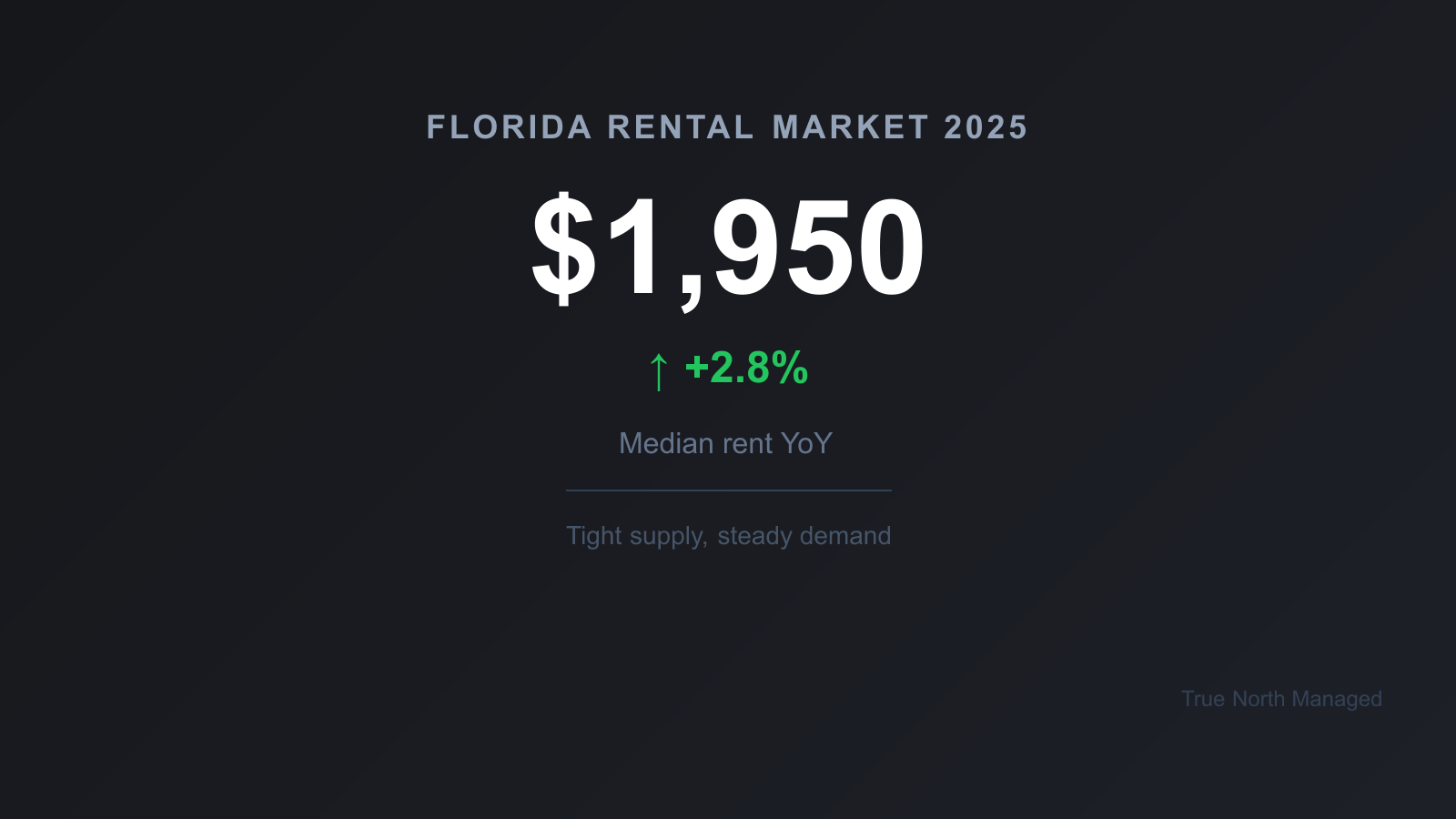
2025 was a year of normalization for Florida's rental market. The post-pandemic surge had cooled; rent growth moderated; and new construction continued to add supply. Insurance market changes and population growth shaped the landscape. Here's where the numbers landed for Florida landlords.
Post-Pandemic Normalization
Florida's rental market has normalized post-pandemic -- rent growth has slowed from 15-20% to 3-5%. Orlando and Tampa are no exception. Supply has caught up. Landlords should expect more modest increases.
The rental market had been running hot since 2020. Demand surged as remote work and migration reshaped housing preferences. By 2025, the pace of growth had eased. Rents continued to rise in most Florida markets, but the velocity of increases slowed. Vacancy remained tight in most submarkets—demand didn't collapse, it just normalized. Landlords who had been riding the wave of double-digit rent growth adjusted expectations. Single-digit growth was more typical.
Insurance Market Changes
Insurance market changes have been the biggest shock. Florida premiums have doubled in some areas. Wind and flood costs are eating into cash flow. Orlando and Tampa landlords are feeling it.
Florida's property insurance market had been volatile for several years—carriers exiting, premiums spiking, Citizens taking on more risk. By late 2025, some stability had returned. Not every landlord saw relief, but the pace of premium increases had slowed in many cases. Flood and windstorm remain separate concerns; coastal and flood-zone properties continued to face higher costs. For investors running the numbers, the insurance trajectory is a key input—2025 offered a -- clearer picture than 2023 or 2024.
New Construction Pipeline Impact
New construction has added supply. Orlando and Tampa have seen significant multifamily delivery. That's moderating rent growth in some submarkets.
Central Florida's multifamily and single-family rental pipeline remained active through 2025. Orlando saw new deliveries in Lake Nona, Horizon West, and along the I-4 corridor. Tampa saw new inventory in Riverview, Wesley Chapel, and New Tampa. Absorption kept pace in most submarkets. Landlords with older inventory faced more competition from newer units with modern finishes. Well-located properties held their pricing; pressure was felt more in areas with concentrated new supply. The pipeline didn't overwhelm the market—demand continued to absorb new units.
Rent Growth Moderation
Rent growth moderation: 3-5% is the new normal. 2021-2022 was an anomaly. Plan for single-digit increases going forward.
Rent growth moderated across most Florida markets in 2025. The days of 15–20% year-over-year increases were over. Modest single-digit growth was more typical. Landlords who had deferred increases earlier in the year had room to adjust at renewal. Tenants who had been under market often saw renewal offers at or above prior-year levels. The moderation was healthy—unsustainable growth was never going to last.
Population Growth Continuation
Population growth continues -- Florida is still adding people. Orlando and Tampa are among the fastest-growing metros. Demand remains strong.
Florida's population continued to grow in 2025. Migration from the Northeast and Midwest remained strong. Remote work and retirement drove demand. Orlando and Tampa both saw steady inflows. The combination of population growth and job growth supported rental demand. Landlords in both markets benefited from sustained demand—it wasn't a boom, -- but it wasn't a bust either.
Remote Work Influence
Remote work influence: some renters are less tied to job centers. Suburban Orlando and Tampa have seen demand hold. Urban cores have recovered.
Remote work continued to influence demand. Some employers moved to hybrid or full remote; others called workers back to the office. The net effect was mixed—some markets saw demand soften as remote workers moved elsewhere; others held steady. Central Florida's mix of Orlando and Tampa—tourism, military, healthcare, tech—kept demand diversified. No single employer or sector drives the entire market.
Central Florida vs State Trends
Central Florida vs. state: Orlando and Tampa track similar trends. Both have strong demand and new supply. Insurance is the wild card.
Central Florida—Orlando and Tampa—tracks state trends but with local nuances. Orlando's tourism and theme park employment create seasonal demand patterns. Tampa's military and healthcare employment create more year-round demand. Both markets saw rent growth moderate in 2025. Both saw new construction add supply. Both remained landlord-favorable in terms of vacancy and renewal use. For a deeper look at Orlando or Tampa, check our market hub pages. Our Q4 2025 Market Pulse covers the year-end comparison.
What 2025 Means for 2026
What 2025 means for 2026: expect moderation, budget for insurance, and focus on retention. Turnover costs more than a modest rent increase. Orlando and Tampa reward landlords who retain.
For landlords evaluating the year ahead, 2025 set a baseline. The market is more mature—expectations should match. Rent growth will likely moderate further; insurance costs will remain a factor; new construction will continue to add supply. For a data-driven view of what your property could command, get a free rental analysis. We pull comps across Orlando and Tampa and help you position for the year ahead.
Verified data (March 2026):
- Statewide vacancy: 6.9%
- Statewide median asking rent: ~$2,090
- 2019–2023 rent increase: +39%
Sources: Florida Landlord Dec 2025 report, Florida Realtors rental crunch